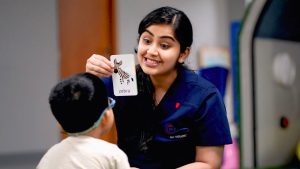
At ABLE UK, our Speech-Language Therapists provide the evaluations assessments and
treatments for children and adolescents within the framework of OPT and Prompt.
We help clients learn to communicate with greater ease and proficiency. We always
emphasize the most current and adaptive strategies, employed by a diverse team of caring, certified speech pathologists. We serve culturally and linguistically diverse populations, and make both bilingual and monolingual Arabic and English, interventions available.
We provide assessment and treatment for children and adolescents with;
We work collaboratively as a team with parents and caregivers, and we’re available
for consultations with other professionals who work with your child. We have a
proven success rate in facilitating effective communication in kids.
It is our belief that many late talkers maybe experiencing underlying orofacial myofunctional disorders which result in difficulty with sequencing and coordination of the mouth muscles and are misdiagnosed as expressive language delay or disorder.
Each child receives a treatment plan, a 3-month progress summary, and a treatment
summary at the end of the year or upon graduation from therapy.
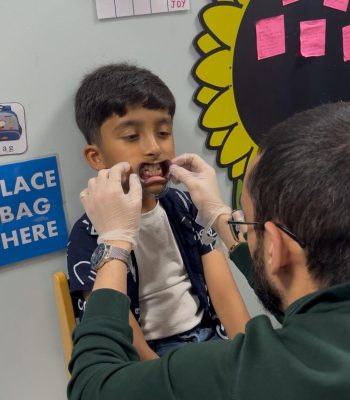
Beckman Oral Motor Protocol is an intervention that utilizes assisted movement and stretch reflexes to activate muscle contraction, build strength and improve Range of Motion in the lips, jaw, tongue and soft palate. It is highly beneficial for children that cannot follow verbal commands due to motor planning and or cognitive deficits. This intervention can be used with infants as well.
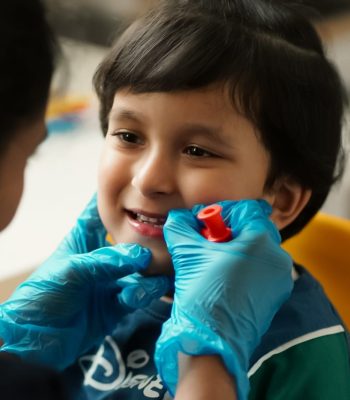
At ABLE UK our Speech Language therapists provide the Beckman Oral Motor Assessment and Intervention. Throughout their work with the children, our therapists use the hands-on techniques for tonic bite, slow oral transit, tongue thrust, and gag. The therapists use specific intervention strategies for improving facial muscle function for eating and speech. These techniques are highly effective and help our therapists better serve children with speech and feeding goals.
What is PROMPT speech therapy? You may have heard this term before but were unsure how it applies to your child’s needs. Prompt stands for Prompts for Restructuring Oral Muscular Phonetic Targets. It is a highly successful therapy option for children with motor speed disorders. This includes children who have childhood apraxia or dysarthria. It may also help some adults who struggle with these needs as well. It is unique and effective as a robust type of speech therapy.
Many children may benefit from the use of PROMPT. This includes individuals who are typically at least six months or older. They may have a diagnosis of a condition such as:
Treatment for other speech disorders and impairments may also be effective using this method. It is best to use it on those with partial or completely non-verbal children. It may also be an alternative treatment for those with mild articulation delays who have not responded to other types of treatment. It is also suitable for those who have motor speech disorders as well as language disorders.
There are various ways that PROMPT is different from other types of speech therapy. It is a much more hands-on experience designed to improve speech. To work well, our therapists has to use touch cues to help to guide the child. As the child learns and expands their skills, the touch cues are removed, one after the other, allowing the further building of those skills. Unlike other methods that rely on repetition, this method is far more hands-on in its functionality. Our therapists are all PROMPT level 3 trained and we offer the highest quality of therapy to suit the childs needs
Parents are usually the first to notice something is off. Trust that instinct. Early support produces better outcomes, and waiting rarely solves the problem on its own.
Consider booking an assessment if your child shows any of these patterns:
A delay does not always mean a disorder, and a thorough assessment is the only way to tell the difference. Our therapists will tell you straight whether therapy is needed or whether watchful monitoring is the right call.
Our speech-language pathologists have clinical experience across the full paediatric communication spectrum.
If you are unsure whether your child’s profile fits, contact us. We will tell you whether speech therapy is appropriate before you book an assessment.
Our therapists are trained in the most established and clinically validated speech therapy frameworks in the field. We do not commit to a single method. We match the approach to the child.
PROMPT Level 3. Prompts for Restructuring Oral Muscular Phonetic Targets is a tactile-kinetic technique that uses precise touch cues on the face and jaw to help children produce sounds they cannot yet make on their own. Highly effective for Childhood Apraxia of Speech, dysarthria and motor speech disorders. Our therapists are trained to PROMPT Level 3, the most advanced certification level.
Beckman Oral Motor Protocol. A hands-on intervention using assisted movement and stretch reflexes to strengthen the lips, jaw, tongue and soft palate. Particularly useful for infants and children who cannot follow verbal instructions, and for tonic bite, tongue thrust, gag, and slow oral transit.
Talk Tools (Levels 1, 2 and 3). Including the Kaufman Speech to Language Protocol and the Kaleidoscope feeding model. Structured oral-motor and feeding hierarchies with measurable progression.
Hanen It Takes Two to Talk and More Than Words. Parent-led programmes that train caregivers to embed language-building strategies into daily routines, multiplying therapy gains between sessions.
DIR Floortime. Play-based, relationship-driven approach particularly effective for children with autism and developmental delays.
Gestalt Language Processing, AAC, social thinking strategies, and sensory processing support are integrated into therapy plans as needed.
Dubai is a multilingual city. Most of the children we see grow up with two or more languages at home, in school, and in the wider community. Bilingualism is a strength, not a delay risk, when supported correctly.
Our team includes Arabic-speaking and bilingual speech-language pathologists. We deliver therapy in three formats:
Assessments are conducted in both languages where appropriate, ensuring we measure true ability rather than penalising a child for being assessed in their weaker language. This matters. A bilingual child assessed only in English may look delayed when they are not. We assess properly so the diagnosis is accurate.
Many late talkers and children with persistent unclear speech are not language-delayed. They have an underlying orofacial myofunctional disorder: the muscles of the mouth, lips, tongue and jaw are not coordinating properly, which makes speech sounds physically difficult to produce.
This is frequently misdiagnosed as expressive language delay, which means therapy targets the wrong system and progress stalls.
ABLE UK is one of the few clinics in Dubai that integrates speech-language pathology, oral placement therapy, paediatric feeding therapy and myofunctional therapy under one roof. Our therapists screen for oral-motor and myofunctional issues during the initial assessment. If we find them, treatment addresses the muscular foundation alongside the speech and language goals.
This integrated approach is why families with children who have plateaued elsewhere often see fresh progress after switching to ABLE.
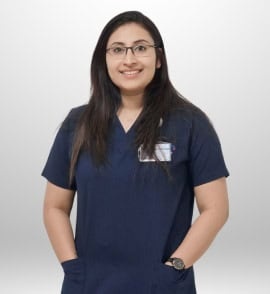
Credentials: Master of Audiology & Speech Language Pathology · OPT Level 3 (Specialist, TalkTools) · Certified Myofunctional Therapist (AOMT) · PROMPT Level 3 · Kaufman (KSLP) · Feeding certifications · The Listening Program provider
Lead speech-language pathologist with 10+ years, heading a team of 14 at ABLE UK. Certified Myofunctional Therapist (AOMT), OPT Level 3 Specialist.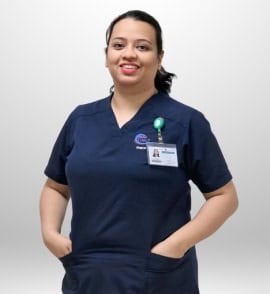
Credentials: M.ASLP (Manipal, 2016) · BASLP (Mangalore, 2014) · DHA-licensed · OPT Level 3 Specialist · PROMPT Level 3 · Feeding Therapy · Play-Based Therapy
DHA-licensed speech-language pathologist specialising in Oral Placement Therapy (Level 3 Specialist), PROMPT Level 3 and feeding therapy across the paediatric population.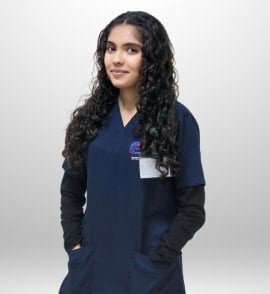
Credentials: BSASLT (Ziauddin College, 2021) · DHA-licensed · OPT Level 3 · PROMPT Level 3 · Orofacial Myofunctional Therapy · Feeding Therapy
DHA-licensed speech-language pathologist helping children develop confident communication and feeding skills, with advanced training in OPT Level 3, PROMPT Level 3 and myofunctional therapy.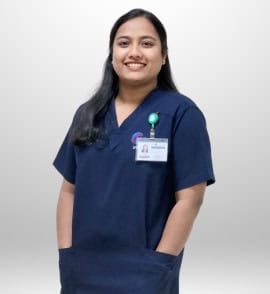
Credentials: MASLP · BASLP · DHA-licensed · OPT Specialist Level 3 · Myofunctional Therapy · Feeding Therapy · Gestalt Language Processing
DHA-licensed speech and language pathologist with 4+ years, specialising in myofunctional therapy, Oral Placement Therapy (Specialist Level 3), feeding therapy and Gestalt Language Processing.
Credentials: 15 yrs' experience · bilingual (Arabic & English) · former President, Egyptian Association for Communication Sciences & Linguistics · OPT Level 2 · Certified Feeding Therapist (TalkTools) · Kaufman (K-SLP) · Myofunctional Therapy (Myo Brooklyn) · ComPAL AAC
Bilingual (Arabic and English) speech and language pathologist with 15 years' experience, specialising in paediatric language and speech-sound disorders, oral placement therapy and AAC.A structured four-step pathway designed to identify your child's needs accurately and start therapy with clarity from day one.
Ready to book a parent consultation?
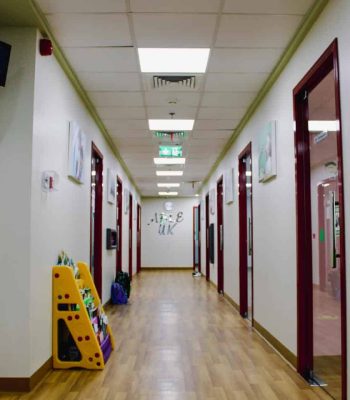
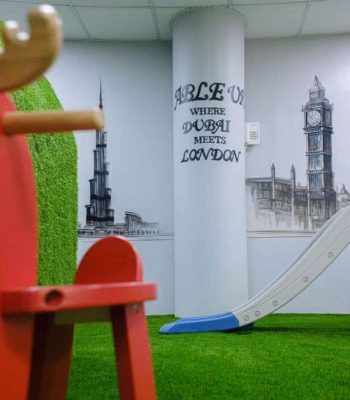
Eleven years in Dubai. UK clinical heritage with twenty-five-plus years of original UK practice behind the brand. DHA-licensed and DHCC-credentialed. Two clinic locations covering both halves of the city: Building 33, Dubai Healthcare City (serving Bur Dubai, Oud Metha, Downtown and DIFC) and Fortune Executive Tower, Cluster T, JLT (serving Marina, JBR, Tecom and Al Barsha).
Our speech-language pathologists hold certifications in PROMPT Level 3, Beckman Oral Motor Protocol, Hanen, Talk Tools, and DIR Floortime. We are one of the few clinics in the region that integrates speech, oral placement, feeding and myofunctional therapy in the same building, with the same team.
Over 115 verified Google reviews. Excellent rating. Real families who started exactly where you are now.
To book a parent consultation, call 04 552 0351, WhatsApp +971 52 774 5062, or visit our contact page.
Watch our expert therapist guide a child through a TalkTools session, using specialized tools and techniques to enhance oral-motor skills, speech clarity, and feeding abilities. This hands-on approach combines play and therapy to support the child’s unique needs, promoting measurable progress in a fun and engaging environment. Discover the impact of TalkTools in action and how it transforms lives, one step at a time.
Horn #3 in the TalkTools Horn Hierarchy is a foundational tool used in oral-motor therapy to develop lip closure, improve breath control, and strengthen oral musculature. Designed to build the skills necessary for speech clarity and feeding, this horn targets controlled exhalation and encourages the coordination of lips and airflow. By practicing with Horn #3, clients progress toward better muscle tone and the oral-motor stability needed for more advanced speech sounds. It’s an integral step in the sequential approach of the Horn Hierarchy, offering structured and measurable outcomes in therapy.
Food desensitization in Speech and Language Pathology is a therapeutic approach designed to help individuals with sensory aversions or oral-motor challenges gradually tolerate and interact with various textures, tastes, and consistencies of food. This process involves introducing non-threatening exposure to foods through playful activities, sensory exploration, and structured steps tailored to the individual’s comfort level. By addressing sensitivities and reducing anxiety around eating, food desensitization aims to improve feeding skills, promote positive mealtime experiences, and support overall oral-motor development. It is particularly beneficial for individuals with feeding disorders, sensory processing issues, or developmental delays.
The Sensi from TalkTools is a versatile tool used in Speech and Language Therapy to support oral-motor development, sensory integration, and muscle strengthening. Equipped with adjustable vibration settings and interchangeable tips, the Sensi provides targeted tactile input to the oral structures, helping improve awareness, coordination, and tone in the lips, tongue, and cheeks. Ideal for clients with sensory processing challenges, feeding difficulties, or speech delays, the Sensi is used to reduce oral aversions, enhance sensory acceptance, and build the foundational skills necessary for clear speech and effective feeding. It’s a dynamic addition to therapy sessions, offering measurable progress in a fun and engaging way.
Speech and language therapy is a clinical service that supports children and adults who have difficulty with communication, including how they produce speech sounds, understand language, express themselves, manage fluency, or feed and swallow safely. Paediatric speech therapy specifically focuses on helping children develop age-appropriate communication skills through structured assessment and evidence-based intervention.
Earlier is almost always better. We assess children from 12 months of age, and we routinely work with toddlers, preschoolers, school-age children and adolescents. There is no minimum age for a parent consultation. If you have concerns about a 14-month-old who is not babbling, book the conversation. Catching a delay early gives your child the best chance of catching up before school starts.
Common red flags include: very few words by 18 months, no two-word combinations by age two, speech that strangers cannot understand by age three, persistent stuttering lasting more than three to six months, frequent frustration when trying to communicate, difficulty following simple instructions, and trouble interacting socially with peers. Feeding difficulties, drooling beyond toddlerhood, and tongue thrust also warrant assessment. If something feels off, get it checked.
Yes. Our team includes Arabic-speaking and bilingual speech-language pathologists. We deliver therapy in monolingual English, monolingual Arabic, or bilingual Arabic and English depending on your child's home and school environment. Bilingual assessment is also available, which is the only fair way to evaluate a multilingual child.
PROMPT stands for Prompts for Restructuring Oral Muscular Phonetic Targets. It is a tactile-kinetic technique where the therapist uses precise touch cues on a child's face, jaw and neck to help them produce speech sounds they cannot yet make independently. PROMPT is highly effective for Childhood Apraxia of Speech, dysarthria and other motor speech disorders. Our therapists are trained to PROMPT Level 3, the highest certification level.
Yes. Stuttering and cluttering are common fluency disorders, and evidence-based speech therapy is the standard treatment. Our approach combines fluency-shaping techniques, stuttering modification strategies, breathing and rhythm work, and where appropriate, support for the emotional impact of stuttering. Treatment is tailored to your child's age and stuttering pattern. Persistent stuttering lasting beyond six months should be assessed rather than left to resolve on its own.
Yes. CAS is one of our core specialisms. It is a motor speech disorder where the brain struggles to plan and coordinate the movements needed for speech, even though the child knows what they want to say. Treatment requires specialised motor-based approaches, particularly PROMPT and the Kaufman Speech to Language Protocol, both of which our team is trained in. CAS rarely resolves without intervention, and frequency of therapy matters.
It depends on the diagnosis, severity, age, and how consistently therapy is reinforced at home. Mild articulation issues may resolve in 12 to 20 sessions. Moderate language delays often require six to twelve months of weekly therapy. Childhood Apraxia of Speech and complex communication needs typically require longer-term intervention with two or more sessions per week. We provide a clear estimate after the initial assessment and review progress every three months.