
Creating Structured Routines Through ABA Therapy for Daily Success

Creating Structured Routines Through ABA Therapy for Daily Success
The rhythm of a household often dictates the peace of the home. For any family, the morning rush to get out the door or the evening transition toward bedtime can feel like a delicate balancing act. However, for parents of children with developmental delays or unique learning needs, these everyday transitions can sometimes feel like climbing a mountain. What looks like a simple sequence of events to an adult, such as waking up, putting on shoes, or brushing teeth, can feel like an overwhelming, chaotic flood of sensory information and expectations to a young child.
This is where the structured, compassionate principles of Applied Behaviour Analysis become an invaluable framework for daily life. Far from being a clinical concept reserved strictly for one on one therapy sessions, this behavioral approach provides a practical, comforting toolkit that parents can use to build reliable routines at home.
By transforming unpredictable, stressful moments into clear, predictable patterns, families can dramatically reduce anxiety, minimize behavioral challenges, and give their children the confidence to navigate their days independently. Structure is not about enforcing rigid rules; it is about creating a safe, understandable environment where a child knows exactly what is expected of them, and what comes next.
Why Predictability Matters to the Developing Brain
To understand why structure is so impactful, it helps to view the world through the lens of a child with neurodivergent needs. Many children who experience developmental variations face challenges with executive functioning, which is the brain’s ability to plan, focus attention, remember instructions, and juggle multiple tasks successfully. Without a clear routine, the day can feel entirely unpredictable, and unpredictability naturally breeds anxiety.
When a child is anxious or unsure of what is coming next, they often express that discomfort through behavioral challenges. A meltdown during a transition from playtime to dinner is rarely just about the food; it is frequently a reaction to an abrupt, unexpected shift in their environment.
Structuring the day provides a psychological safety net. When a child can anticipate the flow of their morning or evening, their stress levels drop significantly. Predictability allows the brain to relax, freeing up cognitive energy that the child can then use to learn new skills, communicate effectively, and engage meaningfully with their family.
The Behavioral Science of a Routine
Building an effective routine is an art form rooted in clear behavioral concepts. In a professional therapeutic setting, specialists rely on specific, evidence based strategies to teach complex behaviors. Families can easily adapt these identical strategies to create seamless schedules within the home.
Task Analysis: Breaking It Down
One of the most powerful tools in behavioral support is task analysis. This involves taking a seemingly simple task and breaking it down into its smallest, most digestible steps. To an adult, getting ready for bed is a single instruction. To a child, it is a complex chain of distinct actions.
When creating a routine, think about a specific pain point in your day and dissect it. For example, the handwashing routine can be broken down into clear steps: turn on the tap, wet your hands, get one pump of soap, rub your hands together while counting to ten, rinse away the bubbles, turn off the tap, and dry your hands with the towel. By teaching and praising each individual step along the chain, the entire process becomes achievable rather than intimidating.
Visual Schedules: Making the Unseen Visible
Spoken words disappear the moment they are muttered. For a child who processes language slowly or becomes easily distracted, a verbal reminder like “put on your shoes” can easily get lost in the noise of a busy room. Visual schedules solve this problem by turning abstract, spoken expectations into permanent, concrete reference points.
Visual support can take many forms depending on a child’s age and communication style. For younger children, a sequence of clear photographs or line drawings showing each step of the morning routine works beautifully. For older children, a simple written checklist on a whiteboard can be incredibly empowering.
Placing these schedules at eye level in the specific areas where the tasks occur, such as the bathroom mirror for grooming or near the front door for departure routines, gives the child a constant, silent guide. Instead of a parent needing to repeat instructions constantly, they can simply point to the visual schedule, encouraging the child to look, process, and take ownership of the next step.
Navigating Transitions with Ease
The space between activities, the transition, is often where daily routines encounter the most friction. Moving away from a highly preferred activity, like playing a video game or watching a favorite show, to a non preferred activity, like sitting down for homework or getting into the bath, is a frequent trigger for frustration.
To make these shifts smoother, behavioral strategies focus on proactive management. Giving a child a clear heads up before a change occurs allows them to prepare mentally. However, simply saying “five more minutes” is often ineffective because time is an abstract concept that young children do not fully comprehend.
Instead, pair verbal warnings with concrete markers. A visual countdown timer where the colored disc slowly disappears helps a child literally see time passing. Alternatively, structural boundaries can be tied to the activity itself: “Two more times down the slide, then we walk to the car,” or “When this song finishes, we turn off the tablet.”
Another highly effective strategy is the use of behavioral momentum. This involves asking a child to complete two or three easy, highly successful tasks right before introducing a more challenging request. The momentum of experiencing success and receiving positive reinforcement creates a wave of willingness that carries over into the next, more difficult activity.
The Role of Positive Reinforcement
A routine only becomes a habit when it is consistently reinforced with positivity. When a child successfully follows a step on their visual schedule or transitions calmly from one room to another, that effort should be immediately acknowledged and celebrated.
Positive reinforcement does not mean offering tangible rewards or treats for every basic action. Often, the most powerful reinforcers are completely free: a warm smile, an enthusiastic high five, specific verbal praise, or a few moments of shared play. The key is immediacy and specificity. Instead of saying a generic “good job,” try saying, “I love how quickly you put your shoes in the basket all by yourself!” This tells the child exactly which behavior was successful, making them much more likely to repeat it tomorrow.
Over time, as the routine becomes deeply ingrained and natural, the need for continuous praise naturally fades. The accomplishment of completing the routine and the sense of independence it brings eventually becomes its own intrinsic reward.
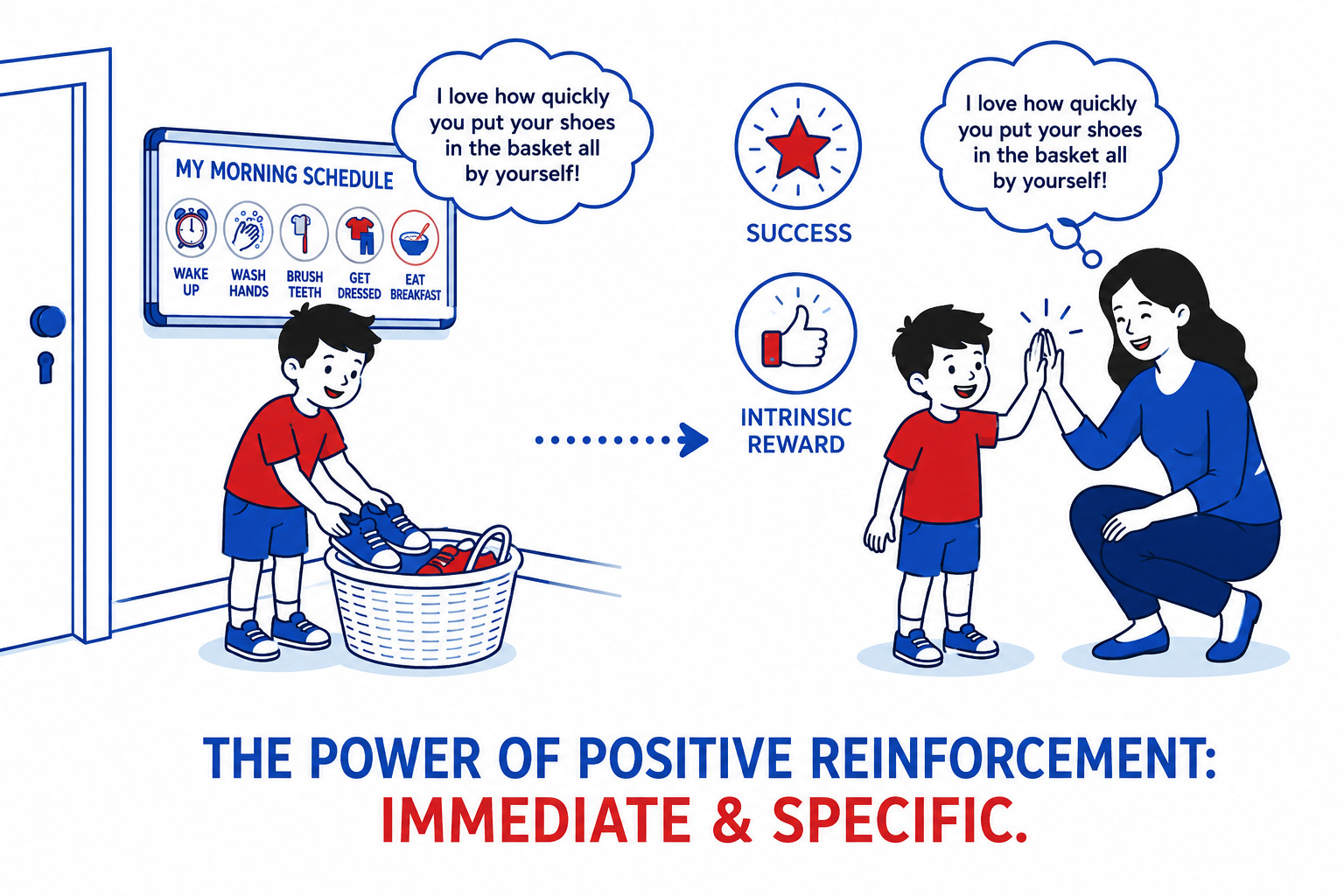
Positive Reinforcement
Tailoring Structure to Your Family Dynamics
There is no single blueprint for a perfect daily routine because no two families are exactly alike. A schedule that works beautifully for one household might feel restrictive or unmanageable for another. The goal is to design a structured rhythm that supports your family’s authentic lifestyle.
When introducing structure, it is always best to start small. Attempting to overhaul the entire day all at once can overwhelm both you and your child. Choose one specific area of the day that causes the most frequent stress, perhaps the morning departure or the dinner to bedtime transition, and focus your energy there first.
Once that specific routine feels stable and comfortable, you can gradually expand the structure to other parts of the day. Remember, consistency is the heartbeat of progress. The more predictable the sequence remains from day to day, the faster the child will internalize the steps and begin navigating them with genuine independence.
Collaborating with Your Care Team
While parents are the absolute experts on their own children, designing these home-based structures becomes infinitely easier when done in close partnership with a professional care team. A dedicated behavioral specialist can observe your child’s unique strengths and learning styles, helping you fine-tune your home routines for maximum success.
This collaborative approach ensures that the strategies used during formal therapy sessions are mirrored perfectly in the home environment. If a child is using a specific visual icon or token system with their therapist, bringing those identical tools into the living room creates a comforting bridge of consistency.
Further, this unified approach allows for open communication with speech and occupational therapists, ensuring that any sensory accommodations or communication devices are seamlessly integrated into the daily schedule. When the entire care team works hand in hand with the family, the path toward independence becomes clear, steady, and joyful.
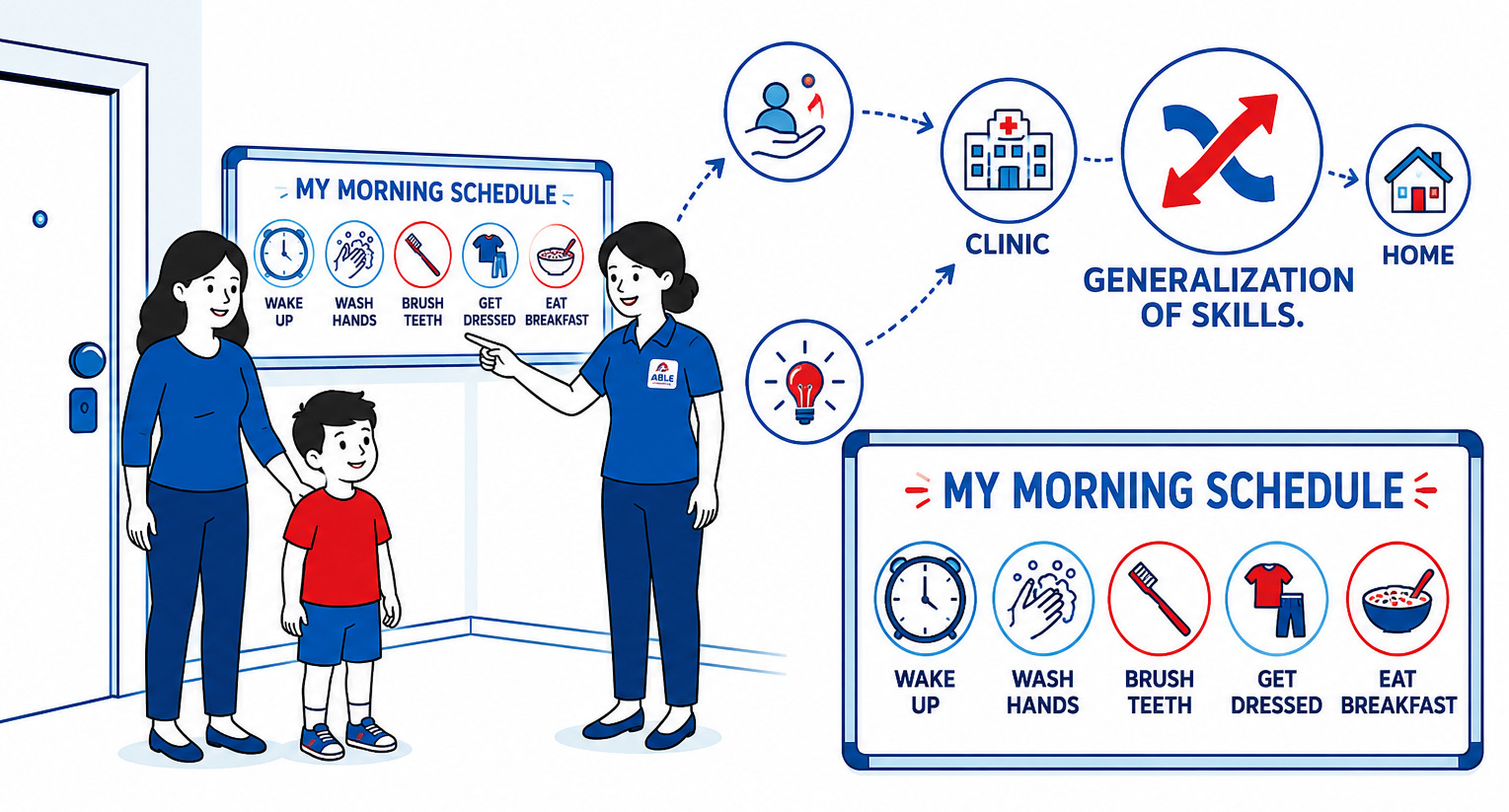
Embracing Flexibility within Structure
It is a common misconception that implementing a structured routine makes a child’s life rigid or inflexible. In reality, the exact opposite is true. Providing a solid foundation of daily predictability actually gives children the emotional security they need to handle the unexpected moments of life.
The world is naturally unpredictable; schedules change, flights get delayed, and routines occasionally have to be broken. When a child feels secure in their general daily rhythm, they are much better equipped to handle these occasional disruptions without becoming dysregulated.
You can even use visual schedules to explicitly teach flexibility. Introduce a distinct “surprise” or “change” card into the visual sequence to show that a shift is coming. By practicing small, controlled changes within a safe environment, you help your child build the vital resilience they need to navigate the beautifully unpredictable world around them.
A More Peaceful Home Environment
Investing the time and energy into creating structured daily routines is an act of deep care that transforms the atmosphere of an entire household. As a child begins to master their daily steps independently, the parenting dynamic shifts away from constant prompting, reminders, and frustration, moving instead toward a space of shared pride and calm.
Through the thoughtful application of these supportive, evidence based behavioral principles, everyday moments cease to be sources of stress. Instead, they become predictable opportunities for growth, connection, and success. By building a reliable rhythm for your child today, you are giving them the ultimate gift for tomorrow: the confidence and independence to step forward into their world with absolute certainty.
