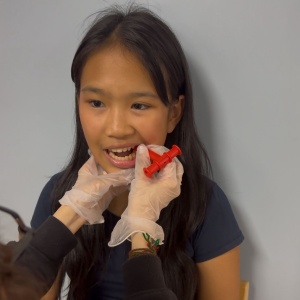
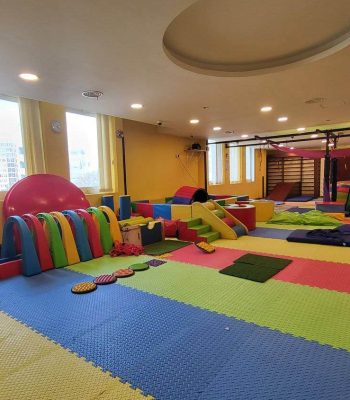
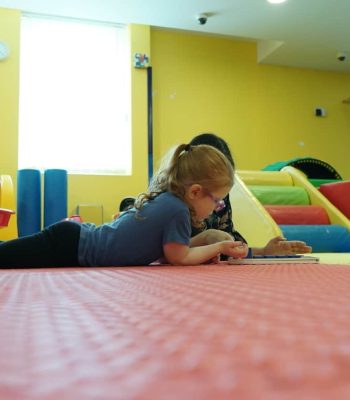
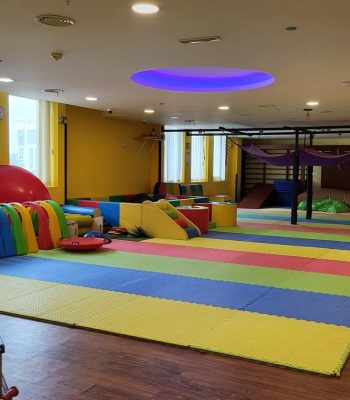
Paediatric myofunctional therapy at ABLE UK supports children with tongue thrust, mouth breathing, oral resting posture concerns, tongue tie recovery, and related orofacial muscle patterns. Delivered by AOMT-trained therapists, our programmes are designed around children and integrated with our in-house speech, oral placement, and feeding teams. We see families at our two Dubai clinics in Dubai Healthcare City and JLT, with bilingual Arabic and English delivery.
Myofunctional therapy is a structured programme of orofacial exercises designed to retrain the muscles of the lips, tongue, jaw, and face. The goal is to establish correct oral resting posture, nasal breathing, and a healthy swallow pattern. In children, that means the tongue rests on the roof of the mouth, the lips stay closed at rest, and breathing happens through the nose by default.
When these patterns are disrupted, often by chronic mouth breathing, tongue tie, persistent thumb-sucking, allergies, or restricted nasal airways, the effects compound over time. They can show up as crowded teeth, a narrow palate, speech difficulties, picky eating, broken sleep, and posture issues that follow the child into adolescence.
Myofunctional therapy addresses the muscle patterns themselves, not the dental or medical conditions that result from them. It works best in coordination with the child’s dentist, orthodontist, ENT, and other clinicians involved in their care, which is exactly how we deliver it at ABLE UK.
Most clinics offering myofunctional therapy in Dubai are dental practices or solo practitioners. ABLE UK is one of the only multidisciplinary paediatric clinics in the city with myofunctional therapy as part of its in-house service mix. That matters more than parents often realise.
Myofunctional therapy rarely sits in isolation. A child with tongue thrust often has speech articulation concerns. A child recovering from tongue tie release usually needs oral motor support alongside the muscle retraining. A child with mouth breathing may also be a picky eater, because the same underlying oral patterns affect feeding. At ABLE UK, the speech therapist, oral placement therapist, feeding specialist, and myofunctional therapist work in the same building from a shared treatment record, with regular case reviews when needs cross disciplines.
We are licensed by the Dubai Health Authority and credentialed by the Dubai Healthcare City Authority. Our therapists deliver in English and Arabic, with monolingual Arabic available where the home language calls for it. We see families at two Dubai locations: our main clinic at Dubai Healthcare City, serving Bur Dubai, Oud Metha, Downtown, and DIFC, and our JLT branch, serving Marina, JBR, Tecom, and Al Barsha.
The conditions below are the most common reasons families come to us for myofunctional therapy. In practice, a child often presents with two or three of these together, which is one of the reasons coordinated multidisciplinary care produces better outcomes than working with each condition in isolation.
Tongue thrust is a swallow pattern in which the tongue pushes against or between the front teeth during swallowing and at rest. Left untreated, it can contribute to dental crowding, speech distortions (particularly on /s/ and /z/ sounds), and relapse after orthodontic treatment. Myofunctional therapy retrains the swallow pattern and re-establishes correct tongue posture.
Chronic mouth breathing changes a child's facial development over time, narrowing the palate, lengthening the lower face, and weakening the muscles that hold the mouth closed at rest. We assess the cause, which may need ENT input for allergies or enlarged adenoids, and then retrain nasal breathing alongside correct lip seal and tongue posture.
Myofunctional therapy is widely considered best practice before and after frenulum release in children. Pre-release work prepares the muscles for the changed range of motion. Post-release work helps the child use the released tissue functionally, so the tongue actually moves into the correct positions for swallowing, speech, and resting posture, rather than returning to its restricted habits.
Children who snore, sleep with their mouth open, or wake unrefreshed often have an underlying airway issue. We work alongside ENT specialists and paediatric sleep clinicians to retrain the oral and facial muscles that support a stable night-time airway. We do not diagnose or treat sleep apnoea ourselves, but we provide the muscle-retraining component of a coordinated care plan.
Orthodontic results often relapse when the underlying muscle patterns that caused the malocclusion are not addressed. Myofunctional therapy supports children before, during, and after orthodontic treatment, working in coordination with the family's orthodontist to lock in long-term stability of the orthodontic outcome.
Every child begins with the same structured four-step pathway, designed to give parents a clear picture of the assessment, the plan, and the work that follows.
An unhurried conversation with our intake team to understand your child's history and your concerns.
A full AOMT-aligned assessment by a qualified myofunctional therapist.
A written report explaining findings, goals, and the recommended therapy programme.
Therapy begins, with weekly home practice and review at the end of each 12-week cycle.
Parents often ask how myofunctional therapy differs from the other oral motor services we offer. The short answer is that they all work with the same anatomy but target different functions.
Speech and language therapy focuses on articulation, language development, fluency, and communication. Where a speech sound error is caused by an underlying oral muscle pattern, the speech therapist will flag it for myofunctional assessment.
Oral Placement Therapy (OPT) is a Talktools-based oral motor approach used primarily to support speech precision and feeding readiness. OPT works on specific oral movements needed for clear speech sounds and safe feeding.
Paediatric feeding therapy addresses the sensory and behavioural dimensions of feeding, including picky eating, oral aversion, and feeding-related medical histories.
Myofunctional therapy addresses the resting and functional patterns of the orofacial muscles themselves: how the tongue sits at rest, how the child breathes through the day, how they swallow, and how those patterns shape long-term oral and facial development. It is the underlying habit layer that the other therapies often need in place to deliver lasting results.
Many children at ABLE UK receive two or three of these services in a coordinated programme. Our clinicians plan goals jointly so the therapies reinforce rather than compete with each other.
While ABLE UK’s primary focus is paediatric, we accept adult myofunctional therapy referrals on a case-by-case basis, particularly where the referral comes from a partner dental practice, orthodontist, or sleep clinician. Adult work commonly addresses tongue thrust contributing to orthodontic relapse, mouth breathing affecting sleep quality, and post-tongue-tie release rehabilitation. To enquire about adult myofunctional therapy, please call our intake team directly.
ABLE UK’s myofunctional therapists are trained through the Academy of Orofacial Myofunctional Therapy (AOMT), one of the most rigorous credentialing pathways in the field. AOMT training equips therapists to deliver evidence-based myofunctional protocols and to coordinate with dentists, orthodontists, ENT specialists, and sleep clinicians as part of multidisciplinary care.
Our approach is family-centred. Habit change in myofunctional therapy depends on consistent home practice between sessions, often for several months. We design programmes that work within the realities of family life rather than against them, with clear home exercises, parent coaching, and progress markers that show families exactly how their child is moving forward. Sessions are typically weekly or fortnightly, in cycles of 12 weeks, with formal review at the end of each cycle.
For children who also see clinicians outside ABLE UK, particularly orthodontists and ENT specialists, we share progress reports and align our programme with their treatment plans, with parental consent.
Most children are ready for structured myofunctional therapy from around age 4 or 5, when they can follow simple exercise instructions and engage in short, focused sessions. We can assess younger children for tongue tie recovery, oral resting posture, and early myofunctional concerns, with intervention adapted to the child's developmental level. For children under 4, we typically work through play-based oral motor support alongside parent coaching.
Speech therapy focuses on how a child produces sounds and uses language. Myofunctional therapy focuses on how the lips, tongue, and jaw muscles sit at rest and function through the day, particularly during swallowing and breathing. Many children benefit from both, and at ABLE UK our speech and myofunctional therapists work in coordination when a child needs both. The two are distinct but often complementary.
A typical paediatric myofunctional programme runs 6 to 12 months, with weekly or fortnightly sessions in 12-week cycles and formal review at the end of each cycle. Outcomes depend on the child, the underlying causes of the muscle pattern (which may need parallel ENT, dental, or orthodontic input), and the consistency of home practice. We share clear progress markers with families at each review.
paediatric tongue tie releases benefit from myofunctional therapy both before and after the procedure. Pre-release exercises prepare the oral muscles for the changed range of motion. Post-release work helps the child use the new range functionally, otherwise the tongue often returns to the same restricted positions despite the surgical release. We coordinate directly with the dental or surgical team carrying out the procedure.
Yes. ABLE UK's myofunctional therapists are trained through the Academy of Orofacial Myofunctional Therapy (AOMT), one of the most established credentialing pathways in the field. All our clinicians are also licensed to practise in the UAE through the Dubai Health Authority and credentialed by the Dubai Healthcare City Authority. Our clinical leadership draws on more than 25 years of UK paediatric practice.
Insurance coverage for myofunctional therapy varies significantly by policy. Some UAE health insurance policies cover it as part of speech and language therapy benefits, while others exclude it. Our admin team will check your specific policy before booking and advise on what is covered. Where direct billing is not available, we help families submit reimbursement claims with appropriate documentation.
Yes, though ABLE UK's primary focus is paediatric. We accept adult referrals on a case-by-case basis, particularly where the referral comes from a partner dental practice, orthodontist, or sleep clinician. Adult work commonly addresses orthodontic relapse, mouth breathing affecting sleep quality, and post-tongue-tie release rehabilitation. Please call our intake team to discuss adult myofunctional therapy.
Yes, and orthodontists often recommend it. Many orthodontic cases relapse because the underlying tongue and lip muscle patterns that caused the malocclusion remain unchanged. Myofunctional therapy works in coordination with your child's orthodontist before, during, and after treatment to support long-term stability of the orthodontic result. We share progress with the orthodontic team where families consent to that coordination.
If you suspect your child has a tongue thrust, persistent mouth breathing, or oral muscle patterns affecting their development, the first step is a parent consultation with our intake team. Call 04 552 0351, send a WhatsApp message to 052 774 5062, or use the enquiry form on our contact page. We will arrange an initial conversation, recommend a myofunctional assessment, and walk you through what a programme typically looks like for a child with similar concerns.
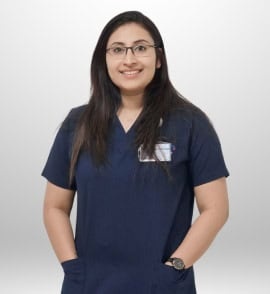
Credentials: Certified Myofunctional Therapist (AOMT); OPT Level 3 Specialist (see Speech & Language Pathology)
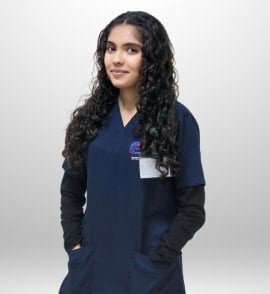
Credentials: Orofacial Myofunctional Therapy; OPT Level 3 (see Speech & Language Pathology)
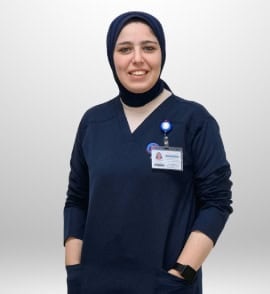
Credentials: Myofunctional Therapy (Myo Brooklyn); OPT Level 2 (see Speech & Language Pathology)
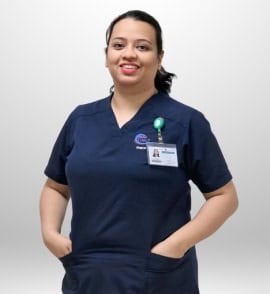
Credentials: OPT Level 3 Specialist; oral-motor and myofunctional expertise (see Speech & Language Pathology)