Building Stronger Social Communication Skills Through Speech Therapy
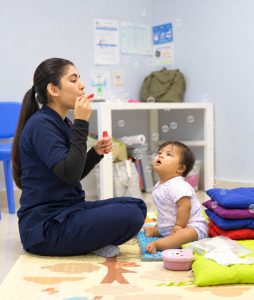
Building Stronger Social Communication Skills Through Speech Therapy
Communication extends far beyond the ability to pronounce individual sounds or assemble correct sentences. At its core, language is a deeply social tool designed to foster human connection, mutual understanding, and shared experiences. While many people associate paediatric speech and language support primarily with articulation drills or late talking, social communication, often referred to clinically as pragmatics, represents one of the most vital areas of child development. Pragmatics encompasses the subtle, unwritten rules of conversational interaction, including how language is used, how tone and body language are interpreted, and how individuals adjust their expression according to different settings and social partners. When children face challenges in these subtle areas, navigating everyday interactions at home, in the classroom, or on the playground can feel overwhelming.
In a dynamic, multicultural environment where children regularly interact across diverse cultural and educational settings, well-developed social pragmatics are essential for personal confidence and academic integration. Speech Therapy Dubai services focus heavily on nurturing these foundational capabilities. By looking beyond mechanics and focusing on functional, real-world connection, targeted speech and language interventions help young learners understand the nuances of shared dialogue, build meaningful peer relationships, and express their thoughts with clarity and self-assurance.
Understanding Social Communication and Pragmatic Language
Social communication relies on a complex interplay of verbal and non-verbal skills that allow individuals to convey meaning and interpret the intentions of others accurately. While formal language involves vocabulary and grammar rules, pragmatic language dictates how those elements are applied in real life.
Pragmatic language skills generally fall into three main functional categories:
- Using Language for Different Purposes: Greeting others, sharing information, asking questions, making requests, or expressing personal feelings effectively.
- Adapting Communication to the Context: Modifying tone, pitch, and word choice depending on who is listening, such as speaking differently to a teacher than to a playmate, or lowering one’s voice in a library.
- Following Conversational Rules: Understanding the rhythm of turn-taking, staying on topic, introducing new subjects appropriately, rephrasing statements when misunderstood, and respecting physical personal space during dialogue.
When a child experiences difficulties in pragmatic language, the issue is rarely a lack of words or intelligence. Rather, it involves difficulty interpreting the social context surrounding those words. A child might have an expansive vocabulary yet find it challenging to enter a peer group play session, maintain eye contact comfortably, or understand humor, sarcasm, and subtle facial expressions. Over time, these daily friction points can lead to feelings of isolation, frustration, or reluctance to participate in group activities. Recognizing these underlying communicative nuances is the first step toward providing meaningful support.
The Role of Comprehensive Assessment in Speech Therapy
Every child communicates through a unique blend of personal strengths, developmental timelines, and environmental influences. Effective intervention begins with a thorough, individualized evaluation conducted by qualified Speech-Language Pathologists. Rather than applying a one-size-fits-all checklist, experienced clinicians conduct holistic assessments that observe how a child uses language across various structured and unstructured settings.
During an initial assessment, a therapist evaluates not only receptive and expressive language skills, but also the nuanced markers of social interaction. This includes observing how the child initiates contact, responds to non-verbal cues, handles conversational transitions, and manages unexpected shifts in play. Gathering insights from parents, caregivers, and educators ensures that the assessment captures a complete picture of the child’s daily life.
Through this detailed mapping, clinicians identify specific developmental targets. For instance, one child may require assistance with active listening and topic maintenance, while another may benefit from structured guidance on non-verbal body language or peer collaboration. Establishing a precise, evidence-informed baseline ensures that every therapeutic goal directly aligns with the child’s real-world needs.
Core Strategies Used to Build Social Pragmatics
Speech therapy utilizes a broad selection of evidence-based techniques tailored to make social learning intuitive, engaging, and practical. Rather than relying on repetitive drills, modern paediatric practice integrates interactive frameworks that mirror everyday social experiences.
Structured Role-Playing and Scripting
Role-playing allows children to practice real-life social encounters within a safe, supportive environment. Therapists create guided scenarios, such as joining a game at recess, ordering food at a cafe, or asking a classmate for help. Through scripted interactions and gradual fading of visual prompts, children learn what words to use and how to deliver them with appropriate pacing and confidence.
Video Modeling and Visual Cues
Visual aids play an important role in helping children visualize abstract social concepts. Video modeling involves watching short clips of positive social interactions, allowing young learners to observe facial expressions, gesture timing, and conversational flow. Similarly, visual social stories and graphic organizers break down complex peer interactions into step-by-step concepts, helping children process expectations without feeling overwhelmed.
Peer Group Social Skills Sessions
While individual therapy sessions build foundational mechanics, group settings provide the ideal practice environment. In small, carefully matched social communication groups, children engage in collaborative activities, board games, and group projects. These sessions offer natural opportunities to practice turn-taking, sharing, active listening, perspective-taking, and positive conflict resolution under the direct guidance of a speech therapist.
Joint Attention and Non-Verbal Decoding
Social communication relies heavily on non-verbal signals. Therapists guide children in reading body language, facial cues, and vocal tone variations. By learning to identify when a listener is interested, confused, or ready to transition to a new topic, children gain the awareness needed to adjust their speech dynamically during live conversations.
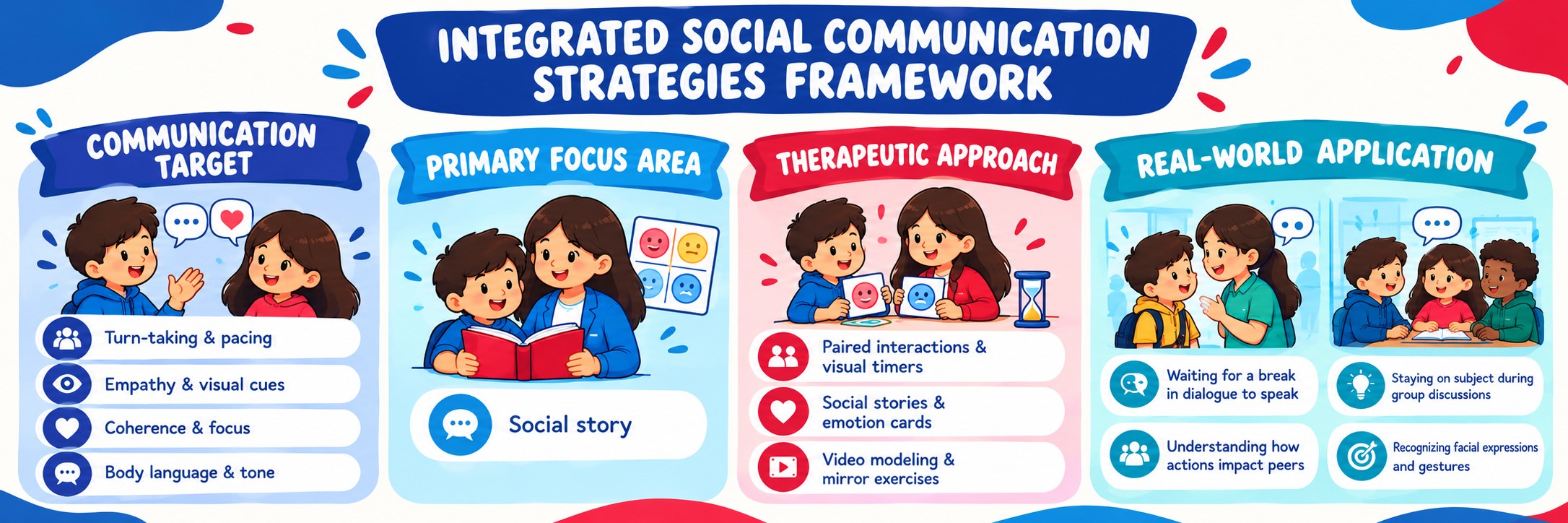
| Communication Target | Primary Focus Area | Therapeutic Approach | Real-World Application |
| Conversational Timing | Turn-taking & pacing | Paired interactions & visual timers | Waiting for a break in dialogue to speak |
| Perspective-Taking | Empathy & visual cues | Social stories & emotion cards | Understanding how actions impact peers |
| Topic Maintenance | Coherence & focus | Conversational mapping & prompts | Staying on subject during group discussions |
| Non-Verbal Decoding | Body language & tone | Video modeling & mirror exercises | Recognizing facial expressions and gestures |
The Power of Play-Based Therapy
For younger children, play serves as the primary language through which they explore concepts, form ideas, and build relationships. Play-based speech therapy transforms targeted goals into enjoyable, motivating experiences that encourage natural engagement.
When speech therapy is structured around play, children process learning naturally. Play lowers communication anxiety, increases spontaneous expression, and helps skills transfer smoothly into home and school environments.
During play-based sessions, speech therapists utilize imaginative play, constructive building, and interactive games to embed social learning naturally. For instance, while building a block tower together, a therapist can model requesting missing pieces, negotiating who places the next block, and celebrating shared success. By turning therapy into an active, enjoyable collaboration, children build positive associations with communication and feel inspired to express themselves.
Integrating Multidisciplinary Support
Communication development does not happen in isolation; it touches nearly every aspect of a child’s neurological, sensory, and motor profile. Paediatric growth benefits immensely from an integrated, multidisciplinary approach.
Speech-Language Pathologists frequently collaborate alongside Occupational Therapists, Sensory Integration specialists, and educational professionals. For example, a child experiencing sensory processing challenges may find it difficult to focus on social interaction in a noisy room. An Occupational Therapist can help regulate the child’s sensory system, creating an ideal state of calm focus that enables the Speech-Language Pathologist to work effectively on conversational skills.
This collaborative model ensures that every therapy plan addresses the complete picture of a child’s development. By aligning strategies across disciplines, healthcare professionals ensure that progress achieved in clinic environments translates into functional, long-term confidence in daily activities.
Extending Growth from Clinic to Home
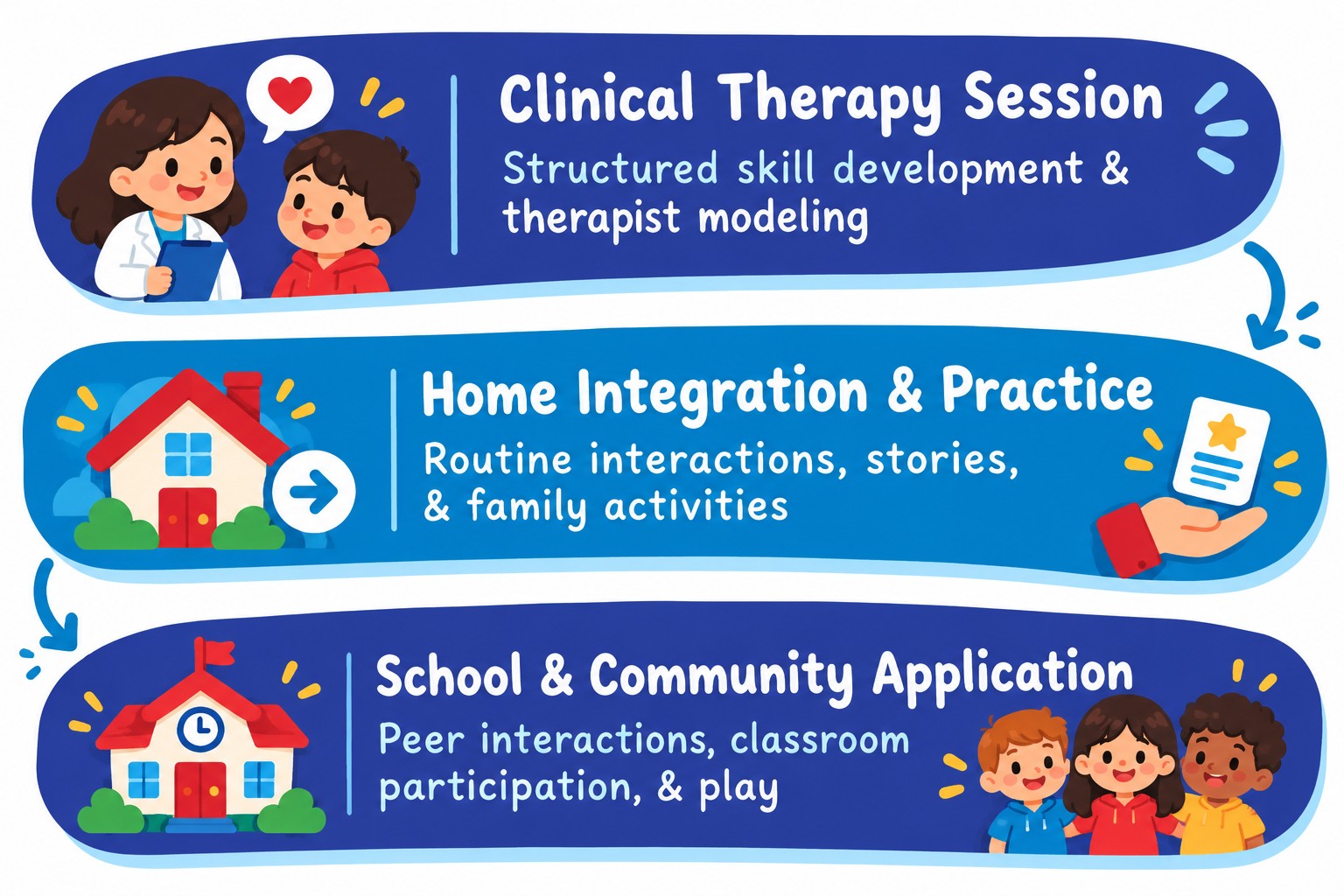
Therapy sessions provide structured instruction and guidance, but the home environment is where communication habits take root. Parents and family members play a central role as primary communication partners, turning everyday household routines into meaningful learning opportunities.
Simple strategies integrated into daily life can reinforce social pragmatic growth:
- Incorporate Guided Storytelling: When reading picture books together, go beyond the text. Ask open-ended questions about how characters might feel, why they made specific choices, or what might happen next.
- Model Mindful Conversation: Practice active listening during family meals. Demonstrate waiting for others to finish speaking, maintaining open body language, and acknowledging what family members share.
- Utilize Interactive Tabletop Games: Board games and card games offer built-in frameworks for turn-taking, following rules, handling winning or losing gracefully, and encouraging peer dialogue.
- Narrate Household Activities: Engage in joint activities like preparing a snack or organizing toys. Talk through the steps together, encouraging descriptive language, choices, and cooperative problem-solving.
- Offer Specific Positive Reinforcement: Recognize and praise authentic social efforts. Acknowledging specific behaviors, such as thanking a peer or sharing a toy smoothly, reinforces positive interaction patterns.
Supporting Academic and Social Confidence in the UAE
As children progress through early childhood and formal schooling, social communication skills become increasingly central to academic achievement and peer integration. Classroom settings require continuous social navigation, from following multi-step group instructions and participating in team projects to resolving misunderstandings during play breaks.
Children who receive targeted pragmatic support often experience noticeable benefits across their educational journey. When a child understands how to ask clarifying questions, interpret a teacher’s expectations, and collaborate comfortably with classmates, classroom anxiety decreases. This increase in self-assurance allows young learners to focus their energy on academic content, creative expression, and forming genuine friendships.
Furthermore, living in a global hub means navigating classrooms rich in cultural variety. Clear, flexible social communication skills empower children to bridge cultural differences, adapt to varied social norms, and build inclusive connections with peers from all backgrounds.
Choosing the Right Clinical Partner
Unlocking a child’s communicative potential requires finding a therapy provider that prioritizes individualized care, clinical excellence, and compassionate support. Families seeking speech and language services should look for clinics that offer dedicated, evidence-based practices delivered by qualified professionals.
Key factors to consider when choosing a clinical provider include:
- UK Clinical Heritage and Expertise: Leveraging internationally recognized clinical standards and research-backed therapeutic methodologies ensures high-quality care.
- Comprehensive Multidisciplinary Care: Access to an integrated team of speech therapists, occupational therapists, and paediatric specialists under one roof supports well-rounded development.
- Family-Centered Approach: Strong programs prioritize parent training, clear progress tracking, and open communication to ensure strategies carry over into home environments.
- Tailored Individual Programs: Every child receives a custom therapy plan built around their distinct personality, strengths, and specific goals.
Nurturing Lasting Communication Skills
Building strong social communication skills is a gradual, rewarding journey that unfolds over time. Every small milestone, whether it is initiating a conversation, sharing a laugh with a friend, or expressing a personal boundary clearly, represents a meaningful step toward lifelong connection.
With the right combination of expert clinical guidance, evidence-based interventions, and nurturing support at home, children can overcome communication hurdles and develop the skills needed to express themselves confidently in any setting. By focusing on pragmatic communication, families and therapists work together to ensure that every child finds their voice, builds meaningful relationships, and achieves their full potential.
To learn more about tailored paediatric support or to speak with a qualified healthcare professional regarding your child’s communication development, consult with an experienced clinician to assess whether speech therapy options are suitable for your family’s unique needs.
