Understanding Your Child’s ABA Provider
Understanding Your Child’s ABA Provider
When a parent receives a new diagnosis for their child, it can be an overwhelming moment. You are suddenly faced with a new vocabulary, a new world of specialists, and a new list of decisions to make. One of the most important steps you might take is seeking out Applied Behavior Analysis, or ABA, therapy. But what exactly is ABA, and how do you find the right provider for your child?
It’s completely normal to feel a bit lost. You’re looking for a professional who will not only help your child but who will also understand them. You need a partner you can trust. This isn’t a decision to be taken lightly. That’s why we’ve created this guide to help you feel more informed, more confident, and more prepared to choose the best possible team for your family. This is about empowering you to be an advocate for your child and ensuring you find a provider who truly sees your child for who they are.
What Exactly Is ABA and Why It Matters
ABA is a science-based approach to understanding behavior and how it is affected by the environment. The goal of ABA is to teach new skills and reduce challenging behaviors in a way that helps a person learn and grow. It’s often misunderstood, but at its core, ABA is about positive reinforcement.
Think of it this way: ABA doesn’t just teach a child to do something. It teaches them a skill that is meaningful and useful. It focuses on breaking down complex skills like communication, social interaction, or daily living tasks into smaller, manageable steps. Then, it uses positive reinforcement—like praise, a favorite toy, or a fun activity—to encourage the child to use that new skill. Over time, the child learns to use the new skill more and more, which helps them become more independent and navigate the world with greater confidence.
A good ABA program is always personalized to your child. It looks at your child’s unique strengths and challenges and creates a plan just for them. It’s a dynamic, ever evolving process that is constantly being adjusted based on your child’s progress and needs.
The Dream Team Who Is Your Child’s ABA Provider?
When you work with an ABA provider, you’re not just working with one person. You’re working with a team of professionals who all have different roles and responsibilities. Understanding who these people are is a key step in understanding your child’s care.
- The BCBA The Clinical Leader: The most important person on your child’s team is the Board Certified Behavior Analyst (BCBA). The BCBA is the person who designs your child’s treatment plan. They are highly trained and have a master’s degree or Ph.D. in a field like behavior analysis or psychology. They also have thousands of hours of supervised clinical experience and have passed a rigorous national certification exam.
The BCBA’s job is to conduct the initial assessment, analyze data, create a personalized treatment plan with specific goals, and provide ongoing supervision to the rest of the team. They should be the person you have regular meetings with to discuss your child’s progress and to make adjustments to the plan as needed. They are the clinical backbone of the program and are responsible for all the clinical decisions.
- The RBT The Front-Line Therapist: The Registered Behavior Technician (RBT) is the person who will be working directly with your child. They have received training in the principles of ABA and are certified by the Behavior Analyst Certification Board (BACB). The RBT’s job is to implement the treatment plan that the BCBA has designed.
The RBT spends the most one-on-one time with your child. They collect data on your child’s progress and work on teaching the skills outlined in the plan. They are a critical part of the team, and a great RBT will have a positive and fun relationship with your child. The RBT is supervised by the BCBA on a regular basis.
- Other Team Members: Depending on your provider and your child’s needs, you might also have other team members involved, such as a BCaBA (Board Certified Assistant Behavior Analyst), who works under the supervision of a BCBA, or a case manager who helps with scheduling and coordination.
The Search Questions to Ask Before You Begin
Finding the right provider can feel like an interview process, because it is. You are interviewing them to see if they are the right fit for your family. Here are some key questions you should ask during your initial consultation.
- Questions about their Philosophy and Approach
- What is your approach to a family centered model? Do you involve parents in the process?
- How do you ensure that therapy is fun and engaging for my child?
- How do you incorporate my child’s interests and motivators into the treatment plan?
- Questions about the Treatment Plan and Process
- What does your initial assessment process look like? How long does it take?
- How often will we meet to review my child’s progress?
- How will you measure my child’s progress? Can you show me what a progress report looks like?
- How will you handle challenging behaviors?
- Questions about the Team and Communication
- How will the BCBA be involved in my child’s day to day therapy?
- How often does the BCBA supervise the RBT?
- How will you communicate with me on a regular basis?
- What is the process for me to share my concerns or ask questions?
What to Look For Green Flags of a Quality Provider
Beyond the questions, you need to trust your gut. A great ABA provider will have certain green flags that show they are a high-quality, ethical, and compassionate team.
- They Listen to You: A good provider knows that you are the expert on your child. They should listen to your concerns, your goals, and your priorities. They should make you feel heard and respected from the very first conversation.
- They Are Transparent: They should be open about their methods and their data. You should never feel like you are being kept in the dark about what’s happening in therapy sessions. They should be happy to show you data and explain what it means.
- They Focus on Meaningful Goals: A quality provider doesn’t just focus on making a child compliant. They focus on teaching skills that will improve your child’s quality of life. This could be anything from learning how to communicate their needs to learning how to play with a sibling.
- They Partner With You: The best ABA programs involve the whole family. They will coach you on how to use the strategies they are using in therapy in your everyday life. This is what helps skills generalize and makes the therapy truly effective in the long run.
Understanding the Plan From Assessment to Success
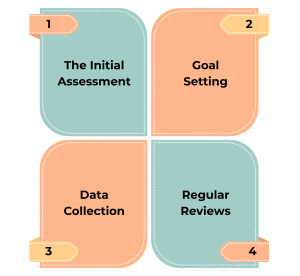
A great provider will have a clear and organized process. Here’s a general idea of what a good treatment plan looks like from start to finish.
Understanding the Plan From Assessment to Success- Able UK
- The Initial Assessment: The BCBA will spend time observing your child in different settings. They might conduct a Functional Behavior Assessment (FBA) to figure out the “why” behind your child’s challenging behaviors. They will also look at your child’s current skill set to see where they are excelling and where they might need a little extra support.
- Goal Setting: Based on the assessment and your family’s priorities, the BCBA will create a treatment plan with specific, measurable, and achievable goals. These goals should be meaningful and should improve your child’s quality of life. For example, a goal might be to “teach a child to request a break using a picture card instead of yelling.”
- Data Collection: This is the most important part of ABA. The RBT will collect data during every therapy session. They are tracking things like how often a new skill is used or how many times a challenging behavior happens. This data is the only way to know if the plan is working.
- Regular Reviews: The BCBA will review the data on a regular basis. They will meet with you to show you the progress and to make adjustments to the plan as needed. If something isn’t working, they will change it. This is why a good ABA program is never static; it’s always evolving with your child.
The Partnership You Are a Key Member of the Team
You are the most important part of your child’s team. You know your child better than anyone. A good ABA provider will recognize this and treat you as a vital partner. They should not only communicate with you but also empower you.
This is your child’s journey, and you have every right to feel informed, respected, and heard. By asking the right questions, looking for the right signs, and understanding the process, you can find a provider who will be an incredible partner in your child’s growth. This is about building a team that will help your child shine and reach their full potential.

3 comments
bddrazplaylogin
September 24, 2026 @ 10:45 amAccessing your favorite games has never been easier with their streamlined portal. The loading times are super fast and the bonus drops trigger exactly when promised. I highly recommend bddrazplaylogin for anyone looking for a dependable and entertaining gaming hub. bddrazplaylogin
phjiligems
September 28, 2026 @ 2:50 amI’ve tried a few sites but this one is really smooth. The graphics are great and the payouts feel fair. Highly recommend phjiligems for anyone looking for some fun.
auronplaygame
September 28, 2026 @ 10:17 amReally impressed with the game variety here. It is definitely my new go-to spot for some weekend fun. Highly recommend giving auronplaygame a try if you love gaming.