Play-Based ABA Therapy for Language Development
Play-Based ABA Therapy for Language Development
When your child is struggling to communicate, it’s a difficult feeling. You see their frustration, and you feel it too. Whether they’re a toddler trying to get a toy or an older child trying to talk with friends, language challenges can feel like a huge obstacle.
You might have heard of ABA therapy and pictured a very strict, serious setting. But that’s not what modern therapy for language development looks like. The most effective approach today is rooted in something every child loves: play. It’s a way to help your child find their voice in a way that feels natural, joyful, and meaningful. This isn’t just about teaching them words; it’s about helping them communicate and connect with the world around them.
Play based ABA therapy is a compassionate and highly effective way to help a child with language skills. It’s about meeting your child exactly where they are, in a world full of toys and games, and using their natural motivation to help them find their voice. This isn’t just about teaching them words; it’s about teaching them to use language in a way that feels natural, joyful, and meaningful.
Beyond the Stereotype: What is Play Based ABA?
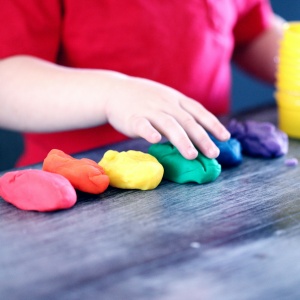
The field of ABA has evolved a great deal. The old stereotype of a rigid, drill-based therapy doesn’t reflect the way a lot of modern clinicians work, especially when it comes to language. Play based ABA is an umbrella term for a number of naturalistic teaching methods. It’s a child centered approach that takes place in a setting that is familiar and fun for the child, like a playroom or a living room.
Instead of a therapist directing the session and telling a child what to do, the therapist follows the child’s lead. They watch what the child is interested in and use that interest as a way to create a teaching moment. For example, if a child is playing with a toy car, the therapist won’t pull out a flashcard. They will get on the floor and play with the cars too. They will create opportunities for the child to use language naturally, in the moment, to get what they want. The therapist might hold a car and wait for the child to say “car” to get it. This turns a lesson into a fun part of a game.
The core idea is simple: children learn best when they are motivated and having fun. By making therapy feel like play, we can reduce a child’s frustration and help them learn new skills in a way that feels intuitive and enjoyable.
The Science of Play: How It Works
Play based ABA isn’t just about playing games; it’s about using the science of behavior to make learning more effective. The therapist is strategically using a child’s motivation and the natural environment to build a strong foundation for language.
- Following Their Lead
A therapist who uses a play based approach will spend time observing a child and seeing what their favorite toys and activities are. The child’s interests become the curriculum. This is incredibly motivating for a child. They want to play with the train set, so they are more likely to communicate to get access to it. This turns a simple preference into a powerful tool for learning.
- Natural Reinforcement
In traditional therapy, the reinforcement might be a sticker or a small piece of candy after a correct answer. In play-based ABA, the reinforcement is natural and directly related to the activity. If a child says “ball” to a therapist who is holding a ball, the natural reinforcement is getting to play with the ball. This makes the connection between the word and the reward immediate and meaningful. It helps the child understand that using language helps them get what they want in the real world.
These strategies are what make play-based ABA so effective for language. It’s a flexible approach that adapts to your child, not the other way around.
From “I Want” to “Look at That”: Building Core Language Skills
Language is complex. It’s not just about knowing words. It’s about knowing how to use them in different ways. Play based ABA helps a child learn all the different “jobs” those words can do.
- Manding (Requesting)
This is one of the most important language skills. Manding is simply asking for what you want or need. In a play-based session, a therapist creates many opportunities for a child to mand. They might hold a favorite toy just out of reach, or blow bubbles and then stop, waiting for the child to ask for “more.” This teaches the child that their words have power and they can use them to get their needs met.
- Tacting (Commenting or Labeling)
Tacting is how we label things in the world. It’s how a child learns to say “dog” when they see a dog, or “red” when they see a red car. In a play-based session, a therapist might hold up a toy and say “car!” in an excited voice. Or they might point to an airplane flying by and say “plane!” The therapist is teaching the child to label the world around them through simple, repetitive comments that are connected to the things they are interested in.
- Intraverbals (Conversations)
This is the skill of having a back-and-forth conversation. It’s how a child can answer a question or comment on what someone else has said. In a play-based setting, the therapist can work on intraverbals by having natural conversations with the child. If a child says “dog,” the therapist might respond with a question like, “What sound does the dog make?” This encourages the child to engage in a verbal exchange and to learn the give and take of conversation.
By working on these different types of language within play, the therapist is building a complete and functional communication system for your child.
What a Session Looks Like: An Inside Look
You might be wondering what an hour of play-based ABA actually looks like. It’s not a classroom or a doctor’s office; it’s a lot like a playdate with a purpose. A typical session might look something like this.
The therapist arrives and greets your child warmly. They have a bag of toys, but they will also use your child’s favorite toys and their home environment to make the session feel natural. They get on the floor and start playing with the child. There might be a toy train, blocks, or a dollhouse. The child leads the play. The therapist is right there with them, creating small opportunities to teach language.
The child reaches for a block. The therapist holds it just for a second and waits for the child to make a sound or to say “block.” The child says “block” and the therapist immediately gives them the block and says, “That’s right, block!” in an excited, encouraging voice.
Later, the child is playing with a toy doll. The therapist might make a silly sound with the doll and wait for the child to imitate them. The child imitates the sound, and the therapist claps and gives them a hug.
Throughout the session, the therapist is watching, listening, and creating a flow of natural interactions. They are using your child’s interests as the driving force behind the learning, which makes the whole process feel natural and positive.
You’re the Most Important Teacher: Putting It into Practice at Home
One of the best things about play based ABA is that you can use the principles at home. You are the person who spends the most time with your child, and a good ABA team will teach you how to be an active part of their therapy.
- Follow Their Lead
Get down on the floor and play with your child. Watch what they are interested in and follow their lead. If they want to play with a puzzle, talk about the puzzle pieces. If they want to play with a truck, talk about the truck.
- Make It Fun
Use an excited and encouraging voice. Exaggerate your facial expressions. Make learning a fun and joyful experience.
- Create Opportunities to Communicate
You can create a “communication temptation” by holding a favorite snack or toy and waiting for your child to make a sound or word to ask for it. You can also hide a favorite toy and wait for your child to ask “where?”
- Use Natural Reinforcement
When your child uses language, respond immediately and in a natural way. If they say “more,” give them more of whatever they were asking for. This shows them that their words have power.
A journey with language challenges can be overwhelming, but play based ABA offers a path forward that is filled with joy, connection, and progress. It is a way to help your child find their voice in a way that feels natural, kind, and truly effective.

5 comments
vnhubet6600
July 27, 2026 @ 7:06 amReally impressed with the customer support. They answered my questions about the bonus almost instantly.
pkbetoffice
July 27, 2026 @ 7:07 amBest place for sports betting right now. The odds are very competitive and the live betting feature is a game changer.
nairabetcasinonigeria
July 27, 2026 @ 7:07 amLove that I can use local payment methods here. It makes depositing and withdrawing so much easier for us.
br27g
September 20, 2026 @ 6:24 pmThe game variety here is just amazing. I spent hours exploring different options and everything works perfectly on my phone. Love the vibe at br27g!
idbundaslot
September 24, 2026 @ 6:12 pmThe slots here have some of the best hit rates I have seen in a while. I really enjoy the bonus rounds and the overall vibe of the site. idbundaslot is simply awesome.