Beyond Children: When Adults in Dubai Need Speech Therapy and Why It Matters

Beyond Children: When Adults in Dubai Need Speech Therapy and Why It Matters
When most people hear “speech therapy,” they often picture young children learning to say their first clear words or improving how they express themselves. While this image is accurate, it’s only part of the story. Adults also experience communication and speech challenges that can deeply affect how they live, work, and connect with others.
In Dubai, where people from every corner of the world come together, communication takes on an even greater role. English, Arabic, Hindi, Tagalog, and many other languages mix in workplaces and communities every day. For adults who struggle to speak clearly, understand language, or use their voice effectively, this multicultural environment can sometimes feel intimidating. That is where speech therapy for adults becomes not just helpful but essential.
Speech therapy is not limited to childhood development. It can be a life-changing support system for adults recovering from injury, living with certain health conditions, or simply wanting to regain confidence in their voice.
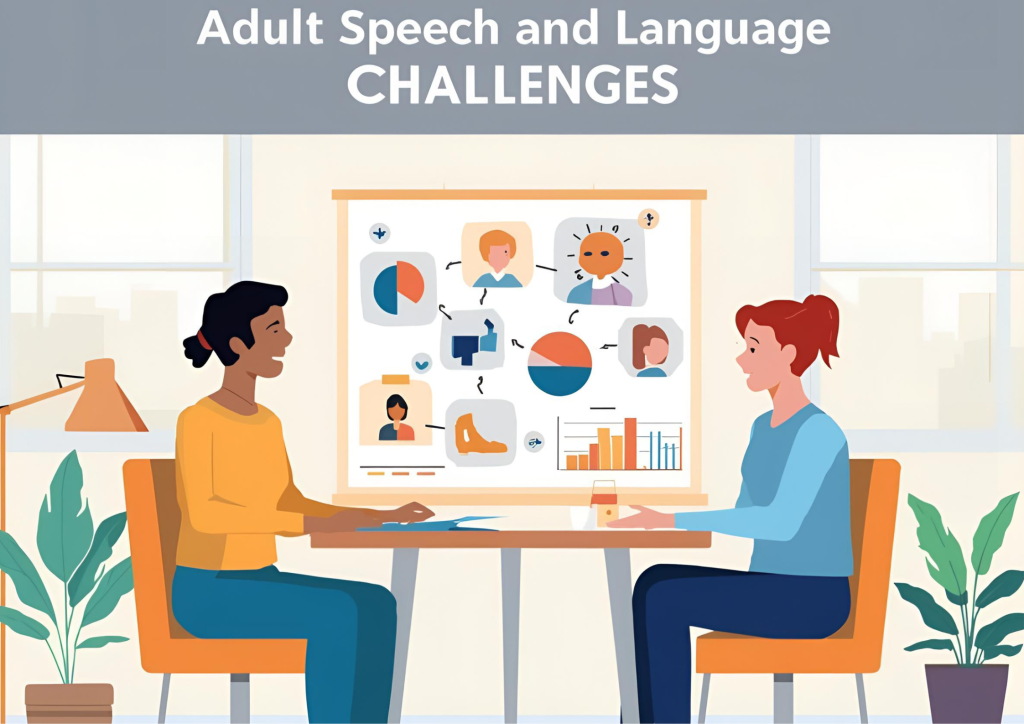
Understanding Adult Speech and Language Challenges
Understanding Adult Speech and Language Challenges- ABLE UK
Speech and language difficulties in adults can appear for many different reasons. Some individuals may have faced these challenges since childhood, while others experience them after an illness or injury. The important thing to remember is that improvement is possible at any age.
One of the most common causes of adult speech challenges is stroke, which can lead to a condition known as aphasia. Aphasia affects a person’s ability to speak, understand language, or both. Other neurological conditions such as Parkinson’s disease, multiple sclerosis, or traumatic brain injuries can also affect how the brain and muscles work together to produce speech.
Some adults experience voice disorders caused by overuse, strain, or damage to the vocal cords. This is particularly common among teachers, singers, call center employees, or public speakers who rely heavily on their voice. Others may deal with stuttering or articulation issues that affect their confidence when communicating socially or professionally.
No matter the cause, the emotional impact of these challenges can be just as significant as the physical ones. People may start to avoid conversations, limit social gatherings, or feel misunderstood at work. Over time, these habits can lead to frustration, anxiety, and loss of self-esteem.
How Speech Therapy Supports Adults
Speech therapy for adults is a highly individualized process. It begins with a thorough assessment of how a person communicates, including their speech, language comprehension, voice quality, and cognitive communication skills. Based on this assessment, a speech-language pathologist (SLP) creates a plan that focuses on specific goals such as improving pronunciation, restoring language comprehension, or building vocal strength.
A major part of adult speech therapy involves retraining the brain and muscles involved in speech. For example, a person recovering from a stroke may practice exercises that strengthen the tongue and lips, improve breath control, or help the brain form new pathways for communication.
For voice disorders, therapy may include vocal hygiene techniques and breathing exercises that reduce strain and improve vocal endurance. Adults who stutter may work on rhythm and pacing, learning strategies to reduce tension and maintain natural speech flow.
Beyond the technical exercises, speech therapy also builds confidence and emotional resilience. Many adults underestimate how empowering it can be to rediscover their voice and use it freely again. Speech therapy sessions often include role-playing real-life scenarios such as making a presentation, ordering food, or answering questions in a meeting to help clients transfer new skills into everyday situations.
The Role of Speech Therapy in a Multilingual City Like Dubai
Dubai’s population is incredibly diverse. With so many languages spoken, communication differences are part of daily life. However, this environment can sometimes make speech or language challenges more noticeable.
For example, an adult who speaks English as a second language may already feel uncertain about pronunciation or accent. If that person also struggles with speech fluency after a stroke or due to stuttering, the impact on their professional and social life can be significant.
Speech therapy in Dubai often focuses not only on rehabilitation but also on clear communication across multiple languages and accents. Therapists help individuals adapt speech patterns, learn strategies to be understood more easily, and gain the confidence to participate fully in conversations whether at work, at social events, or during daily interactions.
This emphasis on practical communication is one of the reasons adult speech therapy is becoming more widely recognized across the region.
When to Consider Speech Therapy as an Adult
Many adults assume speech therapy is only for severe cases. However, there are many reasons someone might benefit from professional support, including:
- Difficulty finding or forming words after a stroke or brain injury
- Trouble pronouncing certain sounds or speaking clearly
- Changes in voice quality, such as hoarseness, weakness, or loss of volume
- Stuttering that causes frustration or avoidance of speaking situations
- Struggles with understanding or remembering spoken information
- Anxiety or self-consciousness about communication in multilingual settings
Seeking therapy early often leads to better outcomes. Even small, consistent improvements in clarity, rhythm, or confidence can have a huge impact on quality of life.
How Therapy Helps Rebuild Confidence
Beyond improving the mechanics of speech, therapy often helps rebuild something even more important — self-assurance. Adults who go through speech therapy often describe a renewed sense of identity. They feel more comfortable in social and professional settings, more understood, and more capable of expressing ideas without hesitation.
Confidence is built gradually through personalized exercises and encouragement. Many speech therapists also incorporate cognitive and emotional strategies, helping individuals cope with frustration, practice mindfulness, and celebrate progress. These positive experiences can reduce anxiety, making communication feel natural again.
Speech therapy is not just about “fixing” speech; it’s about empowering people to communicate in a way that feels authentic and effective.
Technology and Modern Approaches in Adult Speech Therapy
Modern speech therapy is far more than repetitive drills or worksheets. Technology now plays a vital role in supporting therapy outcomes.
Apps, teletherapy platforms, and specialized software allow individuals to practice speech exercises at home and track progress between sessions. Virtual sessions are especially valuable in Dubai, where busy schedules and traffic can make in-person appointments challenging.
Therapists also use biofeedback tools to help clients visualize their voice and articulation patterns. Seeing progress on a screen often motivates adults to continue working toward their goals.
The key, however, remains the human connection. The collaboration between the therapist and the individual. Technology enhances therapy, but empathy, trust, and encouragement are what truly make the process meaningful.
Supporting Emotional and Social Well-Being
Communication is deeply tied to emotional health. When adults cannot express themselves clearly or feel misunderstood, it can lead to isolation and frustration. Speech therapy helps restore not just speech, but connection.
Therapists often address emotional aspects during sessions, creating a safe and understanding environment where adults can speak without fear of judgment. Support groups and peer interactions can also play a powerful role in healing. Sharing experiences with others facing similar challenges reinforces the idea that progress is always possible.
Taking the First Step Toward Better Communication
Admitting that help is needed is often the hardest part. Adults may feel embarrassed or believe it’s too late to make progress. The truth is that the brain retains its ability to learn and adapt throughout life. With the right guidance, adults can improve clarity, expression, and confidence at any age.
The first step is usually a speech and language evaluation, where the therapist listens carefully, identifies specific challenges, and recommends a personalized plan. From there, consistent practice and patience become the foundation for success.
Over time, small victories — a clear phone conversation, an effortless meeting, a relaxed dinner with friends — become powerful reminders of progress.
Why It Matters
Speech therapy for adults is not just about communication; it’s about quality of life. Every voice deserves to be heard, and every person deserves to express themselves with confidence.
For adults in Dubai, where language and connection define much of daily life, speech therapy can mean the difference between silence and participation, hesitation and self-assurance, isolation and community.
Every word, every conversation, and every smile exchanged builds the bridge back to confidence, one sound, one session, one success at a time.
