Empowering Connections: How Speech Therapy Builds Lifelong Social Communication Skills
Empowering Connections: How Speech Therapy Builds Lifelong Social Communication Skills
Human connection relies entirely on our ability to share ideas, express feelings, and understand the intentions of those around us. While speech involves the physical production of sounds, communication encompasses a much broader landscape. It includes the unspoken rules of conversation, the ability to read facial expressions, the rhythm of back-and-forth dialogue, and the capacity to adapt language to different social settings. For many individuals, navigating these nuances does not come naturally. This is where dedicated support makes a profound difference, particularly through specialized Speech Therapy Dubai programs designed to bridge the gap between speech production and meaningful social interaction.
Understanding social communication requires looking beyond words. It involves recognizing how language is used dynamically within a community. When a person struggles to interpret social cues or find the right words during a conversation, it can lead to frustration, isolation, and a lack of confidence. By focusing on pragmatic language skills, professional therapy helps individuals unlock the doors to deeper friendships, smoother academic experiences, and more fulfilling daily interactions.
The True Essence Of Social Communication
Social communication, often referred to in professional settings as pragmatics, is the engine that drives our daily interactions. It governs how we talk to one another, how we alter our tone depending on our audience, and how we follow the unwritten laws of storytelling and dialogue.
Consider the vast difference between speaking to a close friend at a park and speaking to a teacher in a classroom. A skilled communicator instinctively knows to adjust their vocabulary, volume, and formality based on the context. For those who face challenges in this area, however, every interaction can feel like navigating an unfamiliar terrain without a map.
The Core Components of Pragmatic Language
To understand how therapy helps, it is useful to look at the three primary elements that make up social communication:
- Using Language for Different Purposes: This includes greeting someone, informing a peer about an event, demanding a turn during a game, or promising to do something.
- Changing Language According to the Listener or Situation: This involves speaking differently to a toddler than to an adult, or providing background context to a stranger compared to a family member who already knows the story.
- Following Conversational Rules: This covers the rhythm of dialogue, such as taking turns, staying on topic, rephrasing a statement when misunderstood, and using non-verbal cues like eye contact and body language.
When any of these components are disrupted, a person may struggle to maintain relationships or feel misunderstood. Dedicated speech and language interventions focus heavily on these areas to ensure that individuals do not just speak clearly, but truly connect with others.
Recognizing The Signs That Support Is Needed
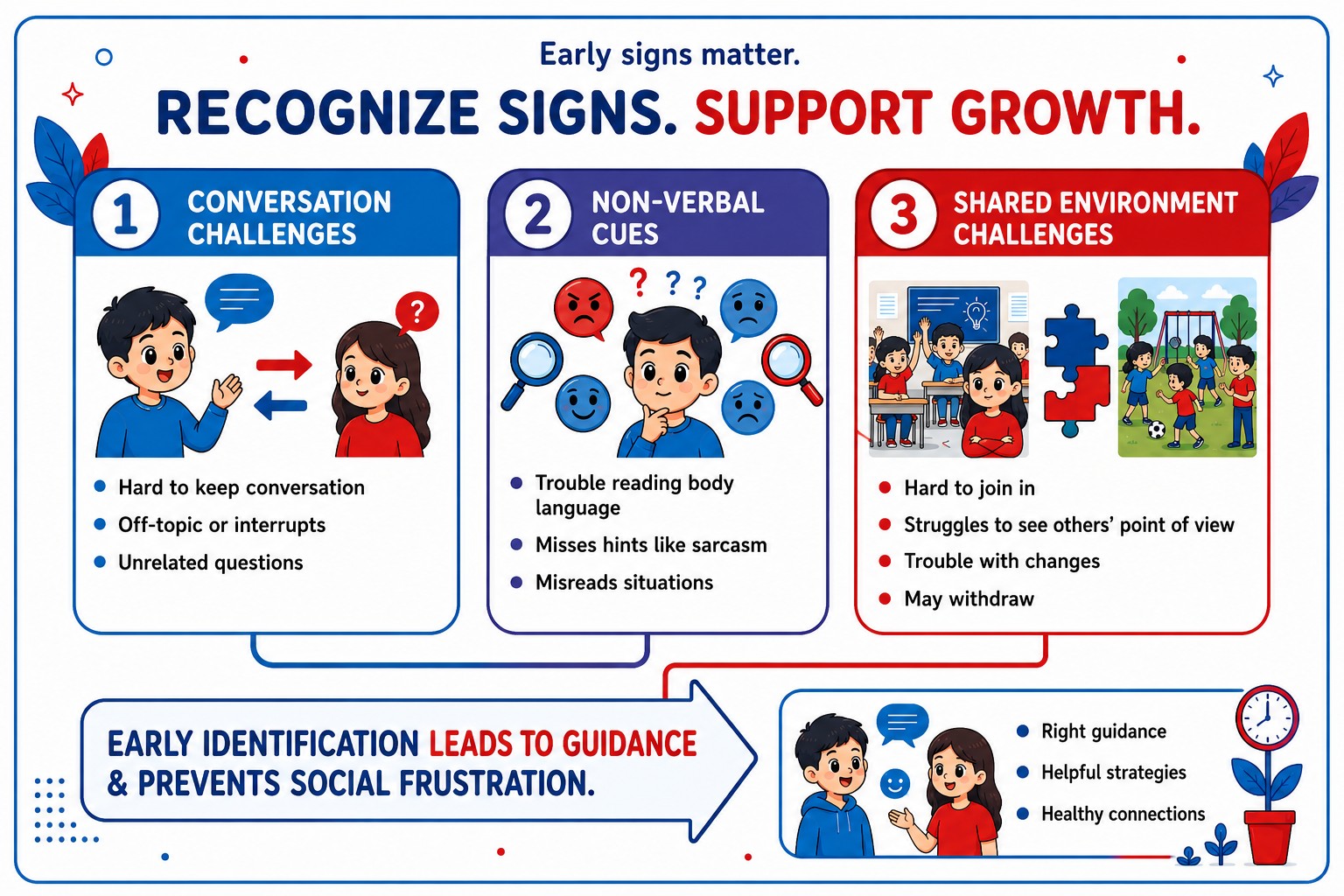
Every person develops at their own unique pace, but certain patterns indicate that an individual might benefit from targeted speech support. Identifying these signs early allows families to seek the right guidance and introduce strategies that prevent social frustration from growing over time.
Difficulties With Conversational Flow
One of the most common signs is an inability to maintain a balanced conversation. An individual might dominate a discussion without realizing their partner has lost interest, or they may struggle to contribute altogether. They might frequently interrupt, change the topic abruptly to a preferred interest, or provide answers that are completely unrelated to the question asked.
Misinterpreting Non-Verbal Cues
A significant portion of human communication is non-verbal. Recognizing a furrowed brow, a shrug of the shoulders, or a sigh helps us gauge how our words are being received. When someone struggles with social communication, they often take language literally and miss these subtle hints. Sarcasm, humor, and figures of speech can become confusing, leading to misinterpretations that strain social bonds.
Challenges In Shared Environments
In group settings, such as school classrooms or community playgrounds, these challenges become more apparent. An individual might find it difficult to join a group game, understand the perspective of a peer during a disagreement, or adapt to changes in a structured activity. Over time, these difficulties can cause a person to withdraw from social situations altogether, making proactive intervention incredibly valuable.
Recognize Signs Support Growth
The Role Of Professional Speech Therapy
A common misconception is that speech therapists only help people who struggle to articulate specific letters or sounds. While articulation is certainly a component, modern speech therapy addresses the entire spectrum of language and communication. Through individualized assessment and evidence-based approaches, professionals create pathways for individuals to practice and master social interactions in safe, supportive environments.
Comprehensive Assessments Tailored To Individual Needs
Effective therapy always begins with a deep, holistic look at an individual’s current strengths and areas for growth. A therapist evaluates how a person uses language across various settings, analyzing both verbal output and non-verbal understanding. This assessment serves as a blueprint, allowing the therapist to craft a customized plan that aligns with the family’s goals and the individual’s lifestyle.
Structuring Play And Interactive Learning
For younger individuals, therapy is rarely about sitting at a desk and repeating words. Instead, it is built around structured play and interactive activities. Because play mimics real-world socialization, it provides the perfect canvas for learning. Therapists use games, collaborative building projects, and imaginative play to teach sharing, turn-taking, and cooperative problem-solving. This approach ensures that learning feels natural, joyful, and deeply engaging.
Practical Strategies Used In Modern Therapy
Therapists employ a variety of creative, proven techniques to help individuals build confidence in their communication skills. These methods are designed to break complex social interactions down into manageable, understandable steps.
Visual Schedules and Social Stories
Visual aids are incredibly powerful tools for teaching social expectations. Social stories are short, personalized narratives that describe specific social situations, what to expect, and how to respond appropriately. For example, a story might walk an individual through the steps of joining a group of peers at recess or handling a situation where they lose a game. By reviewing these stories regularly, individuals learn to anticipate social scenarios and feel more prepared to navigate them.
Role Playing And Scripting
For older children and adolescents, role-playing provides a safe space to practice real-life conversations before they happen. A therapist might act as a store cashier, a new classmate, or a teacher, allowing the individual to practice greetings, asking for assistance, or making small talk. Scripting offers a temporary framework of sentences that individuals can use as a starting point, giving them a sense of security as they build the confidence to create their own spontaneous responses.
Video Modeling
Video modeling involves watching a short clip of positive social interactions to observe ideal communication behaviors. This could include watching how peers make eye contact, how they wait for a pause before speaking, or how they express empathy when a friend is upset. Seeing these behaviors modeled clearly helps individuals visualize the desired outcomes and mimic them in their own lives.
Expanding Skills Into The Wider Community
For therapy to be truly successful, the skills learned in a clinic setting must transition smoothly into daily life. This process of generalization requires collaboration between therapists, families, and educators. When looking for Speech Therapy Dubai options, it is essential to choose a provider that values community integration and provides families with the tools to support development at home.
Creating Communication Opportunities At Home
Families play an indispensable role in reinforcing the lessons taught during therapy sessions. Incorporating communication practice into daily routines does not require extra time; rather, it requires intentionality.
- Family Meal Times: Use this time to practice turn-taking in conversation. Pass an object around the table, and whoever holds the object gets to share a highlight of their day while everyone else listens.
- Board Games: Playing structured games helps reinforce the concept of following rules, managing the disappointment of losing, and celebrating a peer’s victory gracefully.
- Shared Reading: While reading a book together, pause to ask questions about the characters’ emotions. Ask questions like, “How do you think they feel right now?” or “What do you think they will do next?” This builds empathy and perspective-taking.
Partnering With Educational Institutions
Schools are the primary social arena for children and teenagers. When therapists collaborate with teachers and school counselors, they can ensure that the individual receives consistent support throughout the day. Educators can implement small accommodations, such as pairing the student with a supportive communication partner during group work or providing visual reminders of conversational rules on their desk.
The Emotional Impact Of Enhanced Communication
The benefits of strengthening social communication extend far beyond the mechanics of speech. When an individual gains the ability to express their inner thoughts and understand the world around them, their emotional well-being transforms.
Boosting Self-Esteem And Confidence
Struggling to communicate can be incredibly isolating, often leading to feelings of inadequacy. As an individual masters new conversational skills, they experience a surge in self-esteem. They become more willing to raise their hand in class, voice their opinions, and participate in community events. This newfound confidence creates a positive feedback loop, encouraging them to seek out more social interactions.
Reducing Anxiety and Frustration
Behavioral challenges often stem from a breakdown in communication. When a person cannot explain what is wrong or feels misunderstood, they may express their frustration through withdrawal or outbursts. By providing them with the functional language tools they need, therapy dramatically reduces this underlying anxiety. It gives individuals a peaceful, constructive way to advocate for themselves and process big emotions.
Fostering Deep, Lasting Friendships
At its core, communication is the foundation of friendship. Belonging to a peer group, sharing jokes, and having a confidant are essential experiences for a rich and happy life. By refining pragmatic language skills, speech therapy helps individuals build and maintain meaningful relationships, ensuring they feel connected to the vibrant community around them.
Nurturing A Supportive Environment For Growth
Building robust social communication skills is a journey that requires patience, celebration of small victories, and consistent encouragement. Every milestone achieved, whether it is a child making spontaneous eye contact or an adolescent successfully ordering their own meal at a restaurant, is a step toward a more independent and connected future.
With the right professional guidance and a dedicated support system, every individual can discover the joy of meaningful conversation. If you are seeking specialized care to help your loved one thrive socially and academically, exploring comprehensive speech services is a beautiful place to start. Embracing this journey opens up a world of possibilities, helping individuals express their unique voices and build beautiful connections that last a lifetime.
