Empowering Early Development The Life-Changing Benefits of Early ABA Therapy for Kids in Dubai
Empowering Early Development The Life-Changing Benefits of Early ABA Therapy for Kids in Dubai
Every parent wishes to see their child thrive, communicate effectively, and navigate the world with confidence. When a young child shows signs of developmental delays or displays unique learning and behavioral profiles, it is natural for families to seek the absolute best support available. The early years of a child’s life represent a uniquely critical window of time. During this period, the brain possesses an extraordinary capacity to adapt, form new connections, and learn foundational skills that set the stage for long-term independence.
Applied Behavior Analysis, commonly known as ABA therapy, stands out as one of the most thoroughly researched and effective approaches to supporting children with developmental differences. When introduced early in life, this structured yet deeply personalized framework can completely transform a child’s developmental trajectory. By focusing on positive reinforcement, meaningful skill-building, and personalized learning goals, early intervention provides young learners with the tools they need to connect with their families, express their feelings, and interact with the world around them.
For families exploring options for ABA therapy for kids Dubai offers a supportive and highly sophisticated community of professionals dedicated to nurturing these unique developmental paths. Understanding how early behavior analysis works, why timing is so crucial, and how it directly impacts a child’s daily life can help families make informed, confident choices for their child’s future.
The Power of the Early Years and Neural Plasticity
To truly appreciate the value of early intervention, it helps to understand how a child’s brain grows. In the first few years of life, the brain undergoes a massive burst of development. It builds millions of neural connections every single second. This phenomenon is known as neural plasticity, meaning the brain is highly adaptable, flexible, and responsive to environmental experiences.
Because the young brain is so receptive, learning new behaviors and communication patterns is much easier during these early stages than it is later in life. When a child receives targeted, positive guidance through ABA therapy at an early age, practitioners can help guide this rapid brain growth toward positive, adaptive habits.
Waiting until a child is older often means that challenging behavioral habits or communication barriers have become more deeply ingrained. Breaking down these established patterns requires significantly more time and effort. Early intervention essentially takes advantage of a biological golden window, making it the ideal time to introduce foundational learning concepts that will serve the child for the rest of their life.
Understanding the Core Philosophy of Applied Behavior Analysis
At its heart, ABA therapy is not about changing who a child is. Rather, it is about understanding why certain behaviors happen and using that understanding to teach useful, life-enhancing skills. Behavior is a form of communication. When a young child screams, throws a toy, or shuts down, they are trying to express a need or respond to an environment that feels overwhelming.
An experienced behavior analyst looks closely at what happens right before a behavior occurs and what happens immediately afterward. By modifying these factors, therapists can encourage positive behaviors while gently reducing behaviors that might hold the child back or cause them distress.
The cornerstone of this approach is positive reinforcement. When a child attempts a new skill or uses a safe, helpful behavior to express themselves, they receive meaningful praise, a favorite toy, or an engaging activity. This makes the child want to repeat the positive behavior. Over time, these small, reinforced successes build into complex, life-changing skills.
Nurturing Communication and Language Skills
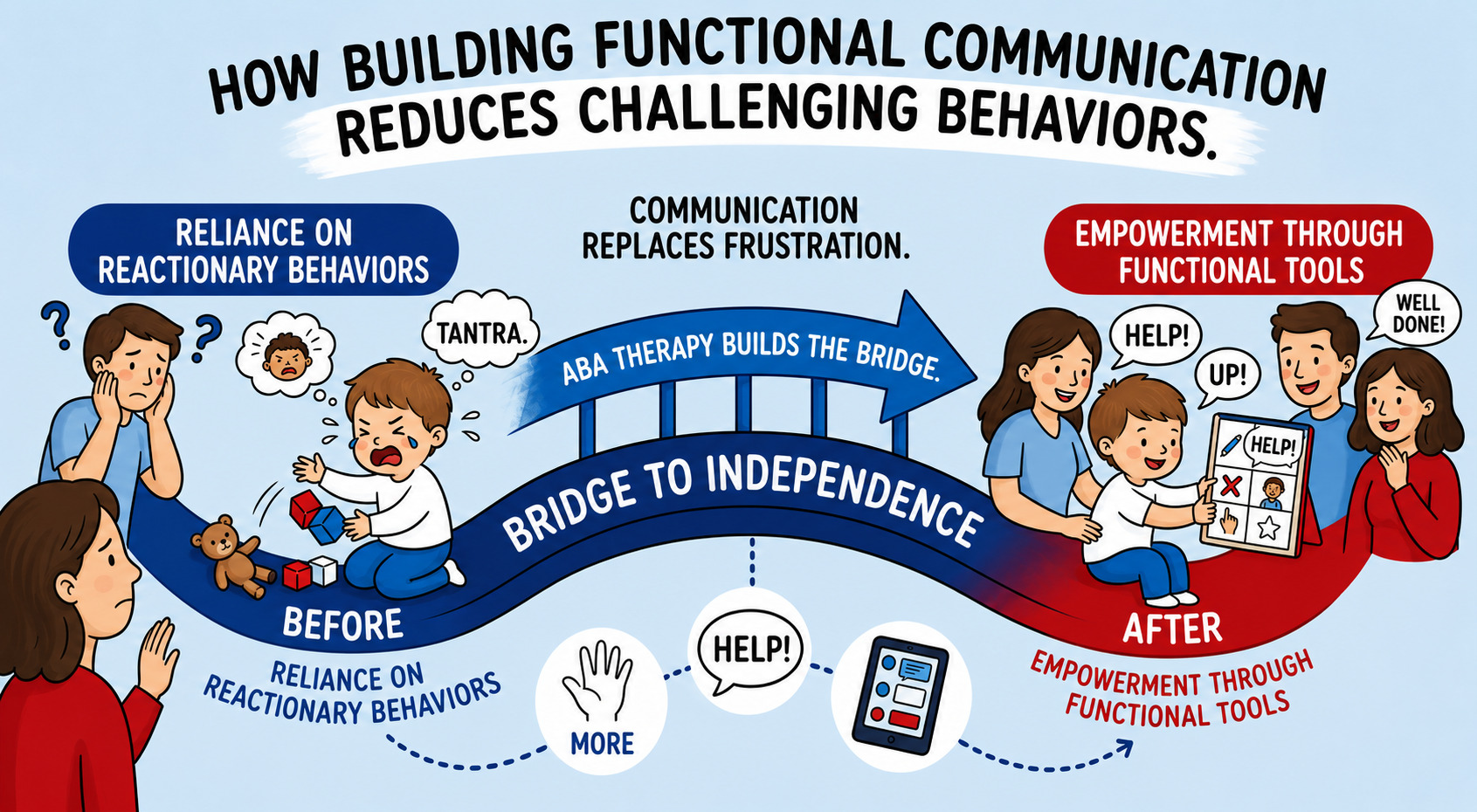
One of the most profound benefits of early behavioral support is the rapid acceleration of communication skills. Many young children with learning variations struggle to express their wants, needs, feelings, and ideas. This communication gap is frequently the root cause of daily frustrations, tantrums, and emotional distress for both the child and their parents.
Early behavior analysis breaks down communication into tiny, achievable steps. Depending on the child’s current developmental level, this might start with teaching simple eye contact, gesturing, pointing, or vocalizing sounds. For children who are ready, it expands into using functional words, forming full sentences, or using alternative communication tools like picture exchange systems or speech-generating devices.
By focusing heavily on functional communication, early intervention directly reduces a child’s frustration. When a young learner discovers that they can use a word or a sign to successfully ask for a snack, a break, or a favorite toy, the need to use challenging behaviors completely drops away. They learn that their voice has power, which builds immense confidence and a desire to connect deeper with those around them.
Building Essential Social Connections and Play Skills
Play is the primary language of childhood. It is how children explore their environments, learn problem-solving skills, use their imaginations, and make their very first friends. However, for many neurodivergent children, knowing how to play with toys or interact with peers does not always come naturally. They might prefer to play in repetitive ways or struggle to join in with other children.
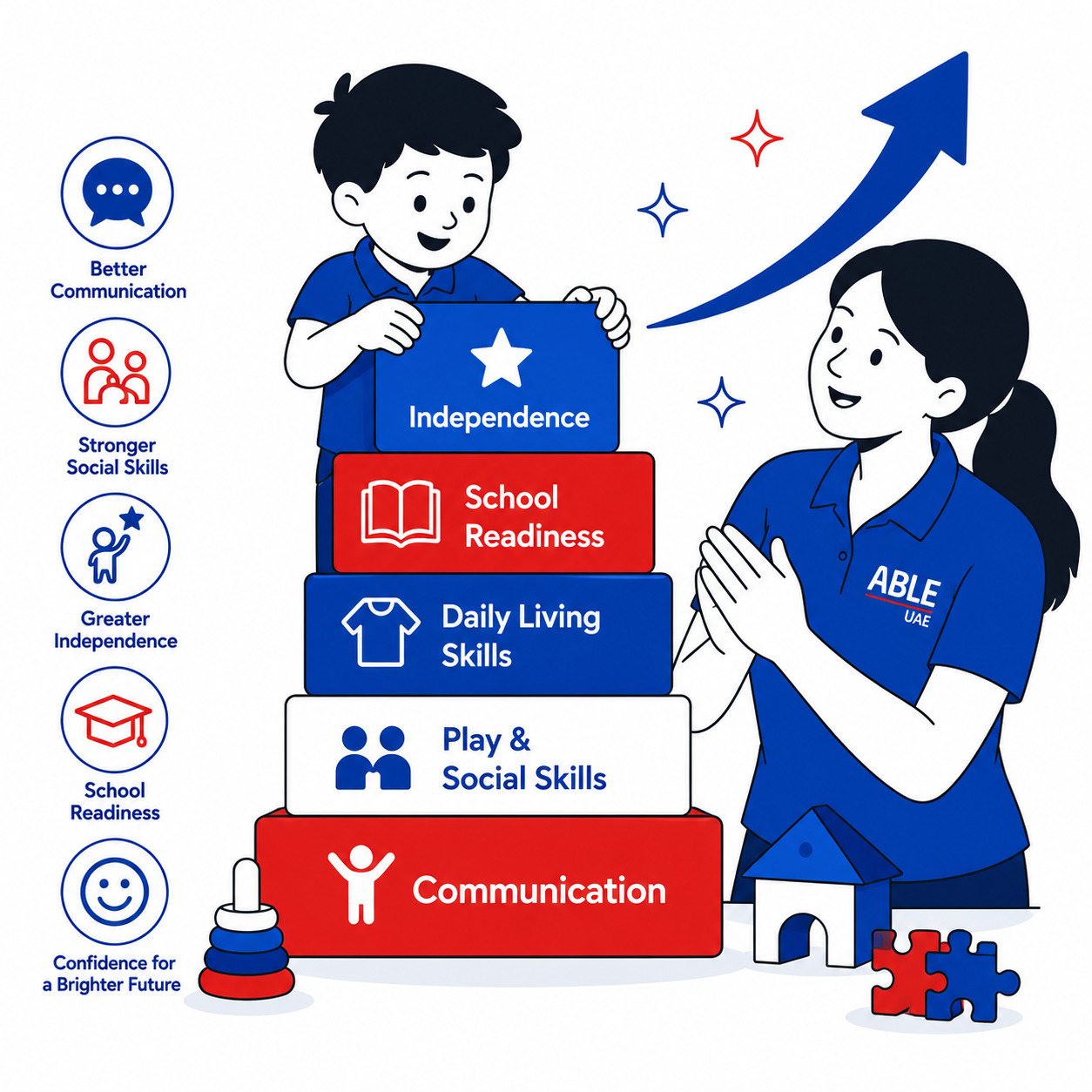
Early behavioral programs place a major emphasis on teaching play and social skills in a warm, natural environment. Therapists work on skills such as sharing and taking turns with toys, imitating the playful actions of others, understanding and responding to social cues, sustaining attention on a shared activity with a peer, and transitioning smoothly from one game to another.
When children learn these foundational social pieces early on, transitioning into nursery or early school settings becomes a much smoother, happier experience. They are equipped with the social tools needed to form meaningful friendships, interact with classmates, and feel like an active, included participant in group settings.
Enhancing Independence in Daily Living Activities
A major goal for any family is to see their child grow into an independent individual capable of managing daily life with ease. Early behavioral intervention does not just focus on academic or cognitive milestones; it places a massive value on practical daily living skills.
When a child is young, teaching self-care habits sets a baseline for lifelong autonomy. ABA programs systematically break down daily routines into simple, manageable actions through a process called task analysis. This includes everyday tasks such as dressing and undressing independently, following a healthy toilet training routine, washing hands and brushing teeth thoroughly, using utensils properly during mealtimes, and tidying up toys after playtime is finished.
By mastering these habits early, children build a strong sense of personal capability. They rely less on continuous parental prompts and learn to take pride in taking care of themselves. This early independence brings immense relief and joy to the entire family unit, making daily schedules feel much more harmonious and organized.
Preparing for Success in Academic Environments
As children approach school age, the demands placed on them increase significantly. A classroom requires a child to sit still for periods of time, focus on a teacher’s instructions, follow group schedules, and manage transitions between different subjects or classrooms. For a young child with unique learning needs, this can feel incredibly overwhelming without the right preparation.
Early behavioral therapy acts as a preparatory bridge to the school environment. Therapists work diligently to build classroom-readiness skills, which include learning how to follow multi-step instructions, sitting attentively at a desk or during circle time, raising a hand to speak, and managing internal frustrations when a task feels challenging.
By simulating these classroom experiences in a highly supportive, low-stress therapeutic setting, children build the stamina and coping mechanisms necessary to handle the school day. When they finally step into a formal educational environment, they are already familiar with the expectations of learning, allowing them to focus on academic concepts and peer interactions rather than feeling stressed by the environment itself.
The Vital Role of Collaborative Family Support
An exceptional early intervention program never views the child in isolation. True, lasting progress happens when therapy extends beyond the walls of the center and flows naturally into the home and community. This is why parent training and collaborative family support are absolutely vital components of successful behavioral therapy.
Parents are a child’s first and most important teachers. Early intervention programs empower families by teaching them the exact same strategies, positive reinforcement techniques, and communication prompts that the therapists use. This shared approach ensures that the child experiences consistency across all environments.
When parents understand how to respond to behaviors at home, during grocery shopping trips, or while visiting relatives, the child generalizes their new skills much faster. It transforms the family dynamic from one filled with uncertainty or stress to one rooted in mutual understanding, confidence, and shared celebration of every single milestone achieved.
Choosing Quality Specialized Support in Dubai
As a vibrant, global hub, Dubai has made incredible strides in providing world-class therapeutic services for children with diverse learning profiles. Families seeking options for ABA therapy for kids Dubai are met with highly dedicated professionals who utilize culturally sensitive, innovative, and deeply compassionate approaches to care.
When selecting a provider, it is essential to look for a team that prioritizes a highly individualized, holistic approach. No two children are exactly alike, and a cookie-cutter program will never yield the profound results that a tailor-made plan can. The right environment should feel warm, welcoming, and safe, ensuring that the child looks forward to their sessions and views learning as a joyful, rewarding experience.
Investing in early intervention within a supportive community means giving your child access to comprehensive care that looks at the whole individual, celebrates their unique strengths, and carefully guides them through their specific challenges.
Looking Forward to a Brighter and More Independent Future
The decision to begin early behavioral therapy is an act of profound love and dedication. While navigating developmental challenges can sometimes feel like an emotional journey for a family, the long-term benefits of taking proactive steps during a child’s earliest years are truly unparalleled.
Through the gentle, evidence-based practices of early behavioral analysis, children learn to navigate their worlds with greater clarity, confidence, and joy. They discover the beauty of communication, the thrill of mastering a new daily skill, and the happiness that comes from connecting deeply with friends and family. By embracing early intervention, families unlock a world of potential, paving a clear, bright path toward a lifetime of independence, success, and fulfillment.
