
Everyday Wins That Transform Small Moments with Occupational Therapy
Everyday Wins That Transform Small Moments with Occupational Therapy
Childhood is a busy job. A child’s success isn’t just measured by report cards or sports trophies; it’s built on a thousand small, often unnoticed accomplishments that fill their day. It’s the moment they manage to zipper their jacket independently after recess, the calm focus they show while copying letters, or their ability to cope with the surprising texture of a new food without getting upset. When the seemingly effortless tasks of childhood become sources of stress or struggle, the entire family feels the weight. These moments signal that a child needs targeted support to bridge the gap between their developmental stage and the demands of their world.
This is the profound domain of Occupational Therapy (OT). OT isn’t about finding a career; it’s about finding success in a child’s “occupation,” or their daily life activities, which include playing, learning, socializing, and caring for themselves. For many families seeking specialized care, especially at centers offering comprehensive support, OT provides the crucial link between a child’s inner developmental needs and their outward performance in the real world. It transforms moments of stress into moments of subtle, everyday triumph.
Therapists work with the core belief that every child can thrive when their environment and skills are aligned. This is achieved through purely behavioral and educational strategies that address sensory processing, motor planning, and emotional regulation, steering clear of any compounds or substances. It’s an approach that focuses on building capability from the ground up, turning frustration into functional independence.
The Hidden World of Sensory Processing
One of the most powerful and often misunderstood areas of OT is sensory integration. Children constantly take in information through their eight senses (not just the traditional five, but also vestibular, which governs balance and movement, and proprioception, which governs body awareness and muscle input). For some children, this input is confusing, overwhelming, or under-stimulating.
Imagine trying to focus on a math problem while feeling like your clothes are made of sandpaper, or hearing every tiny noise as loud as a siren. This is the daily reality for a child with sensory processing challenges. OT addresses these fundamental issues by providing a structured, supportive environment, often utilizing specialized spaces like sensory gyms.
At ABLE UK, this philosophy comes to life in our state-of-the-art Occupational Therapy Gym — a purpose-built environment designed to nurture functional, sensory, and motor development in a safe, engaging way. Every corner of the space is thoughtfully equipped to encourage exploration and growth, from sensory swings and climbing structures to fine motor activity zones. Here, children can move, play, and learn through experiences tailored to their unique needs, all under the guidance of skilled therapists who transform therapeutic exercises into joyful, confidence-building moments.
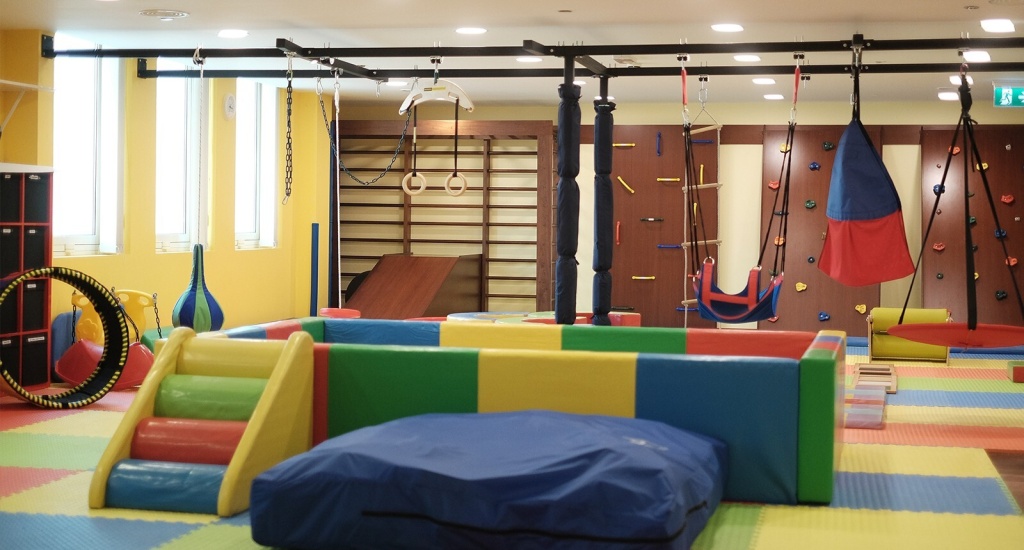
Occupational Therapy Gym- ABLE UK
In these environments, therapists use purposeful activities, like swinging, deep pressure, or specific tactile games, to help the child’s nervous system organize and respond appropriately to sensory input. This work isn’t about play for its own sake. It is essential brain and body work that supports coordination, focus, and emotional skills. The everyday wins resulting from this work are profound: a child who can now sit comfortably for dinner, tolerate the texture of new foods, or calmly enter a noisy school hallway without becoming overwhelmed. These small changes lead to massive gains in quality of life.
Motor Skills and Functional Independence
Occupational Therapy is the roadmap to functional independence. This involves all the tasks a child needs to master to navigate their day successfully. Therapists break these complex skills down into achievable steps, focusing on three major areas:
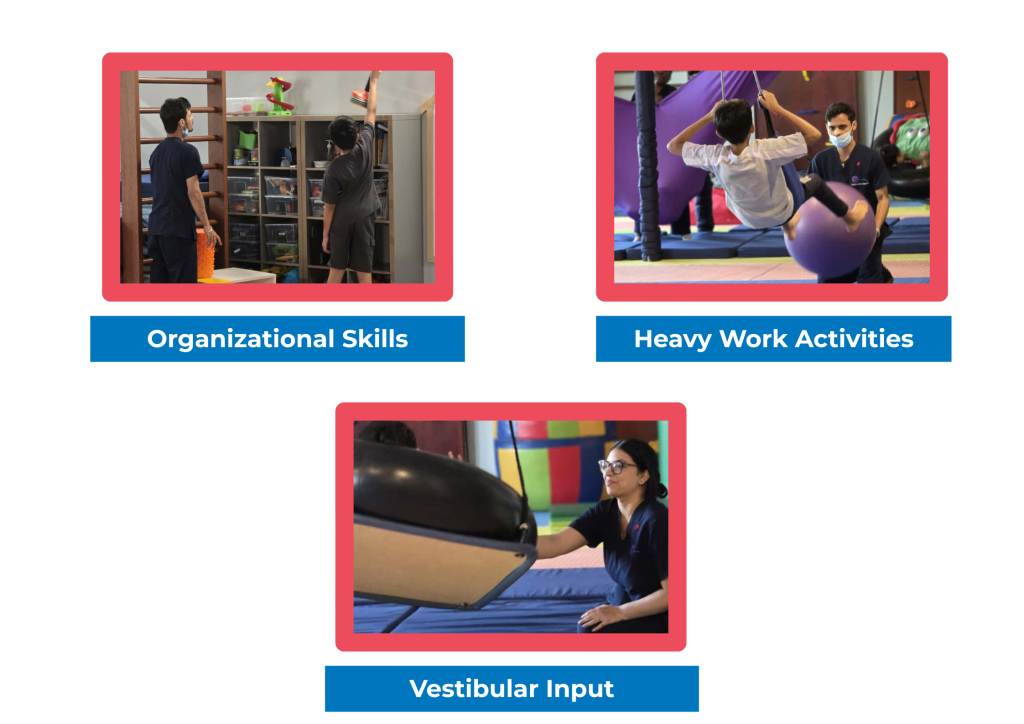
Motor Skills and Functional Independence- ABLE UK
- Organizational Skills: These are the small, precise movements required by the hands and fingers, essential for tasks like writing, drawing, cutting, and manipulating small toys. If a child has weak hand muscles or poor coordination, holding a pencil or using scissors becomes exhausting, leading to avoidance and learning delays. OT strengthens these independence skills through playful, targeted activities, building the endurance and dexterity required for academic success. The win here is a child who can confidently write their own name or manage their own backpack.
- Heavy Work Activities: These involve the larger movements of the arms, legs, and torso, which are necessary for balance, coordination, and physical play. A child might struggle with running, climbing, or even staying seated upright at a desk if their core strength is low. OT provides activities, often involving movement through their spacious therapy gyms, that support motor development and body awareness. These are essential for navigating a playground safely and participating in physical education.
- Vestibular Input: This is the complex coordination between what the eyes see and what the body does. These skills are vital for copying notes from a whiteboard, tracking words across a page while reading, or estimating how much pressure to use when throwing a ball. OT employs specific learning activities to refine these abilities, which are critical for smooth academic performance. The daily triumph is a child who can efficiently organize their belongings and locate items in a cluttered desk.
Emotional Regulation and Self-Control
Often, a child’s most challenging behaviors stem not from a willful defiance, but from an inability to manage intense feelings or energy levels. When a child can’t identify or regulate their sensory and emotional state, they may shut down, withdraw, or act out. This is where OT intersects powerfully with behavioral learning principles.
An Occupational Therapist works to provide children with tools for self-control and emotional skills before they reach a point of crisis. They teach calming strategies, helping the child recognize the signs of mounting frustration or anxiety in their own body. Using sensory tools, heavy work, or structured movement, the child learns to safely manage impulses and make smart choices.
For instance, an OT might teach a child that when they feel overwhelmed, going to a quiet corner and using a weighted blanket provides organizing input that helps them reset. This is a practical, transferable skill. The daily victory is a child who successfully uses a coping strategy to avoid a meltdown, allowing them to remain engaged in a learning or social activity. This shift from reactive crisis to proactive self-management is arguably the most valuable outcome of therapy.
A Holistic and Family-Centered Approach
Effective therapy recognizes that a child exists within a family system. Specialized centers committed to providing expert care always emphasize a family-centered care model. This means that therapy isn’t confined to the clinic; it must be integrated into everyday routines for lasting success.
Occupational Therapists spend significant time coaching parents and caregivers. They teach practical strategies for simplifying daily tasks, modifying the home environment, and continuing skill-building activities during playtime. They show parents how to turn a difficult transition, such as bath time or bedtime, into a predictable, regulating routine. This partnership empowers the family with the confidence and knowledge needed to support their child’s growth every step of the way.
The goal is to foster independence and confidence through continuous, small successes. It is a slow, steady, dedicated effort. There is no quick fix or single compound that can replace the work of development. Instead, it is the patient, consistent application of strategies that builds the neurological pathways for lasting change. The reward is seeing a child achieve a meaningful level of independence, whether it’s managing a tricky zipper, enduring a haircut without distress, or making a new friend on the playground. These are the everyday wins that truly transform a child’s life and the daily reality of their family.
