From First Words to Confident Conversations Through Speech Therapy
From First Words to Confident Conversations Through Speech Therapy
A child’s first words are moments parents never forget. Whether it is a soft “mama,” an excited attempt at naming a favorite toy, or a sound that resembles a word, those early efforts mark the beginning of communication. Over time, these first words grow into phrases, questions, stories, and conversations. For some children, this journey unfolds naturally. For others, speech and language development may take longer, bringing uncertainty and concern for families.
Speech therapy plays a vital role in supporting children along this path. It helps bridge the gap between early communication attempts and confident, meaningful conversations. Through structured guidance, encouragement, and personalized strategies, speech therapy empowers children to express themselves clearly and confidently in everyday life.
This article explores how speech therapy supports communication development from early childhood through later stages, why some children need extra help, and how families can be active partners in building strong communication skills.
Understanding Speech And Language Development
Speech and language development is a complex process that begins long before a child speaks their first word. Babies learn by listening, watching facial expressions, and responding to sounds around them. Long before words emerge, children communicate through eye contact, gestures, facial expressions, and vocal play.
As children grow, they begin to understand language before they can use it. They recognize familiar voices, respond to their name, follow simple directions, and gradually attach meaning to words. Speech emerges when children learn to coordinate breath, voice, and mouth movements to produce sounds that others can understand.
Every child develops at their own pace. Some children speak early and often, while others take more time to feel comfortable using words. Variation is normal, but when progress is significantly delayed or communication seems effortful, speech therapy can provide valuable support.
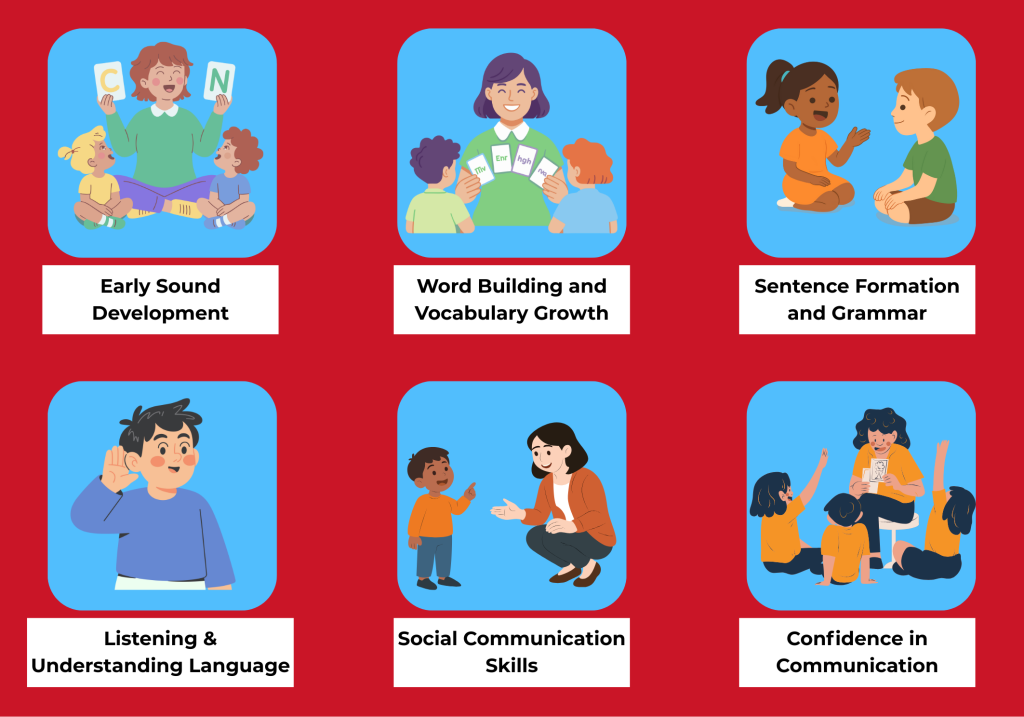
Key Areas Speech Therapy Supports As Children Grow
Key Areas Speech Therapy Supports As Children Grow- ABLE UK
- Early Sound Development
Helping children learn how to produce and combine sounds clearly, laying the foundation for understandable speech. - Word Building and Vocabulary Growth
Supporting children as they expand the number of words they use to express needs, thoughts, and emotions. - Sentence Formation and Grammar
Guiding children to connect words into meaningful phrases and sentences for clearer communication. - Listening and Understanding Language
Strengthening the ability to follow directions, answer questions, and understand spoken language in everyday situations. - Social Communication Skills
Teaching children how to take turns in conversation, maintain eye contact, and respond appropriately during interactions. - Confidence in Communication
Encouraging children to use their voice comfortably in different settings, from home to school and social environments.
When Communication Challenges Appear
Speech and language challenges can show up in different ways depending on the child’s age and needs. Some children may struggle to produce sounds clearly, while others have difficulty understanding language or forming sentences. For some, communication challenges affect social interactions, learning, or emotional expression.
Parents may notice signs such as limited vocabulary, unclear speech, difficulty combining words, challenges following instructions, or frustration during communication. Some children may rely heavily on gestures or avoid speaking altogether. Others may speak often but have trouble being understood.
These challenges are not a reflection of intelligence or motivation. Communication difficulties often stem from differences in how the brain processes language or how the muscles used for speech coordinate. Speech therapy focuses on strengthening these underlying skills rather than simply encouraging children to talk more.
The Role Of Speech Therapy In Early Communication
Speech therapy supports children from the earliest stages of communication. For young children, therapy may focus on building attention, listening skills, imitation, and understanding language. Therapists often use play-based activities that feel natural and engaging rather than structured drills.
Through play, children learn how sounds are formed, how words are used, and how communication works within social interactions. Therapists model clear speech, expand on a child’s attempts, and encourage turn-taking during play. This approach helps children feel successful and motivated to communicate.
Early support can make a meaningful difference. When children gain confidence using sounds and words, they are more likely to engage with others, explore language, and build stronger communication foundations.
Growing From Words To Sentences
As children develop, speech therapy evolves to match their growing abilities. Once children begin using words, therapy may focus on expanding vocabulary, combining words into phrases, and forming simple sentences. Children learn how to describe actions, ask questions, and express needs more clearly.
Speech therapists help children understand grammar in a way that feels practical rather than academic. Instead of focusing on rules, therapy emphasizes meaningful communication. Children practice language through storytelling, role play, games, and everyday conversation.
This stage is especially important for building confidence. When children can express their thoughts and needs clearly, frustration decreases and independence increases. Communication becomes a tool for connection rather than a source of stress.
Supporting Clear And Understandable Speech
Some children understand language well but struggle with pronunciation. They may leave out sounds, substitute one sound for another, or be difficult for others to understand. These speech sound challenges can affect confidence, especially as children begin school and interact with peers.
Speech therapy helps children learn how to produce sounds accurately. Therapists guide children through mouth movements, breath control, and sound placement in a supportive and encouraging way. Practice is introduced gradually, starting with individual sounds and progressing to words, sentences, and conversation.
Clear speech allows children to be understood by others, which strengthens social relationships and self-esteem. When children feel heard and understood, they are more willing to participate in conversations and classroom activities.
Building Confidence In Social Communication
Communication is not only about words and sounds. It also involves understanding social cues, taking turns in conversation, and adjusting communication based on the situation. Some children find these aspects challenging, even if their speech is clear.
Speech therapy addresses social communication by helping children practice real-life interactions. This may include learning how to start conversations, maintain topics, interpret facial expressions, and respond appropriately to others. Therapists often use role play and guided discussion to teach these skills in a safe and supportive environment.
As children develop stronger social communication skills, they feel more confident interacting with peers, teachers, and family members. Conversations become more natural and enjoyable rather than stressful or confusing.
The Emotional Impact Of Communication Challenges
Communication difficulties can affect a child’s emotional well-being. When children struggle to express themselves or feel misunderstood, they may become frustrated, withdrawn, or anxious. Over time, this can impact self-esteem and social participation.
Speech therapy supports emotional growth by helping children experience success in communication. Each improvement, no matter how small, reinforces the idea that their voice matters. Therapists also help children learn strategies for managing frustration and expressing emotions through words rather than behavior.
Parents often notice positive changes beyond speech. Children may become more confident, more willing to try new activities, and more engaged in social settings once communication becomes easier.
The Importance Of Family Involvement
Families play a crucial role in speech development. Speech therapy is most effective when strategies learned during sessions are reinforced at home. Therapists often work closely with parents to share techniques that can be used during daily routines.
Simple actions such as narrating activities, offering choices, reading together, and encouraging conversation during meals can support progress. Parents do not need to turn everyday life into a lesson. Natural, responsive communication is often the most powerful tool.
When families feel supported and informed, they become confident partners in their child’s communication journey. This collaboration helps children apply their skills across different environments and situations.
Supporting Communication Across Different Settings
Children use communication in many settings, including home, school, and social environments. Speech therapy helps ensure that skills transfer beyond the therapy room. Therapists may collaborate with teachers or provide guidance to help children use their communication skills consistently.
This approach supports long-term success. Children learn how to adjust their communication based on context, such as speaking differently with peers versus adults or participating in group discussions. These skills prepare children for academic success and social independence.
Progress Looks Different For Every Child
No two children follow the same path in speech therapy. Some progress quickly, while others need more time and practice. Progress may happen in small steps, such as increased attempts to speak, clearer pronunciation of certain sounds, or longer attention during conversation.
Speech therapy values these small milestones. Each step forward builds toward stronger communication. Therapists focus on consistent growth rather than perfection, helping children feel encouraged rather than pressured.
From Early Support To Lifelong Skills
Speech therapy does more than help children speak clearly. It equips them with lifelong communication skills that support learning, relationships, and self-expression. Children who feel confident communicating are better prepared to advocate for themselves, participate in discussions, and build meaningful connections.
Early support can prevent future challenges and create a strong foundation for academic and social success. Even when therapy begins later, children can still make meaningful progress that improves quality of life.
Final Thoughts
From first words to confident conversations, communication is a journey that shapes how children connect with the world. Speech therapy provides guidance, encouragement, and practical tools that help children find their voice and use it with confidence.
When children are supported with patience and understanding, communication becomes a source of joy rather than frustration. With the right support, every child has the potential to express themselves clearly, share their thoughts, and engage fully in the world around them.
