
How Occupational Therapy Encourages Better Coordination and Balance
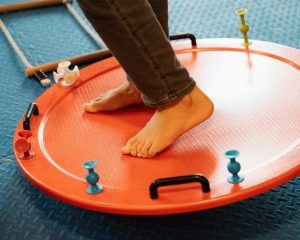
How Occupational Therapy Encourages Better Coordination and Balance
Whether recovering from an injury, managing a neurological condition, or supporting a child’s motor development, balance and coordination are the foundational pillars of smooth, independent movement. When these systems lag, simple tasks like buttoning a shirt, walking on uneven ground, or reaching for a grocery item can feel surprisingly challenging.
For individuals seeking specialized care, seeking occupational therapy in Dubai offers access to world-class clinics and tailored interventions that tackle these challenges head-on—retraining the brain and body to work together seamlessly during everyday tasks.
Whether recovering from an injury, managing a neurological condition, or supporting a child’s motor development, balance and coordination are the foundational pillars of smooth, independent movement. When these systems lag, simple tasks like buttoning a shirt, walking on uneven ground, or reaching for a grocery item can feel surprisingly challenging.
For individuals seeking specialized care, seeking occupational therapy in Dubai offers access to world-class clinics and tailored interventions that tackle these challenges head-on—retraining the brain and body to work together seamlessly during everyday tasks.
1. Targeting the Core Sensory Systems
Balance isn’t just about leg strength; it relies heavily on sensory feedback sent to the brain. Occupational therapists focus closely on two often-overlooked internal senses:
- Proprioception: The body’s “position sense,” which tells your brain where your limbs are in space without you having to look at them.
- The Vestibular System: Located in the inner ear, this system detects movement, head position, and spatial orientation, acting as your internal gyroscope.
How OT Helps: Therapists design activities that challenge these systems—such as standing on textured surfaces, utilizing foam pads, or performing visual tracking tasks while moving—to recalibrate how the brain processes spatial information.
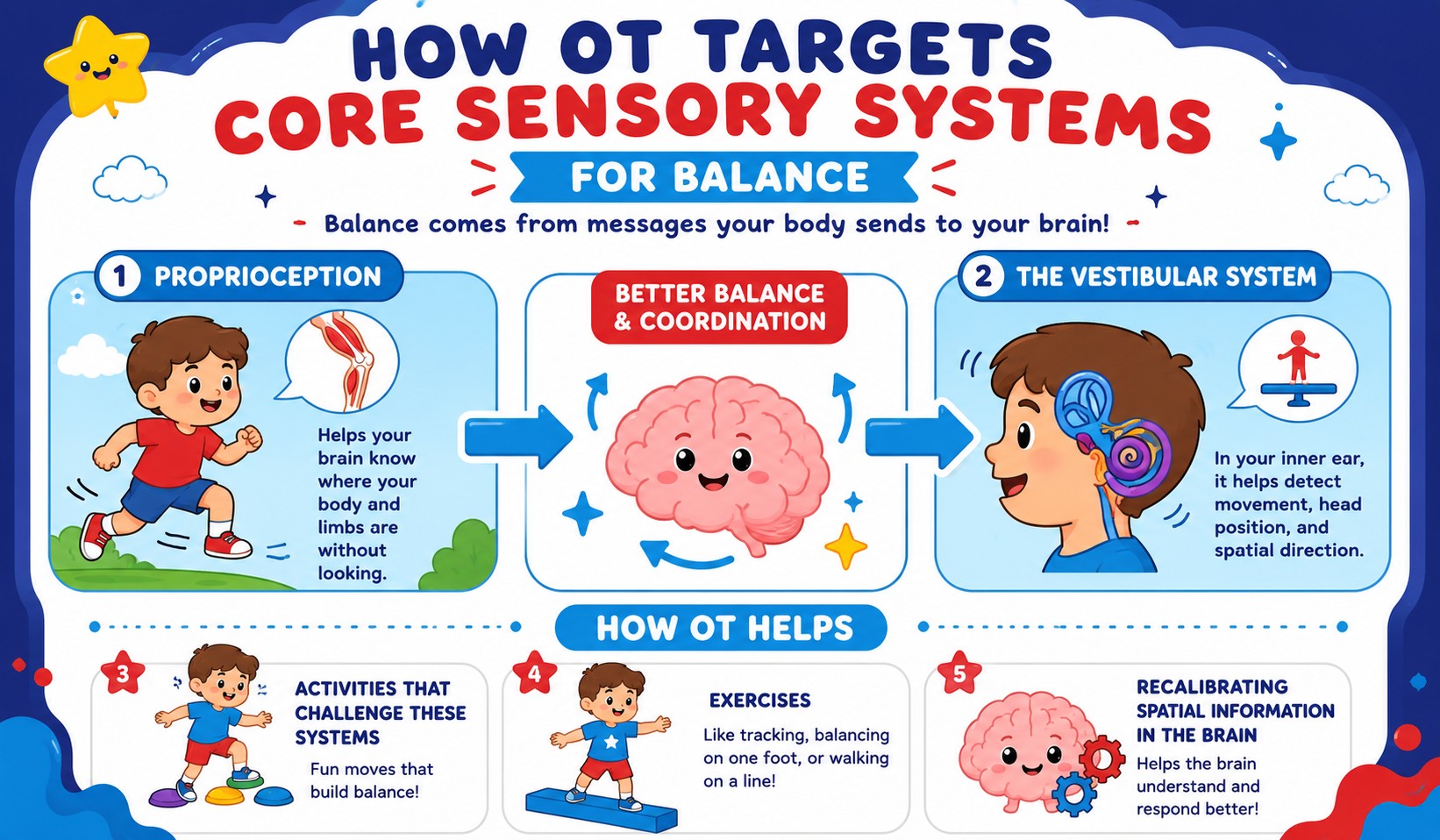
How Ot Targets Core Sensory Systems For Balance
2. Strengthening Core and Postural Stability
A stable center of gravity is essential for controlled limb movement. Without strong core and trunk control, keeping your balance while reaching or turning becomes significantly harder.
- Dynamic Sitting & Standing: Exercises using therapy balls, balance boards, or dynamic cushions force the deep core muscles to fire automatically.
- Weight-Shifting Drills: Practicing gentle shifts from side to side or forward and backward trains the body to respond quickly to sudden changes in position, reducing fall risks.
3. Developing Bilateral Integration and Fine Motor Control
Coordination often requires both sides of the body to work together in harmony—known as bilateral integration. OT breaks down complex movements into structured, repeatable steps:
| Focus Area | OT Strategies & Activities | Real-World Benefit |
| Symmetrical Bilateral | Clapping, rolling dough with a rolling pin, using two hands to catch a ball. | Stabilizes movement patterns across both hemispheres of the brain. |
| Asymmetrical Bilateral | Holding paper with one hand while cutting with scissors with the other. | Enables multi-tasking and fine manual dexterity. |
| Crossing the Midline | Reaching across the body for objects placed on the opposite side. | Improves neurological pathways for smooth, coordinated tracking. |
4. Task-Specific and Functional Retraining
Unlike traditional gym exercises, OT focuses directly on meaningful daily activities (Activities of Daily Living, or ADLs). Instead of isolated leg presses, an occupational therapist embeds balance training directly into functional routines:
- Environmental Obstacles: Navigating step-overs, stepping onto curbs, or walking over varied surfaces (grass, carpet, tile).
- Dual-Task Training: Practicing walking while carrying a glass of water or naming items in a store, which trains the brain to handle real-life distractions without losing balance.
- Adaptive Strategies: Modifying the environment—such as adjusting lighting, adding grab bars, or using supportive footwear—to ensure safety while skills improve.
The Takeaway
Occupational therapy transforms coordination and balance from abstract physical goals into practical, real-world independence. By addressing sensory processing, postural control, and task-specific movement, seeking expert occupational therapy in Dubai empowers individuals to move through their day with renewed control and confidence.
2. Strengthening Core and Postural Stability
A stable center of gravity is essential for controlled limb movement. Without strong core and trunk control, keeping your balance while reaching or turning becomes significantly harder.
- Dynamic Sitting & Standing: Exercises using therapy balls, balance boards, or dynamic cushions force the deep core muscles to fire automatically.
- Weight-Shifting Drills: Practicing gentle shifts from side to side or forward and backward trains the body to respond quickly to sudden changes in position, reducing fall risks.
3. Developing Bilateral Integration and Fine Motor Control
Coordination often requires both sides of the body to work together in harmony—known as bilateral integration. OT breaks down complex movements into structured, repeatable steps:
| Focus Area | OT Strategies & Activities | Real-World Benefit |
| Symmetrical Bilateral | Clapping, rolling dough with a rolling pin, using two hands to catch a ball. | Stabilizes movement patterns across both hemispheres of the brain. |
| Asymmetrical Bilateral | Holding paper with one hand while cutting with scissors with the other. | Enables multi-tasking and fine manual dexterity. |
| Crossing the Midline | Reaching across the body for objects placed on the opposite side. | Improves neurological pathways for smooth, coordinated tracking. |
4. Task-Specific and Functional Retraining
Unlike traditional gym exercises, OT focuses directly on meaningful daily activities (Activities of Daily Living, or ADLs). Instead of isolated leg presses, an occupational therapist embeds balance training directly into functional routines:
- Environmental Obstacles: Navigating step-overs, stepping onto curbs, or walking over varied surfaces (grass, carpet, tile).
- Dual-Task Training: Practicing walking while carrying a glass of water or naming items in a store, which trains the brain to handle real-life distractions without losing balance.
- Adaptive Strategies: Modifying the environment—such as adjusting lighting, adding grab bars, or using supportive footwear—to ensure safety while skills improve.
How Ot Targets Core Sensory Systems For Balance
The Takeaway
Occupational therapy transforms coordination and balance from abstract physical goals into practical, real-world independence. By addressing sensory processing, postural control, and task-specific movement, seeking expert occupational therapy in Dubai empowers individuals to move through their day with renewed control and confidence.
