How Rest Better Tonight The Hidden Link Between Tongue Posture And Restful Sleep

Sleep is one of the most fundamental pillars of human health, yet millions of people around the world wake up every morning feeling entirely unrefreshed. For many, the night is a battleground of loud snoring, sudden gasps for air, and fragmented rest. When seeking answers for chronic fatigue and disrupted sleep, people often look at stress levels, caffeine intake, or bedroom environments. However, the root cause of the issue might be resting right inside the mouth.The position of the tongue during the day and night plays a monumental role in maintaining an open, functional airway. Poor tongue posture is a silent contributor to sleep apnea, a condition where breathing repeatedly stops and starts during the night. Understanding how oral posture affects nighttime breathing is a vital step toward reclaiming systemic health. For individuals exploring modern, non-invasive health solutions, Myofunctional Therapy Dubai offers a structured path to retrain the muscles of the mouth and face, ensuring that every breath taken during sleep is deep, clear, and effortless.
Understanding The Mechanics Of Daytime And Nighttime Breathing
To understand why the tongue has such a profound impact on sleep quality, it helps to look at the basic anatomy of the upper airway. The throat is a flexible tube surrounded by muscles. Unlike the windpipe, which is held open by rigid rings of cartilage, the upper airway relies almost entirely on muscle tone to stay open.When a person is awake, the brain automatically sends signals to these muscles to keep the airway patent and stable. However, during sleep, muscle tone across the entire body naturally decreases. If the muscles of the mouth and throat are fundamentally weak or poorly conditioned, this normal relaxation causes the tissues to collapse inward.The tongue is the largest muscle group in this equation. If it does not rest in its optimal position during the day, it is highly likely to misbehave at night. When a person sleeps on their back, gravity pulls a weak, improperly positioned tongue backward into the throat. This physical blockage narrows or entirely seals off the airway, leading to the characteristic choking and gasping associated with obstructive sleep apnea.What Is Proper Tongue Posture
Most people rarely think about where their tongue rests when they are not speaking or eating. However, proper oral posture is essential for correct craniofacial development and optimal breathing.In a healthy state, the tongue should rest entirely against the roof of the mouth. The tip of the tongue should sit gently on the rough ridge of tissue just behind the front upper teeth, while the middle and back sections of the tongue should be suctioned flat against the palate. The lips should be comfortably sealed, and the upper and lower teeth should be slightly apart.When the tongue rests firmly against the roof of the mouth, it acts as a natural internal support structure for the upper jaw. This counterbalances the external pressure exerted by the cheek muscles. Furthermore, keeping the tongue on the palate naturally pulls the base of the tongue forward and away from the back of the throat, maximizing the space available for air to travel down into the lungs.The Consequences Of Poor Oral Rest Posture
When the tongue habitually rests on the floor of the mouth instead of the roof, a cascade of structural and physiological problems can unfold over time. This improper positioning is often referred to as low tongue posture, and its effects extend far beyond simple discomfort.- Chronic Mouth Breathing: When the tongue sits low, the lips naturally part, encouraging a person to breathe through their mouth rather than their nose. Mouth breathing bypasses the natural filtration, warming, and humidification systems of the nasal passages, delivering cold, unfiltered air directly to the lungs and throat tissues, which can cause chronic inflammation.
- Narrowing Of The Upper Jaw: Without the constant upward pressure of the tongue to expand the palate, the upper jaw can develop into a narrow, high-arched shape. This leaves less room for adult teeth to emerge straight, often resulting in severe crowding and alignment issues.
- Elongated Facial Structure: Long-term mouth breathing and low tongue posture can alter facial development over years, leading to a recessed chin, a retrognathic lower jaw, and a strained facial appearance.
- Airway Compromise: A narrow jaw and a recessed lower jaw leave less physical space inside the mouth for the tongue. Consequently, the tongue is forced backward into the pharyngeal space, directly impeding the airway and setting the stage for sleep-disordered breathing.
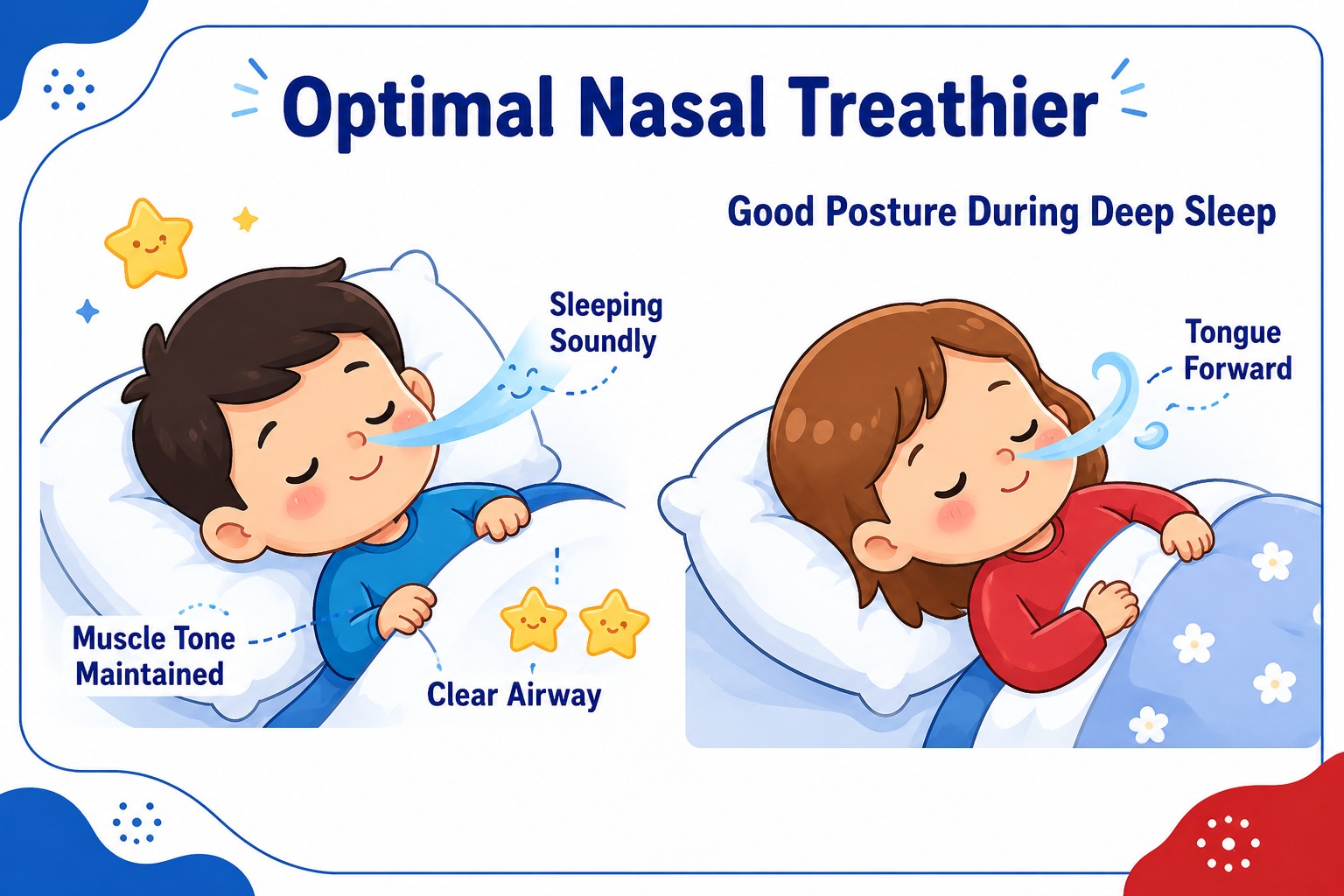
Optimal Nasal Treathier
How Low Tongue Posture Triggers Sleep Apnea
The transition from poor daytime tongue posture to nighttime sleep apnea is direct and mechanical. During the deepest stages of sleep, the body undergoes a necessary state of muscle relaxation. For an individual with strong oral muscle tone and correct tongue posture, this relaxation does not cause a structural collapse. The tongue remains comfortably forward, and the airway stays clear.For someone with weak oral muscles and low tongue posture, the story is entirely different. As the body enters deep sleep, the tongue completely relaxes and drops backward due to gravity. It acts like a physical plug at the top of the windpipe.As the person attempts to inhale, the air rushing past the collapsed tongue causes the soft tissues of the throat to vibrate loudly, creating the sound of snoring. If the collapse is complete, air cannot pass through at all. The brain detects the sudden drop in oxygen levels and the rise in carbon dioxide, triggering a survival mechanism. It abruptly jolts the body out of deep sleep into a lighter stage of sleep, forcing a sudden gasp or choke to reposition the tongue and restore airflow. This cycle can occur dozens or even hundreds of times a night, preventing the individual from ever reaching the deeply restorative stages of rest.The Ripple Effect Of Disrupted Sleep On Overall Wellness
Living with untreated sleep apnea is exhausting in the most literal sense. The continuous micro-arousals throughout the night completely destroy sleep architecture, meaning a person can spend eight hours in bed but wake up feeling as though they barely slept at all.The daytime consequences of this condition are widespread. Individuals often experience severe morning headaches, profound daytime fatigue, brain fog, irritability, and a stark decline in cognitive focus. Over time, the chronic stress placed on the cardiovascular system due to repeated nighttime oxygen deprivation can elevate the risk of high blood pressure, heart disease, and metabolic imbalances. Addressing the root structural causes of this airway collapse is not simply a matter of reducing snoring; it is a vital intervention for long-term systemic wellness.Exploring Myofunctional Therapy Dubai For Airway Health
For many years, the primary approaches to managing sleep apnea involved mechanical devices that force air into the airway, or invasive surgical procedures to remove excess tissue from the throat. While these methods can be highly effective and life-saving for many, they do not always address the underlying muscular weakness that allowed the airway to collapse in the first place.This is where the field of neuromuscular re-education becomes invaluable. Myofunctional Therapy Dubai focuses on a series of targeted, non-invasive exercises designed to strengthen and tone the muscles of the tongue, lips, cheeks, and soft palate. Just as physical therapy can rehabilitate a weak knee or shoulder, oral myofunctional therapy rehabilitates the muscles responsible for breathing and swallowing.By working closely with qualified specialists, individuals learn to consciously and unconsciously alter their oral habits. The ultimate objective of the therapy is to establish a natural, effortless daytime rest posture where the tongue lives on the roof of the mouth and nasal breathing becomes the default setting.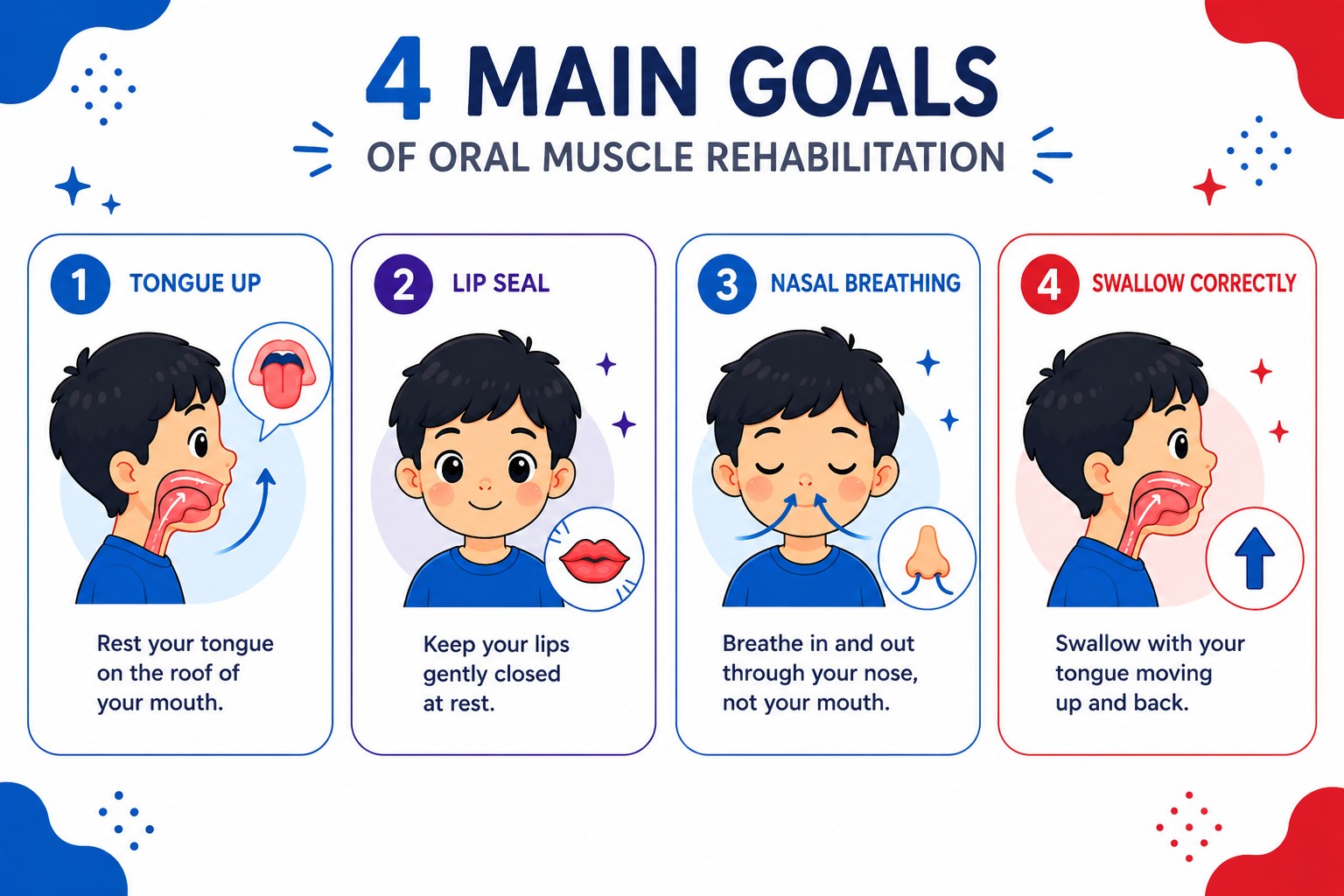
main goals of oral muscle rehabilitation
What To Expect From An Oral Exercise Program
Embarking on a journey with Myofunctional Therapy Dubai is a commitment to gradual, lasting behavioral change. The therapy does not offer an overnight fix, but rather a sustainable path to structural improvement.An initial assessment involves a detailed evaluation of oral structures, checking for issues like a restricted tongue-tie, assessing jaw mobility, and analyzing current swallowing and breathing patterns. Once a baseline is established, a specialist designs a customized regimen of daily exercises.These exercises are simple yet precise. They might involve pressing the tongue against a specific spot on the palate, holding specific shapes with the lips, or practicing controlled nasal breathing patterns. Typically, these exercises require only a few minutes, practiced multiple times a day. Over weeks and months, these conscious movements build muscle memory, eventually transitioning into automatic habits that persist even when a person is fast asleep.A Holistic Pathway To Long Term Vitality
The relationship between how we hold our mouths during the day and how we breathe at night highlights the profound interconnectedness of the human body. Simple adjustments to the way the tongue rests can be the key to unlocking profound improvements in sleep quality, energy levels, and overall health.By addressing the muscular root causes of airway restriction, individuals can move away from superficial fixes and look toward genuine, long-term healing. Prioritizing airway health through structural and muscular balance ensures that the body receives the oxygen it needs to thrive, allowing for truly restorative nights and vibrant, energetic days.