How Speech Therapy Helps Children Overcome Speech and Language Delays

How Speech Therapy Helps Children Overcome Speech and Language Delays
Communication plays a central role in a child’s development. Through words, gestures, and sounds, children express their needs, share emotions, build relationships, and explore the world around them. When speech or language does not develop as expected, it can affect many areas of a child’s life, from learning and social interaction to confidence and emotional well-being.
Speech therapy provides structured, supportive, and individualized guidance that helps children overcome speech and language delays and build strong communication skills over time.
Speech and language delays are more common than many parents realize. Some children may struggle to form sounds clearly, while others may have difficulty understanding language or expressing their thoughts. These challenges are not a reflection of intelligence or effort. They simply indicate that a child needs additional support to develop communication skills at their own pace. Speech therapy focuses on meeting children where they are and helping them grow in ways that feel natural, encouraging, and meaningful.
Understanding Speech And Language Delays
Speech and language delays can look different from one child to another. Speech refers to how sounds are produced and how clearly words are spoken. Language involves understanding words, using vocabulary, forming sentences, and using communication appropriately in social situations. A child may experience challenges in one area or both.
Some children may have a limited vocabulary compared to peers. Others may struggle to combine words into sentences or follow simple instructions. Speech delays may show up as unclear pronunciation, difficulty producing certain sounds, or frustration when trying to be understood. These challenges can become more noticeable as children grow and communication demands increase at home, school, and social settings.
It is important to remember that children develop at different rates. However, when delays persist or interfere with daily interactions, early support through speech therapy can make a significant difference.
Common Signs That A Child May Benefit From Speech Therapy
Parents are often the first to notice when communication feels challenging for their child. Some signs may appear early, while others become clearer as children reach preschool or school age.
Children who benefit from speech therapy may speak less often than peers, use gestures instead of words, or struggle to imitate sounds. They may have difficulty understanding questions or following directions. Older children may become frustrated when others do not understand them, avoid speaking in groups, or have trouble expressing ideas clearly.
Social challenges can also be connected to communication delays. Children who struggle with language may find it harder to make friends, participate in conversations, or engage in imaginative play. Speech therapy addresses these concerns in a supportive and non-judgmental way.
The Purpose Of Speech Therapy For Children
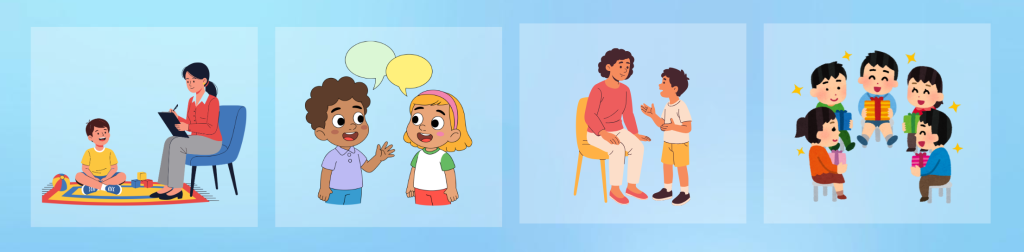
The Purpose Of Speech Therapy For Children- ABLE UK
Speech therapy is designed to help children communicate more effectively in their everyday lives. The focus goes beyond correcting sounds or expanding vocabulary. It aims to support overall communication, confidence, and participation in meaningful activities.
Speech therapists assess a child’s strengths and areas of need through observation, play, and interaction. Therapy goals are tailored to the child’s developmental level, personality, and family priorities. Sessions are engaging and interactive, often using play, stories, games, and everyday routines to encourage communication.
The goal is to help children develop skills that feel useful and relevant, allowing them to express themselves more clearly and understand others more easily.
Speech therapy supports children by helping them:
• Understand words, instructions, and everyday language used at home and school
• Express needs, thoughts, and emotions with clearer words and sentences
• Improve speech clarity so others can understand them more easily
• Build confidence to communicate during play, learning, and social interactions
Supporting Speech Sound Development
Many children experience difficulty producing certain sounds. Speech therapy helps children learn how to move their lips, tongue, and jaw to produce sounds accurately. Therapists break down sound production into manageable steps and provide clear, gentle guidance.
Practice is embedded in playful activities to keep children motivated and engaged. Over time, children learn to produce sounds more consistently and clearly. As speech becomes easier to understand, children often gain confidence and become more willing to communicate.
Clear speech supports success at school and in social interactions. When children are understood, they are more likely to participate actively and feel proud of their communication abilities.
Building Language Skills Through Therapy
Language development involves understanding and using words to communicate ideas, needs, and emotions. Speech therapy supports both receptive language, which is understanding language, and expressive language, which is using words and sentences.
Therapists help children expand vocabulary, learn sentence structure, and develop storytelling skills. Activities are designed to encourage children to ask questions, describe experiences, and engage in conversations. For children who struggle with understanding language, therapy focuses on following directions, answering questions, and processing information more effectively.
Language skills are essential for learning, social interaction, and emotional expression. Strengthening these skills helps children participate more fully in daily activities.
Encouraging Social Communication
Communication is not only about words. Social communication involves taking turns, maintaining eye contact, understanding social cues, and adjusting language based on context. Some children with language delays find these skills challenging.
Speech therapy provides opportunities to practice social communication in a safe and supportive environment. Therapists model appropriate interactions and guide children through play and conversation. Children learn how to initiate interactions, respond to others, and stay engaged during communication.
Improved social communication supports friendships, classroom participation, and emotional development. As children become more comfortable interacting with others, their confidence often grows.
The Role Of Play In Speech Therapy
Play is a powerful tool in speech therapy, especially for young children. Through play, children feel relaxed and motivated, making learning feel natural rather than forced. Therapists use toys, games, books, and imaginative activities to create meaningful communication opportunities.
During play, children practice requesting, labeling, commenting, and problem solving. Therapists follow the child’s interests to keep sessions enjoyable while guiding communication growth. This approach helps children generalize skills beyond therapy sessions into everyday life.
Play based therapy supports learning while honoring each child’s unique personality and interests.
Supporting Families Through Speech Therapy
Speech therapy is most effective when families are involved. Therapists work closely with parents and caregivers to share strategies that can be used at home. These strategies are simple and practical, fitting naturally into daily routines.
Parents may learn how to model language, encourage communication during play, and respond supportively to their child’s attempts to communicate. Consistent practice across environments helps children make steady progress.
Families often report feeling more confident and empowered when they understand how to support their child’s communication development. Speech therapy becomes a collaborative journey rather than an isolated service.
Addressing Emotional And Behavioral Impact
Communication challenges can affect a child’s emotional well-being. When children struggle to express themselves or be understood, they may feel frustrated, anxious, or withdrawn. These feelings can sometimes appear as behavioral challenges.
Speech therapy supports emotional growth by giving children tools to express their needs and emotions more clearly. As communication improves, many children experience fewer frustrations and greater emotional regulation.
Feeling understood and capable builds self-esteem. Children begin to see themselves as successful communicators, which positively influences behavior and relationships.
Supporting School Readiness And Academic Success
Strong communication skills are essential for learning. Speech therapy supports skills that are directly related to academic success, such as following instructions, understanding questions, and expressing ideas clearly.
Children who receive speech therapy often show improved participation in classroom activities. They may feel more comfortable speaking in group settings, asking for help, and engaging in learning tasks.
Early support can reduce the impact of communication delays on academic progress. Speech therapy helps children build a foundation that supports learning across subjects.
Individualized Support For Every Child
No two children experience speech or language delays in the same way. Speech therapy recognizes and respects this individuality. Therapy plans are tailored to each child’s needs, strengths, and goals.
Progress is measured in small but meaningful steps. Therapists adjust strategies as children grow and develop. This flexible approach ensures that therapy remains relevant and effective.
Children are encouraged to progress at their own pace, with an emphasis on celebrating effort and growth rather than perfection.
Long Term Benefits Of Speech Therapy
The benefits of speech therapy extend beyond improved speech and language skills. Children gain confidence, independence, and stronger social connections. They learn how to express themselves and understand others, which supports emotional health and resilience.
As communication becomes easier, children often show increased curiosity, engagement, and willingness to try new experiences. These skills support success throughout childhood and beyond.
Speech therapy lays the groundwork for lifelong communication, helping children navigate relationships, education, and daily life with greater ease.
When To Seek Support
Parents do not need to wait until challenges become severe to seek support. If there are concerns about a child’s communication development, speech therapy can provide guidance and reassurance.
Early support can help address delays before they impact other areas of development. However, speech therapy is beneficial at any age. Children continue to grow and learn throughout childhood, and it is never too late to support communication skills.
Seeking help reflects care and commitment to a child’s well-being. It is a positive step toward understanding and supporting their unique needs.
Supporting Communication With Patience And Understanding
Every child’s communication journey is different. Some children need more time and support to find their voice. Speech therapy offers a compassionate and effective approach to helping children overcome speech and language delays.
Through personalized support, playful learning, and family involvement, speech therapy helps children build skills that last. As children learn to communicate more clearly and confidently, they gain tools that support connection, learning, and self-expression.
With the right guidance and encouragement, children can overcome communication challenges and develop the skills they need to thrive. Speech therapy plays a vital role in helping children find confidence in their words and joy in connecting with the world around them.
