Myofunctional Therapy and Bruxism: Addressing the Root Cause of Tooth Grinding

Myofunctional Therapy and Bruxism: Addressing the Root Cause of Tooth Grinding
For many individuals, waking up with a tight jaw, a dull headache, or unexplained tooth sensitivity is an all-too-familiar morning routine. Nighttime tooth grinding and jaw clenching, known clinically as bruxism, affect millions of adults and children worldwide. While traditional approaches often rely on protective night guards to shield enamel from mechanical wear, these devices primarily manage the symptoms rather than addressing why the grinding occurs in the first place.
In recent years, health professionals have turned their attention toward functional movement and neuromuscular balance within the oral and facial structures. Orofacial myofunctional therapy has emerged as a supportive, non-invasive approach that focuses on re-educating the muscles of the mouth, tongue, and face. By restoring proper resting postures and nasal breathing patterns, this targeted therapy aims to address underlying functional imbalances that contribute to persistent nocturnal tension.
Understanding Bruxism Beyond Surface Wear
Tooth grinding is rarely an isolated dental issue. While the visible consequences appear on the biting surfaces of the teeth in the form of worn enamel, flattened edges, or cracked restorations, the movement itself is driven by complex neuromuscular activity. The jaw muscles, particularly the masseter and temporalis, are among the strongest muscles in the human body relative to their size. When these muscles contract repetitively or forcefully during sleep, the forces exerted across the jaw joint and surrounding tissues can be substantial.
Bruxism is generally categorized into two main forms: awake bruxism and sleep bruxism. Awake bruxism often manifests as unconscious clenching during periods of deep concentration, emotional stress, or physical exertion. Sleep bruxism, on the other hand, is classified as a sleep-related movement event. During sleep cycles, micro-arousals in the central nervous system can trigger rhythmic muscle activity in the jaw, leading to sustained clenching or audible grinding.
Traditional oral appliances, such as custom acrylic splints or night guards, play an important role in physical protection. They create a physical barrier that absorbs forces and prevents further enamel destruction. However, a night guard does not alter the neural drive or muscle habit that causes the jaw to contract. When the guard is removed, the involuntary tendency to clench or grind often remains unchanged. To achieve long-term comfort and stability, it is helpful to look deeper into the structural and behavioral factors driving muscle hyperactivity.
The Role of Orofacial Myofunctional Therapy
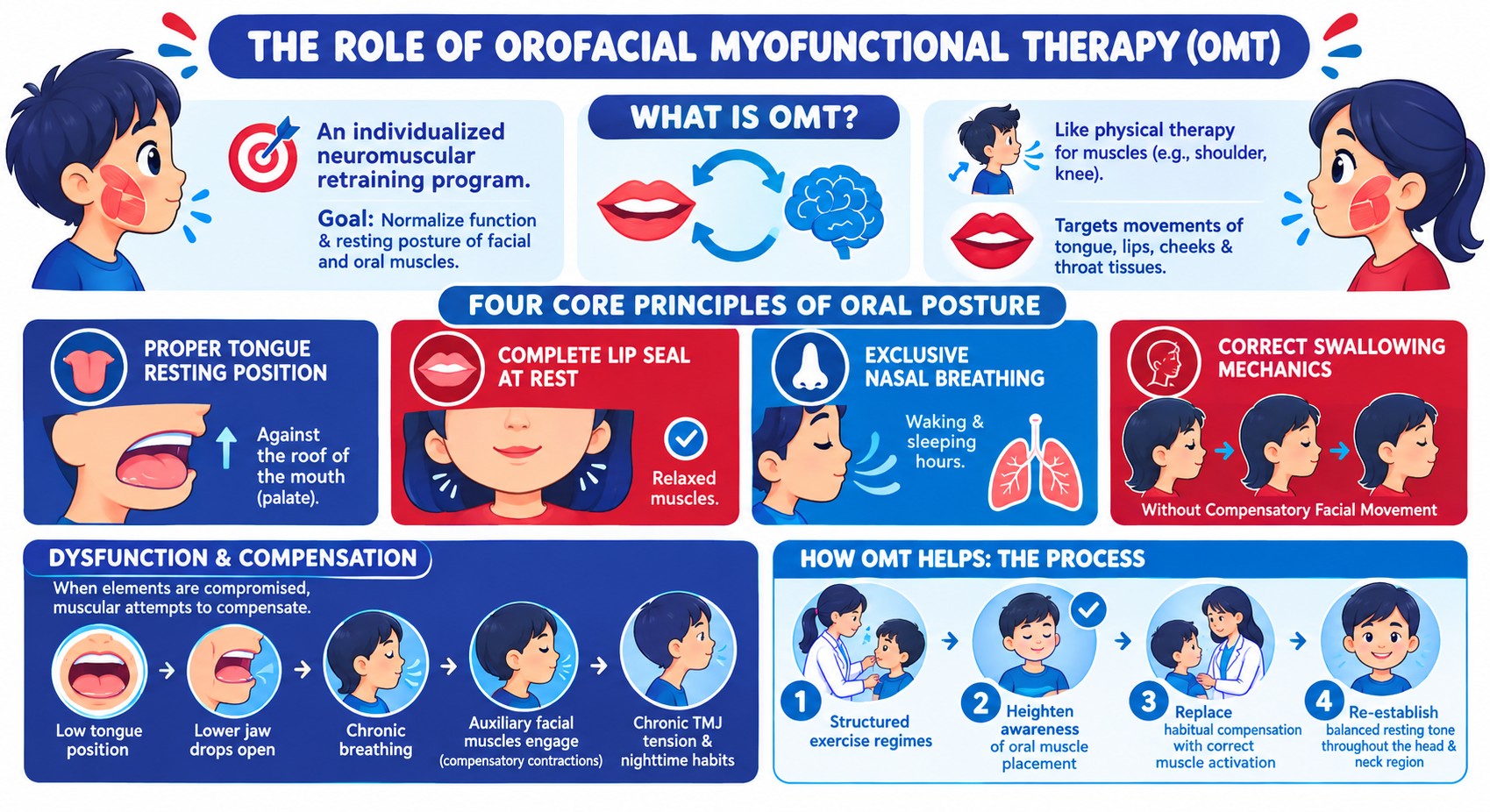
Orofacial Therapy Principles Infographic ()
Orofacial myofunctional therapy is an individualized program of neuromuscular retraining exercises designed to normalize the function and resting posture of the facial and oral muscles. Much like physical therapy restores movement and function to an injured shoulder or knee, myofunctional exercises target the subtle movements of the tongue, lips, cheeks, and soft tissues of the throat.
The primary goals of myofunctional therapy revolve around four core principles of oral posture:
- Proper tongue resting position against the roof of the mouth
- Complete lip seal at rest without strain
- Exclusive nasal breathing during waking and sleeping hours
- Correct swallowing mechanics without compensatory facial movement
When any of these foundational elements are compromised, the surrounding musculature attempts to compensate. For example, if the tongue rests low in the floor of the mouth instead of against the palate, the lower jaw may drop open slightly, leading to chronic mouth breathing. To stabilize the airway or keep the mouth closed, auxiliary facial muscles engage in compensatory contractions. Over time, these dysfunctional muscle patterns can create chronic tension across the temporomandibular joint and trigger nighttime clenching habits.
Through structured exercise regimes, patients learn to heighten their awareness of oral muscle placement. By replacing habitual compensation with correct muscle activation, myofunctional therapy helps re-establish balanced resting tone throughout the head and neck region.
The Connection Between Airway, Tongue Posture, and Jaw Tension
One of the most significant insights in modern oral health is the direct relationship between airway health and jaw position. During sleep, the body prioritizes maintaining an unobstructed airway above almost all other physiological functions. If the upper airway becomes narrowed or unstable during sleep cycles, the body employs subconscious physical maneuvers to keep breathing passages open.
The tongue is a primary structure in airway management. Attached to the lower jaw and hyoid bone, the tongue is composed of complex muscle groups that can easily fall backward toward the throat when relaxed, particularly during back-sleeping. If a resting tongue sits low in the floor of the mouth, it occupies space needed for optimal air passage.
To prevent airway collapse during sleep, the central nervous system may signal the jaw muscles to contract, moving the lower jaw forward. This protective reflex pulls the attached tongue tissue forward, opening the airway behind it. While this response successfully maintains airflow, it requires the masseter and pterygoid muscles to remain active throughout the night. The result is continuous clenching or grinding as the body repeatedly uses jaw movement to maintain open breathing channels.
Nasal breathing plays a vital supportive role in this dynamic. Breathing through the nose encourages the tongue to naturally rest against the roof of the mouth, forming a seal that stabilizes the upper airway and supports balanced facial development. Mouth breathing, conversely, forces the tongue downward, destabilizing oral architecture and predisposing the individual to muscle fatigue and involuntary nocturnal tension.
Core Components of a Retraining Program
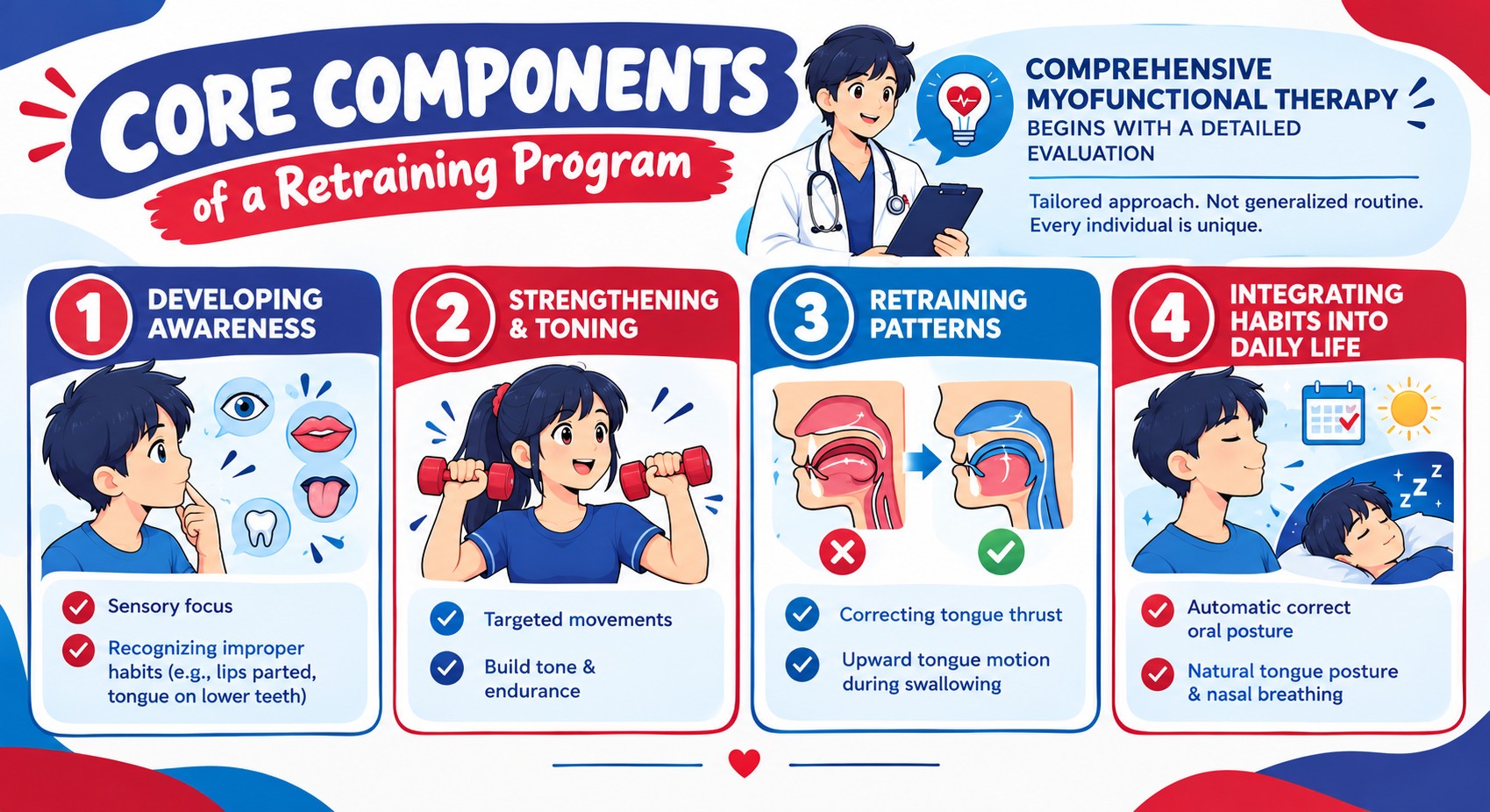
Core Components of Myofunctional Therapy ()
A comprehensive myofunctional therapy program begins with a detailed evaluation by a qualified healthcare professional. Every individual presents with unique anatomical features, movement patterns, and resting habits, requiring a tailored approach rather than a generalized routine.
The therapeutic process typically progresses through several key phases:
Developing Neuromuscular Awareness
Before muscle habits can be changed, individuals must develop conscious awareness of their current oral posture. Many people are unaware that their tongue rests against their lower teeth or that their lips remain slightly parted during rest. Initial exercises focus on sensory awareness, helping patients recognize proper contact points along the roof of the mouth and identify tension in the cheeks and jaw.
Strengthening and Toning Orofacial Muscles
Targeted movements are introduced to build tone and endurance in specific muscle groups. Exercises may focus on elevating the posterior third of the tongue, strengthening the circular lip muscles, or improving swallowing coordination. By improving the strength and tone of the tongue, the tissue becomes less prone to falling backward during sleep relaxation.
Retraining Proper Swallowing Patterns
An improper swallow, sometimes referred to as a tongue thrust, involves pushing the tongue forward or sideways against the teeth rather than upward against the palate during deglutition. Because humans swallow hundreds of times a day, a dysfunctional swallow pattern continuously applies improper forces against the teeth and jaw structure. Therapy exercises re-educate the tongue to sweep upward during swallows, protecting the arch form and minimizing strain.
Integrating Habits into Daily Life
The ultimate objective of myofunctional therapy is for correct oral posture to become automatic. Through consistent daily practice over several months, new neural pathways are formed. Over time, correct tongue posture and nasal breathing persist naturally during both waking hours and deep sleep, reducing the underlying drive for nocturnal jaw contraction.
Complementary Benefits for Overall Well-Being
While addressing tooth grinding is a primary reason many individuals seek orofacial myofunctional evaluation, restoring balance to the oral structures frequently yields benefits across broader aspects of health and daily comfort.
Relief from Head and Neck Discomfort
Chronic activation of the jaw muscles rarely stays confined to the mouth. The temporalis muscle extends up the sides of the head, while the masseter connects directly to the cheekbones and lower jaw. Muscle tension in these regions frequently radiates into the neck, shoulders, and upper back. By reducing overall jaw muscle hyperactivity, many individuals experience a noticeable reduction in morning head pressure and upper body tightness.
Enhanced Quality of Rest
By supporting stable resting postures and encouraging consistent nasal breathing, myofunctional therapy helps minimize sleep disturbances caused by airway instability. Uninterrupted sleep cycles allow for deeper physical recovery, helping individuals wake up feeling more refreshed and energized.
Support for Long-Term Dental Stability
Uncontrolled bruxism can cause substantial wear on natural enamel and shorten the lifespan of dental restorations, crowns, and implants. Reducing the severity of night grinding provides a safer environment for existing teeth, preserving structural integrity and reducing the need for repetitive corrective dental work over time.
Integrating Therapy into a Holistic Care Plan
Addressing bruxism effectively often requires a collaborative, multidisciplinary approach. Because tooth grinding can stem from a combination of anatomical, behavioral, stress-related, and sleep factors, myofunctional therapy works best when integrated into a broad, cohesive care strategy.
A comprehensive assessment by a qualified dentist or healthcare professional can help evaluate the degree of tooth wear, assess the health of the tempormandiublar joint, and determine whether a protective night appliance is temporarily needed during the initial phases of muscle retraining. In cases where structural airway issues or chronic nasal congestion exist, consultation with an ear, nose, and throat specialist or a certified sleep professional may be recommended to address underlying anatomical obstructions.
Additionally, stress management techniques, ergonomic adjustments, and general physical therapy can complement myofunctional work. When stress levels are high, the sympathetic nervous system increases general muscle tone throughout the body, including the jaw. Combining relaxation strategies with targeted muscle exercises addresses both the systemic nervous response and the localized physical habit.
Exploring Suitable Options for Your Journey
Every individual’s journey with bruxism is unique. While protective appliances remain a valuable tool for preserving dental enamel, exploring functional approaches offers an opportunity to look closer at muscle tone, breathing habits, and airway support. Restoring harmony to the facial and oral structures takes time, consistency, and expert oversight, but the path toward sustainable comfort is achievable.
If you or a family member experience persistent jaw tightness, morning headaches, or signs of night tooth grinding, speaking with a qualified healthcare professional can help clarify the most appropriate next steps. An individual assessment can determine whether orofacial myofunctional therapy or a combination of supportive therapies aligns with your specific health needs and personal goals.
