Nurturing Young Voices: How Speech Therapy Builds Lasting Communication Confidence

Nurturing Young Voices: How Speech Therapy Builds Lasting Communication Confidence
Communication is at the heart of every interaction, relationship, and learning experience in a child’s life. From expressing daily needs to sharing imaginative ideas, the ability to speak clearly and connect with others forms the bedrock of emotional and social growth. When a child experiences difficulties in speech or language development, the impact often extends beyond the words themselves. It can affect their self-esteem, classroom participation, and willingness to engage with peers.
Speech therapy offers structured, empathetic, and evidence-informed support that empowers children to find their voice. Beyond correcting individual sounds or expanding vocabulary, speech therapy creates a safe environment where children discover the joy of expressing themselves without fear of misunderstanding.
Understanding the Deep Connection Between Speech and Confidence
Children learn about the world through active interaction. When they express a thought and receive a meaningful response, it reinforces their sense of agency and belonging. However, when communication barriers arise, children may frequently experience frustration or withdrawal.
The Cycle of Frustration and Hesitation
When a child finds it difficult to articulate sounds, form sentences, or grasp social communication cues, standard everyday conversations can feel challenging. Repeated experiences of not being understood can lead to a quiet cycle of hesitation:
- Social Withdrawal: A child may prefer solo play over group activities to avoid communication struggles.
- Academic Hesitation: Fear of mispronouncing words might prevent a child from raising their hand in the classroom, even when they know the correct answer.
- Emotional Overload: Difficulty expressing feelings, needs, or boundaries can lead to heightened emotional distress or sudden outbursts.
By recognizing these patterns early, families can provide children with dedicated support that fosters understanding, patience, and skill development.
The Role of Speech Therapy in Child Development
Speech therapy is a specialized discipline centered on evaluating, supporting, and enhancing speech, language, and social communication skills. Therapists work closely with children and their families to build tailored strategies that meet each child’s individual needs.
Clarifying Pronunciation and Articulation
Speech sound clarity is fundamental to effective communication. Children developing speech patterns may substitute, omit, or distort specific sounds. Speech therapists use engaging, age-appropriate activities to teach proper tongue placement, airflow, and vocal coordination. As children master sounds in isolation and gradually incorporate them into full sentences, their clarity improves, boosting their confidence during conversations.
Expanding Receptive and Expressive Language
Language involves two distinct sides: understanding what others say (receptive language) and choosing the right words to express thoughts (expressive language). Therapy sessions focus on strengthening both areas:
- Building dynamic vocabulary through hands-on activities and visual materials.
- Practicing sentence structures to help children construct clear, multi-word ideas.
- Strengthening listening comprehension through stories, instructions, and interactive games.
Enhancing Social Communication Skills
Communication is inherently social. Beyond vocabulary and grammar, children learn how to navigate social dynamics, known as pragmatics. This includes understanding turn-taking during conversations, reading facial expressions, interpreting tone of voice, and adjusting language based on the setting. Guided practice helps children feel comfortable navigating social situations with peers and adults.
Key Strategies Used in Speech Therapy to Build Confidence
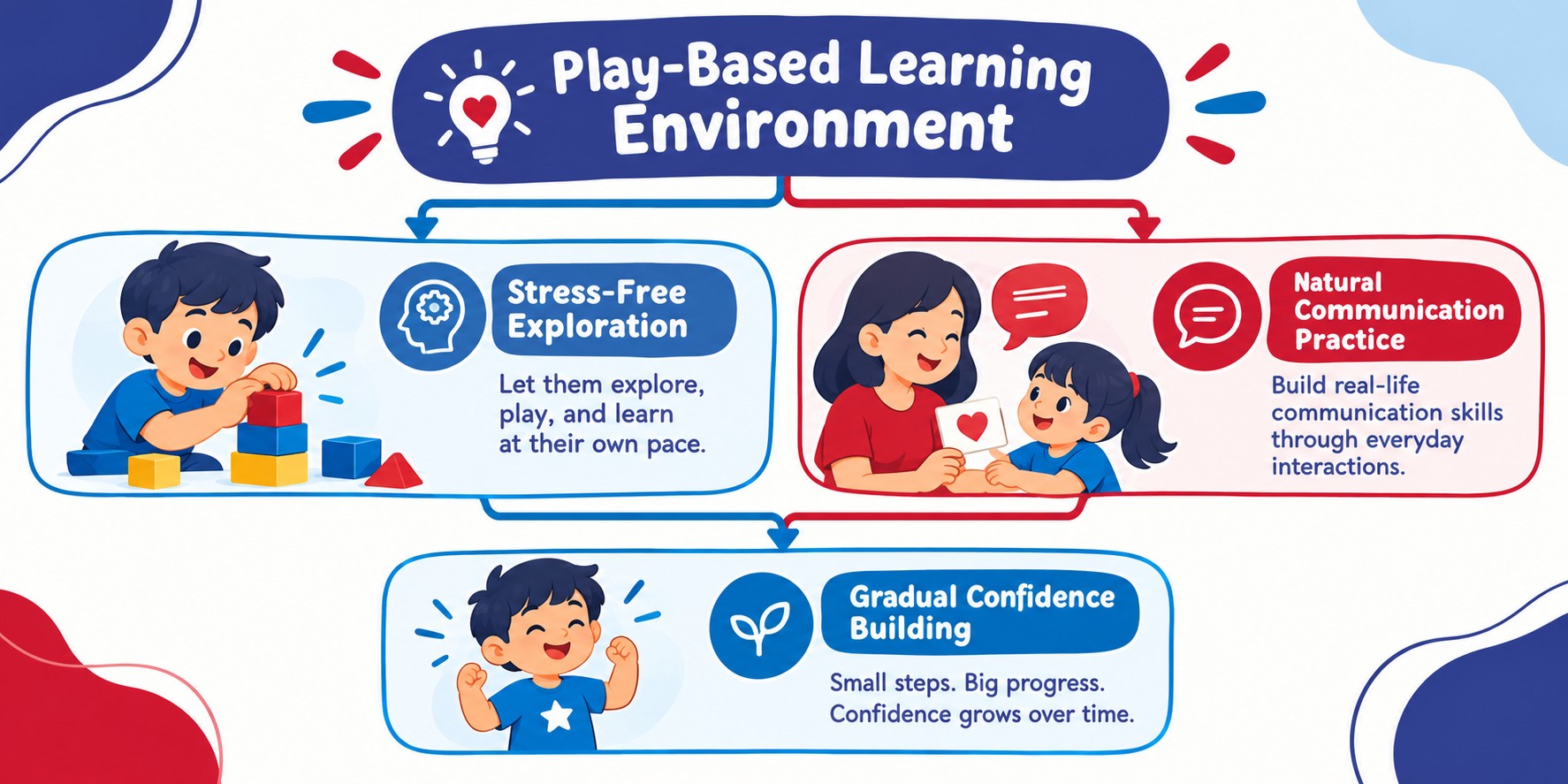
Play Based Learning Infographic ()
Confidence does not develop overnight. It grows gradually through positive experiences, incremental successes, and supportive encouragement. Speech therapists employ structured techniques to make learning engaging and rewarding.
Play-Based Learning and Natural Engagement
Young children learn most effectively through play. Speech therapy sessions frequently integrate toys, games, storytelling, and creative arts. Play-based learning helps lower stress, making children feel at ease while practicing new communication skills naturally.
When learning feels like play, children focus on the fun of the activity rather than the pressure of speaking perfectly. This comfortable environment encourages experimentation and builds self-assurance.
Micro-Goals and Celebrating Small Achievements
Breakdown of complex skills into manageable steps allows children to experience continuous progress. Celebrating micro-goals—such as pronouncing a challenging sound correctly or completing a full sentence without pausing—reinforces positive behavior and motivates ongoing effort.
Multi-Sensory Approaches
Children process information in diverse ways. Speech therapists often use multi-sensory techniques that combine visual cues, physical touch points, and auditory feedback. Visual aids, hand gestures, and mirrors help children visualize speech mechanics, making abstract concepts concrete and easier to understand.
The Power of Family Collaboration and Home Practice
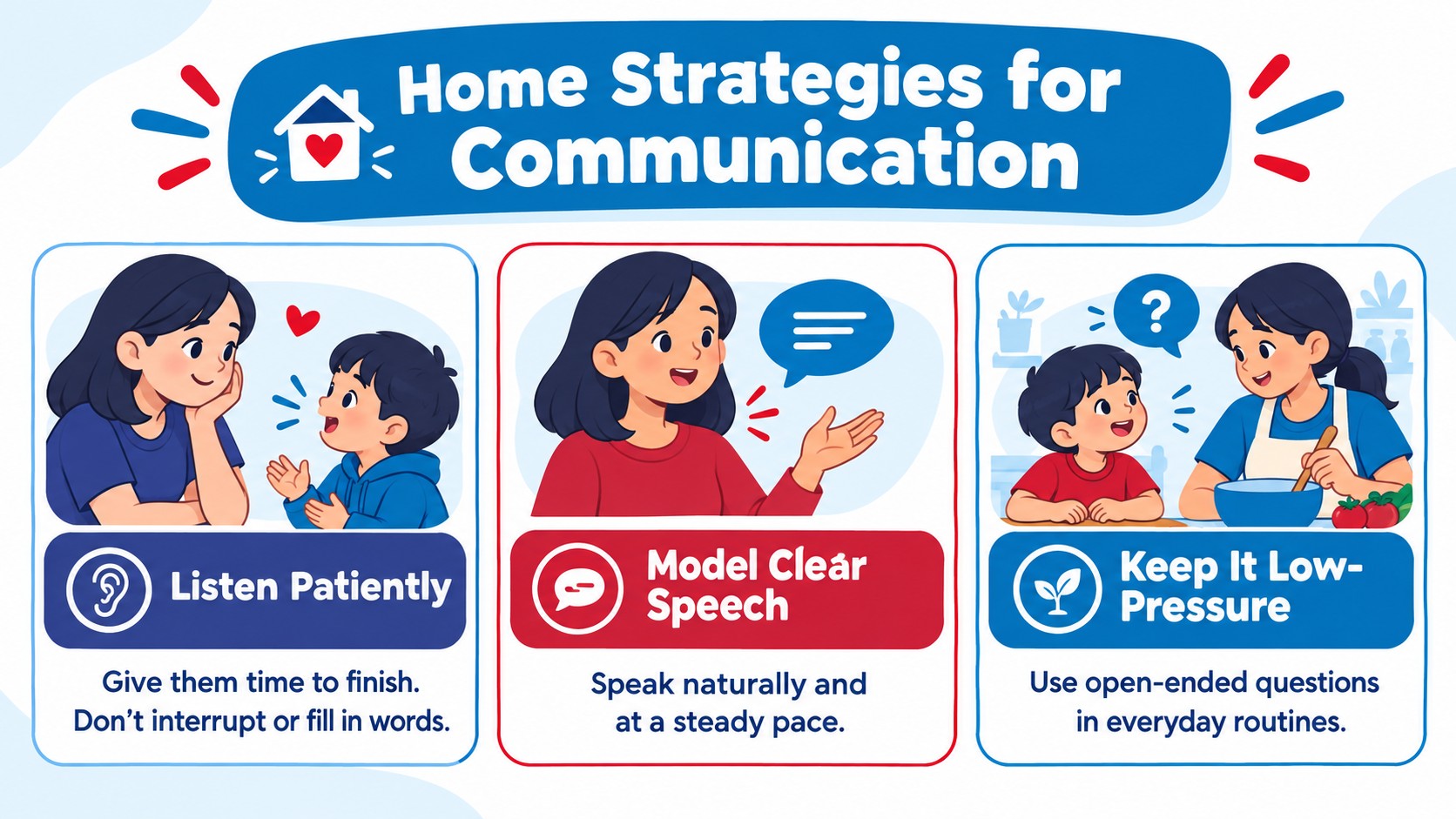
Home Strategies for Communication ()
While individual therapy sessions provide structured guidance, a child’s everyday environment plays a vital role in reinforcing progress. Parents, caregivers, and family members serve as primary communication partners, making home support essential for long-term growth.
Practicing Active and Patient Listening
Giving a child undivided attention and sufficient processing time demonstrates that their thoughts are valued. Avoiding the urge to finish their sentences or correct every minor slip-on-the-spot gives them the space they need to express themselves comfortably.
Modeling Clear Communication
Children absorb language patterns from their surroundings. Rather than explicitly pointing out errors, adults can gently model correct speech. For instance, if a child says, “The cat runnable fast,” a caregiver can respond naturally, “Yes, the cat ran very fast!” This indirect modeling reinforces accurate language structure without calling attention to mistakes.
Incorporating Communication into Daily Routines
Everyday activities offer natural opportunities to practice speech and language skills:
- Mealtimes: Encourage discussions about favorite foods, daily plans, or sensory experiences like tastes and textures.
- Shared Reading: Read books together, ask open-ended questions about images, and invite the child to predict what happens next.
- Outdoor Walks: Point out surroundings, describe colors and shapes, and discuss observations together.
Encouraging Social Interaction and Peer Connections
As children build speech clarity and language skills, applying these tools in group settings becomes a natural next step. Social interactions allow children to put their skills into practice, building meaningful connections with peers.
Structuring Small Group Activities
Inviting a small group of peers or arranging structured playdates provides a comfortable space for social communication. Activities with shared goals, such as building a block tower, completing a puzzle, or playing a board game, naturally encourage cooperation and conversation.
Preparing Children for Classroom Dynamics
School environments present unique communication opportunities, from group discussions to playground interactions. Speech therapists often collaborate with educators to ensure consistent strategies across settings. Helpful classroom accommodations may include:
- Seating near the front of the classroom to support clear hearing and visual focus.
- Providing visual schedules and step-by-step instructions.
- Allowing extra wait time when asking a child to answer questions aloud.
Supporting Long-Term Personal and Emotional Growth
The benefits of early communication support extend far beyond clear speech. As children gain confidence in their ability to express thoughts and emotions, positive shifts occur across multiple areas of life.
Strengthening Self-Advocacy
When children learn how to convey their needs, ask for assistance, and set boundaries, they develop crucial self-advocacy skills. Understanding that their voice matters empowers them to navigate challenges with independence and resilience.
Fostering Academic Curiosity
Clear communication directly supports reading, writing, and classroom engagement. Children who feel secure in their speech skills are more likely to participate in discussions, ask clarifying questions, and collaborate comfortably on group projects.
Nurturing Social Relationships
Communication forms the foundation of friendship. When children express themselves easily and understand peer interactions, making friends becomes a fulfilling and enjoyable process. Positive social experiences contribute directly to overall emotional well-being.
Taking the First Step Toward Communication Support
Every child develops on their own unique timeline. However, when speech or language difficulties create ongoing frustration, seeking guidance from a qualified speech therapist can offer clarity and structured support.
A comprehensive speech assessment evaluates a child’s current strengths, identifies specific areas for growth, and outlines a supportive path forward. With individualized attention, evidence-informed strategies, and steady encouragement from family and educators, children can overcome communication hurdles and share their ideas with the world.
To learn more about child development support and therapy services tailored to individual needs, speak with a qualified healthcare professional or specialist today. Treatment options vary based on individual needs, and your healthcare professional can assess which approach is best suited for your child.
