
Supporting Emotional Regulation in Kids Through Occupational Therapy

Supporting Emotional Regulation in Kids Through Occupational Therapy
Children experience a wide spectrum of intense emotions every day. From the excitement of discovering a new game to the frustration of an unexpected routine change, their daily lives are filled with moments that test their ability to manage feelings. When a child struggles to navigate these big emotions, it often manifests as sudden outbursts, prolonged tantrums, difficulty focusing, or withdrawing from group activities.
For many parents and caregivers, watching a child go through these intense moments can feel overwhelming. It is natural to wonder why simple tasks or small transitions trigger such powerful reactions. Emotional regulation is not an innate skill that children are born with; it is a complex developmental process that grows over time through guidance, environment, and practice.
Occupational therapy offers a supportive, structured framework to help children develop these crucial self-regulation abilities. By looking at the connection between sensory processing, motor skills, environmental triggers, and emotional responses, occupational therapists empower children to understand their bodies, recognize their feelings, and learn practical strategies for staying calm and composed.
Understanding Emotional Regulation in Early Childhood
Emotional regulation is the ability to monitor, understand, and manage one’s own emotional state, attention levels, and energy output to meet the demands of a given situation. For a young child, this means being able to soothe themselves when upset, stay engaged during classroom instruction, and transition smoothly from a fun activity to a quiet task.
When children have well-developed regulation skills, they are better equipped to handle disappointment, solve problems calmly, and build healthy relationships with peers and adults. Conversely, when emotional regulation is challenging, everyday activities such as getting dressed, going to school, or playing with friends can become source points of stress.
It is helpful to recognize that emotional regulation relies heavily on the nervous system. A child’s nervous system receives constant feedback from the world around them. Light, sound, physical contact, and movement all send signals to the brain. If the nervous system perceives these inputs as intense or threatening, the body reacts with a fight, flight, or freeze response. This automatic physiological reaction often precedes the visible emotional behavior.
The Crucial Link Between Sensory Processing and Feelings
To understand how occupational therapy supports emotional growth, it helps to understand sensory processing. The human body uses sensory systems to gather information about the environment and internal bodily states. Beyond the standard five senses, there are three internal sensory systems that play a massive role in emotional balance:
The Proprioceptive System
Located in muscles and joints, proprioception tells us where our body parts are in space and how much force we are exerting. Activities that activate muscles, such as pushing, pulling, or lifting, send calming signals to the nervous system.
The Vestibular System
Located in the inner ear, this system responds to movement and gravity. It affects balance, coordination, and arousal levels. Controlled movement like gentle swinging can soothe an anxious nervous system, while fast swinging can raise low energy levels.
The Interoceptive System
Interoception is the internal sense that alerts us to hunger, heart rate, respiration, bladder fullness, and muscular tension. Recognizing a racing heart or a tight stomach is the fundamental first step in identifying feelings like anxiety or anger.
When a child has difficulty processing sensory information, their brain may interpret normal environment inputs as intense or disturbing. A noisy classroom might feel deafening; a scratchy shirt tag might feel painful. When sensory overload occurs, emotional regulation breaks down rapidly. Occupational therapists evaluate these sensory patterns to understand the underlying causes of emotional stress.
Key Signs Your Child May Benefit From Professional Support
Every child has difficult days, but persistent struggles with emotional management can indicate that additional support is beneficial. Children express their emotional challenges through various behaviors and physiological signs.
Persistent Challenges With Daily Transitions
Transitions require significant cognitive and sensory flexibility. A child who struggles with regulation may experience severe distress when moving from preferred activities to necessary tasks, such as leaving the playground or coming to the dinner table.
Intense Behavioral Reactions to Minor Stressors
Small setbacks, such as a broken crayon or a minor spill, may produce intense emotional reactions that seem disproportionate to the situation.
Frequent Sensory Avoidance or Seeking
Some children constantly crave intense sensory input, such as crashing into furniture, spinning, or humming loudly. Others avoid sensory experiences, covering their ears at moderate sounds, refusing certain clothing textures, or avoiding physical contact.
Difficulty Re-Entering a Calm State
After becoming upset or overwhelmed, the child requires an extended period to return to a baseline state of calm, even with supportive adult comfort.
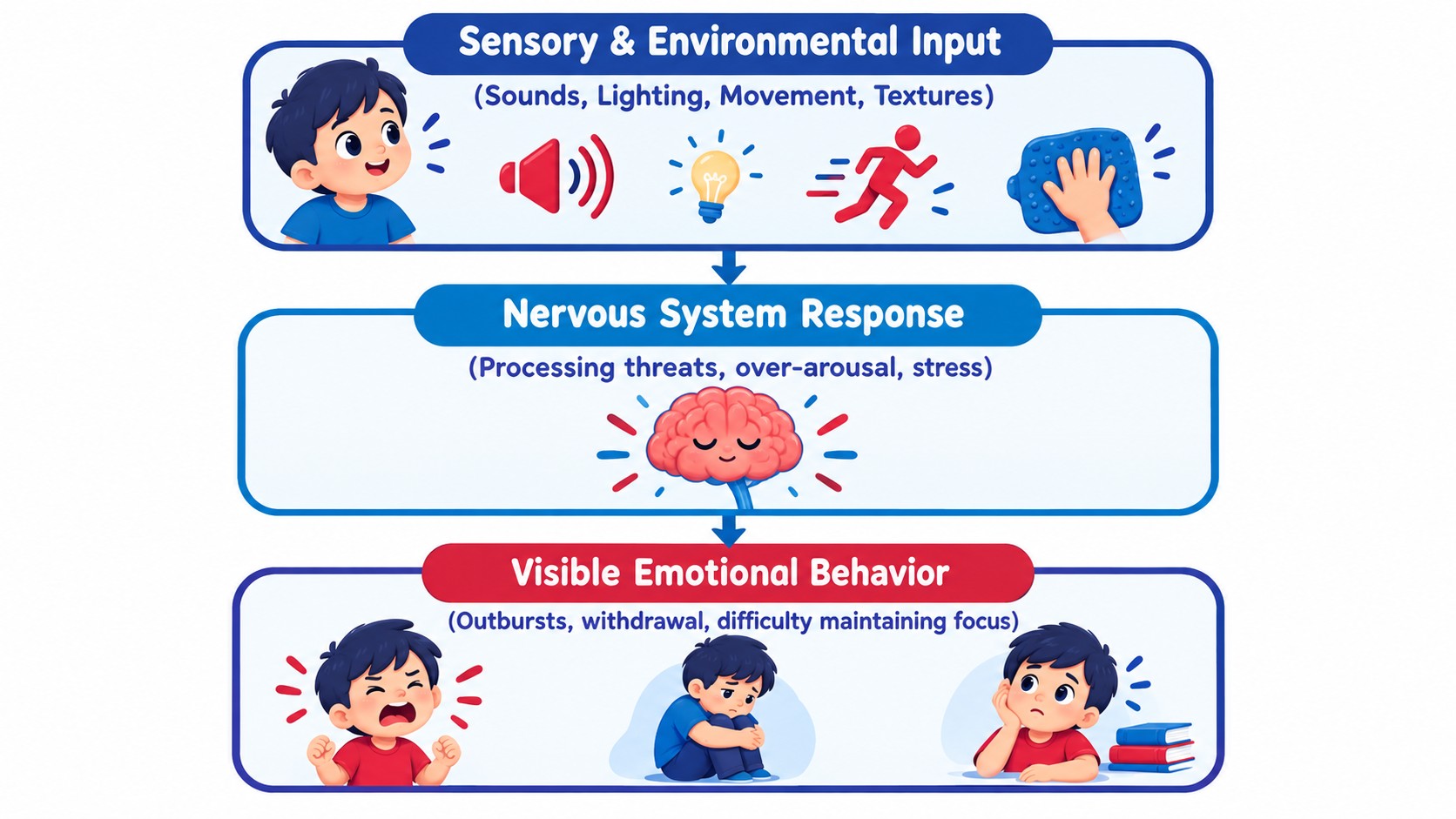
Sensory Input to Emotional Behavior ()
How Occupational Therapy Supports Emotional Regulation
Occupational therapy focuses on enabling individuals to participate fully in daily life activities, or occupations. For children, their primary occupations are play, learning, self-care, and social interaction. When emotional challenges hinder participation in these activities, occupational therapists step in with tailored strategies.
Rather than focusing solely on behavior management, occupational therapy addresses the foundational neurological, sensory, and physical components that influence emotional states.
Comprehensive Sensory Assessments
Therapists evaluate how a child responds to sensory inputs in various settings. By identifying whether a child is sensory-seeking, sensory-avoidant, or sensory-underresponsive, the therapist can design individualized interventions that support nervous system balance.
Creating Customized Sensory Strategies
A sensory schedule is a planned daily routine that incorporates specific movement activities, heavy work tasks, and quiet sensory breaks. These activities are strategically timed throughout the day to keep the child’s arousal state regulated, preventing sensory overload before it happens.
Developing Interoceptive Awareness
Through targeted games and observational activities, therapists help children tune into their internal body signals. Learning that a fast heart rate means “my body is excited or scared” helps children connect physical sensations to specific emotional states.
Teaching Expressive and Self-Soothing Tools
Therapists introduce age-appropriate tools and techniques that children can use independently when feeling overwhelmed. These may include deep breathing exercises, progressive muscle relaxation, or using tactile comfort items.
Practical Techniques Used in Therapy Sessions
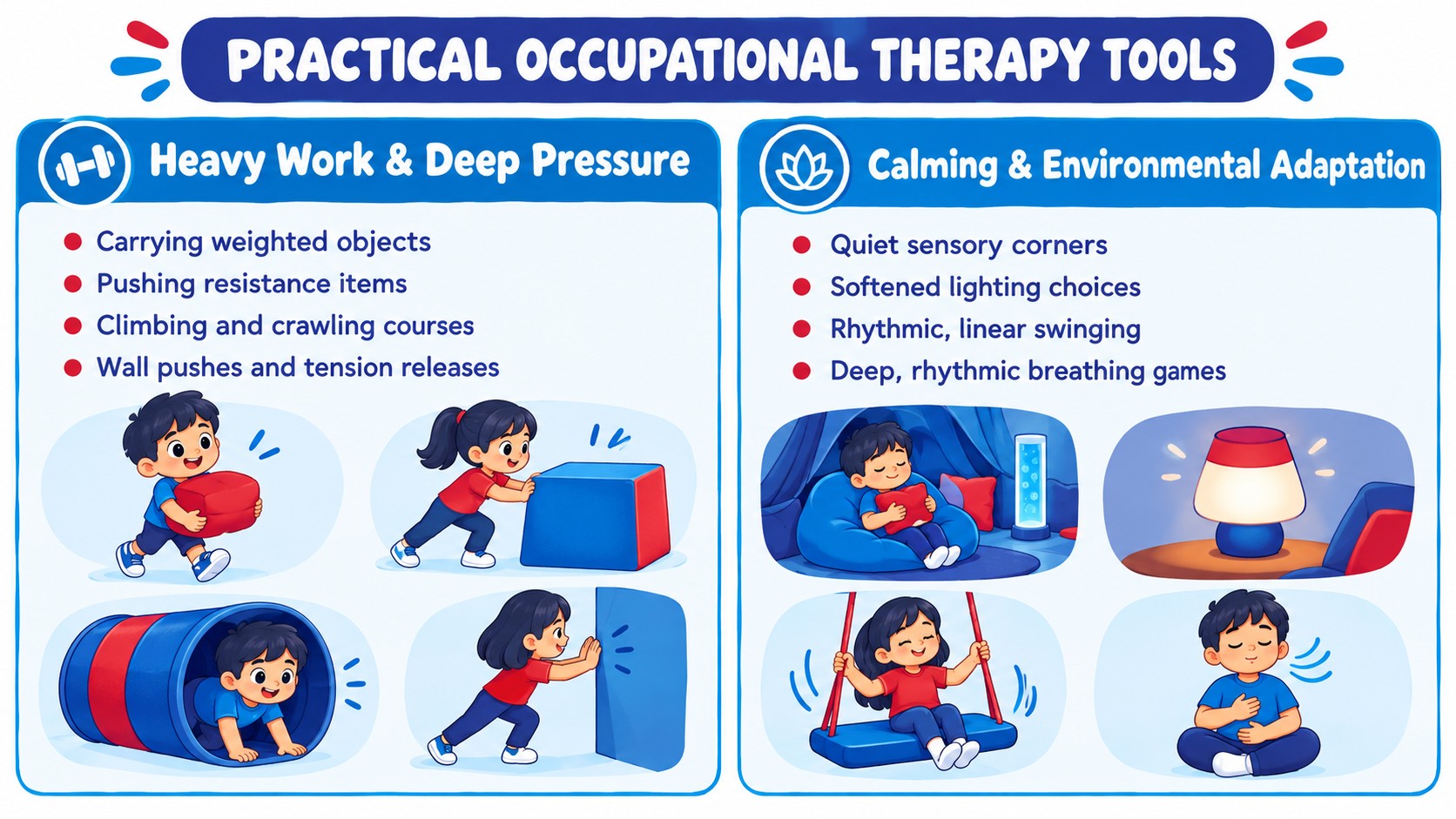
Practical Occupational Therapy Tools Infographic ()
Occupational therapy sessions are designed to be engaging, playful, and child-centered. Therapy rarely feels like work to a child; instead, it uses structured play to build critical skills naturally.
Heavy Work Activities
Heavy work involves activities that push or pull against resistance, activating the muscle and joint receptors. Examples include pushing a loaded cart, climbing up a play structure, carrying heavy books, or doing animal walks across a room. Heavy work naturally releases grounding neurotransmitters, helping to regulate nervous system energy.
Deep Pressure Input
Firm, uniform pressure can exert a deeply calming effect on an overstimulated child. Therapists use weighted blankets, resistance bands, therapy mats, or therapeutic hugs to provide deep pressure input, promoting a sense of security and groundedness.
Co-Regulation Exercises
Before a child can self-regulate, they must experience co-regulation with a supportive adult. Therapists model calm facial expressions, steady vocal tones, and relaxed body language during high-stress moments. Over time, the child internalizes this calmness and begins using it independently.
Visual Schedules and Social Stories
Predictability creates a sense of safety. Occupational therapists often utilize visual schedules, timer systems, and descriptive social stories to prepare children for changes in routine, reducing anxiety associated with the unknown.
Practical Ways Parents Can Support Regulation at Home
Therapy sessions provide essential tools and guidance, but home is where real-world skill building takes root. Creating a home environment that values sensory awareness and emotional validation makes a substantial difference in a child’s progress.
Establish a Dedicated Calming Space
Designate a cozy corner of your home as a quiet sanctuary. Fill it with soft pillows, plush blankets, noise-reducing headphones, and tactile sensory toys. Teach your child that this space is not for punishment or timeout, but rather a comforting refuge to visit whenever feelings become intense.
Integrate Daily Movement Breaks
Ensure your child gets regular physical movement throughout the day, especially before structured tasks like homework or dinner. Incorporating heavy work tasks at home, such as helping carry laundry baskets or jumping on a small trampoline, helps maintain steady energy levels.
Use Clear, Predictable Routines
Structure reduces uncertainty, which minimizes anxiety. Use simple visual charts for morning and bedtime routines so your child knows exactly what to expect next. When disruptions to the schedule are unavoidable, communicate them early using clear, straightforward language.
Practice Co-Regulation in High-Stress Moments
When your child experiences an intense meltdown, logical reasoning is rarely effective because their brain is in a protective, reactive state. Focus first on lowering your own energy, maintaining a calm voice, ensuring physical safety, and staying nearby. Offer your quiet presence until the intense wave of emotion passes.
Name the Feelings and Sensations
Help your child connect internal feelings with descriptive words. Phrases like “I notice your hands are clenched and your shoulders are high; it looks like your body feels frustrated right now” help build interoceptive awareness without placing judgment on the emotion itself.
Collaborative Care for Long-Term Development
Supporting emotional regulation is a journey that requires patience, consistency, and collaboration. Occupational therapists work closely with families, teachers, and other healthcare professionals to ensure that strategies developed in the clinic are integrated seamlessly into school and home settings.
Every child possesses a unique sensory profile and emotional temperament. What works wonderfully for one child may not suit another. Through careful observation, professional assessment, and evidence-informed interventions, occupational therapy offers a personalized path toward greater self-awareness, confidence, and emotional resilience.
When children learn to navigate their internal world and understand their sensory needs, they gain tools that benefit them well beyond childhood. Learning how to self-regulate lays the groundwork for academic participation, meaningful friendships, and long-term self-esteem.
Choosing Professional Guidance for Your Family
If you notice that your child consistently struggles with emotional meltdowns, sensory sensitivities, or managing daily transitions, speaking with a qualified occupational therapist is a helpful step forward. A professional assessment can offer clarity on your child’s sensory profile and pinpoint the underlying reasons for their emotional reactions.
Treatment options and support strategies vary depending on individual needs. Your healthcare professional can assess whether occupational therapy is suitable for your child and help tailor an approach that supports your family’s daily routines. Learning more about sensory processing and emotional development empowers you to advocate effectively for your child’s health and happiness.
To learn more about child development support and therapeutic services, speak with a qualified healthcare professional who can guide you on the best pathway for your child.
