Supporting Your Child’s Growth Through ABA Therapy

Supporting Your Child’s Growth Through ABA Therapy
Children grow and learn in many different ways, shaped by their experiences, environments, and individual abilities. For some families, supporting a child’s development comes naturally, while others find themselves navigating additional challenges that require patience, structure, and guidance. When a child has developmental needs, growth may take a different path, and progress may come in smaller, more meaningful steps. In these moments, having the right support can make a significant difference, helping children build skills that strengthen confidence, independence, and everyday participation.
Applied Behavior Analysis, often referred to as ABA therapy, offers a thoughtful and practical approach to supporting children’s development. Rather than focusing on labels or limitations, ABA therapy looks closely at how children learn, communicate, and interact with the world around them. Through consistent support and individualized strategies, ABA therapy helps children build essential skills that support independence, confidence, and meaningful participation in everyday life.
This article explores how ABA therapy supports child development, what growth can look like through this approach, and why many families find it to be a valuable part of their child’s journey.
Understanding Growth Beyond Milestones
Childhood growth is often measured by milestones such as first words, independent play, or academic readiness. While milestones provide helpful reference points, true growth extends far beyond a checklist. Growth includes emotional awareness, communication, social connection, adaptability, and the ability to manage daily routines.
For children with developmental needs, progress may not always follow a predictable path. A child may show strengths in one area while facing challenges in another. ABA therapy respects this individuality by focusing on meaningful, functional skills that improve daily life rather than rushing toward arbitrary benchmarks.
Supporting growth means meeting children where they are and helping them move forward with patience and consistency.
What ABA Therapy Is And How It Helps
ABA therapy is based on understanding behavior as a form of communication. When children struggle, their actions often reflect unmet needs, limited skills, or difficulty understanding expectations. ABA therapy seeks to understand the purpose behind behaviors and teach skills that allow children to communicate and interact more effectively.
Therapy plans are carefully designed for each child. Goals are selected based on the child’s strengths, needs, and family priorities. Skills are taught in small, manageable steps, with positive reinforcement used to encourage learning and confidence.
ABA therapy does not aim to change who a child is. Instead, it focuses on helping children gain tools that allow them to express themselves, engage with others, and participate more fully in daily life.
How ABA Therapy Supports Child Growth
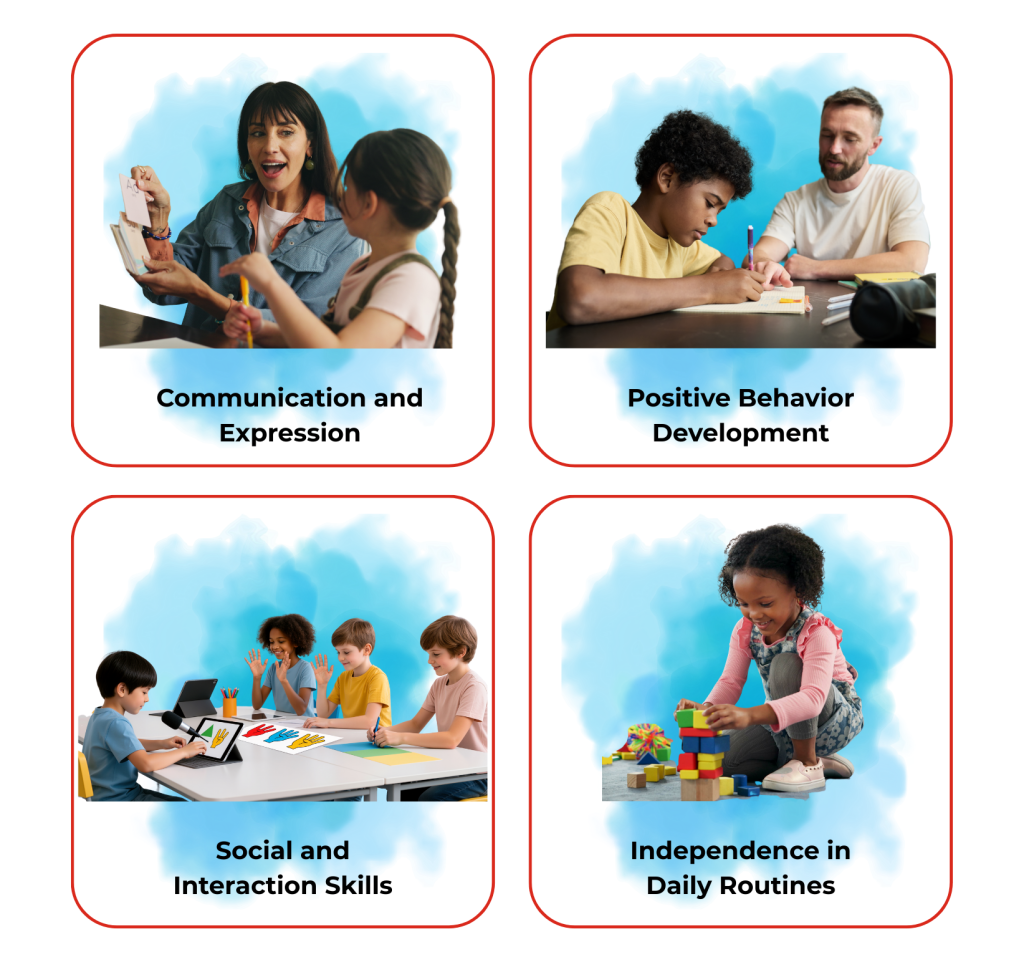
How ABA Therapy Supports Child Growth- ABLE UK
- Communication and Expression
Helping children learn to express needs, emotions, and ideas in ways that reduce frustration and increase understanding. - Positive Behavior Development
Teaching practical alternatives to challenging behaviors by focusing on skills that support success in daily routines. - Social and Interaction Skills
Supporting children as they learn to engage with others, take turns, and participate more comfortably in group settings. - Independence in Daily Routines
Building skills that allow children to take part in self-care, play, and learning with greater confidence.
Supporting Communication Development
Communication plays a central role in a child’s growth. When children can express their needs, feelings, and ideas, they are better able to connect with others and navigate their environment.
ABA therapy supports communication in many forms. Some children begin by learning to request items or activities using words, gestures, pictures, or assistive communication tools. Others work on expanding vocabulary, improving clarity of speech, or engaging in simple conversations.
Therapists respond consistently to communication attempts, helping children understand that their efforts are meaningful. Over time, communication becomes more natural and spontaneous, reducing frustration and increasing engagement.
Encouraging Social Connection
Social interaction is a key part of childhood growth. Friendships, play, and shared experiences help children develop empathy, cooperation, and emotional understanding. For some children, social situations can feel confusing or overwhelming.
ABA therapy breaks social skills into clear and achievable steps. Children may practice greeting others, taking turns, sharing materials, or responding appropriately during play. These skills are introduced gradually and practiced through structured activities and natural interactions.
As children become more comfortable, social engagement often increases. Positive experiences with peers and adults help build confidence and a sense of belonging.
Developing Daily Living Skills
Daily routines shape a child’s sense of independence. Skills such as dressing, eating, hygiene, and following routines allow children to participate more fully at home and in the community.
ABA therapy supports daily living skills by teaching them step by step. Tasks are broken down into smaller actions, making learning feel manageable rather than overwhelming. Consistent practice and encouragement help children gain confidence in their abilities.
As children master daily routines, they often experience a greater sense of pride and autonomy. These successes also support family routines by reducing stress and increasing cooperation.
Addressing Challenging Behaviors With Understanding
Challenging behaviors can be one of the most stressful aspects of parenting a child with developmental needs. These behaviors are rarely intentional acts of defiance. More often, they reflect difficulty communicating, coping with change, or managing emotions.
ABA therapy approaches challenging behaviors with curiosity and compassion. Therapists work to understand why a behavior is occurring and what need it may be expressing. From there, they teach alternative skills that allow the child to meet that need in a more effective way.
For example, a child who becomes upset during transitions may learn strategies for preparing for changes. A child who struggles with waiting may learn to ask for help or engage in a calming activity. Over time, as skills improve, challenging behaviors often decrease naturally.
Supporting Emotional Regulation
Emotional growth is just as important as skill development. Children need support in recognizing emotions, managing frustration, and coping with unexpected situations.
ABA therapy helps children build emotional awareness and regulation skills. This may include learning to identify feelings, request breaks, or use calming techniques during moments of stress. These skills are practiced consistently so they can be used independently over time.
When children feel more in control of their emotions, they are better able to engage in learning and social interactions. Emotional regulation also supports long term well-being and resilience.
Encouraging Learning And Focus
Learning requires attention, persistence, and flexibility. Some children with developmental needs find it difficult to focus, follow instructions, or complete tasks independently.
ABA therapy supports learning by teaching children how to attend to tasks, respond to instructions, and work through activities step by step. Tasks are adjusted to match the child’s current abilities, with challenges increasing gradually as skills develop.
Positive reinforcement helps children associate effort with success, encouraging motivation and confidence in learning.
The Importance Of Individualized Support
Every child’s growth journey is unique. What works well for one child may not be effective for another. ABA therapy recognizes this by prioritizing individualized goals and strategies.
Therapists collaborate closely with families to identify priorities that matter most in daily life. This may include communication, independence, social engagement, or emotional regulation. Goals are reviewed and updated regularly to reflect the child’s progress and changing needs.
This personalized approach helps ensure that therapy remains relevant, meaningful, and effective.
Family Involvement And Everyday Learning
Families are central to a child’s growth. ABA therapy works best when parents and caregivers are active participants in the process.
Therapists often share strategies that families can use during daily routines such as mealtimes, play, or bedtime. These everyday moments become valuable opportunities for learning and connection.
When skills are practiced consistently across settings, children are more likely to use them independently. Family involvement also helps create a supportive environment where progress can continue beyond therapy sessions.
Supporting Skill Use Across Environments
Learning a skill in a therapy setting is only part of the process. Children also need support using those skills in different environments and with different people.
ABA therapy emphasizes generalization, which means practicing skills in a variety of settings such as home, school, and community spaces. Children learn that skills apply across situations, not just during therapy.
This focus helps ensure that growth is meaningful and lasting.
Measuring Progress And Celebrating Growth
Progress in ABA therapy is monitored carefully over time. Therapists track skill development to understand what is working and where adjustments may be needed.
Growth is not always linear. Some skills take longer to develop, while others emerge quickly. Regular review allows therapy to adapt to the child’s changing needs.
Celebrating progress, both big and small, helps reinforce confidence and motivation. Each step forward represents meaningful growth.
Looking Toward The Future
Supporting a child’s growth is a long-term journey that requires patience, understanding, and collaboration. ABA therapy offers a structured yet flexible approach that helps children develop essential skills while honoring their individuality.
By focusing on communication, independence, emotional regulation, and social connection, ABA therapy supports growth that extends beyond childhood. These skills help children navigate relationships, learning environments, and daily responsibilities with greater confidence.
With the right support, children with developmental needs can continue to grow, learn, and participate meaningfully in the world around them.
