The Silent Impact Of How We Breathe: Why Nasal Breathing Is Essential For Lifelong Health

The Silent Impact Of How We Breathe: Why Nasal Breathing Is Essential For Lifelong Health
We do it roughly twenty thousand times a day without a single conscious thought. Breathing is the very first thing we do when we enter the world and the last thing we do when we leave it. Because it happens entirely on autopilot, we rarely stop to consider how we are taking those breaths. We assume that as long as oxygen is entering our bodies, our respiratory system is doing its job.
However, a subtle shift in this basic biological function can quietly reshape our physical health, facial development, sleep quality, and overall well-being. The choice between breathing through the nose and breathing through the mouth is not merely a matter of preference. It is a fundamental physiological fork in the road.
While the human body is incredibly resilient and provides the mouth as a backup airway for emergencies, relying on mouth breathing as a primary habit carries a heavy biological cost. Fortunately, fields like Myofunctional Therapy Dubai are shining a light on how correcting these foundational oral habits can restore vitality and balance to our daily lives.
The Natural Design Of Human Respiration
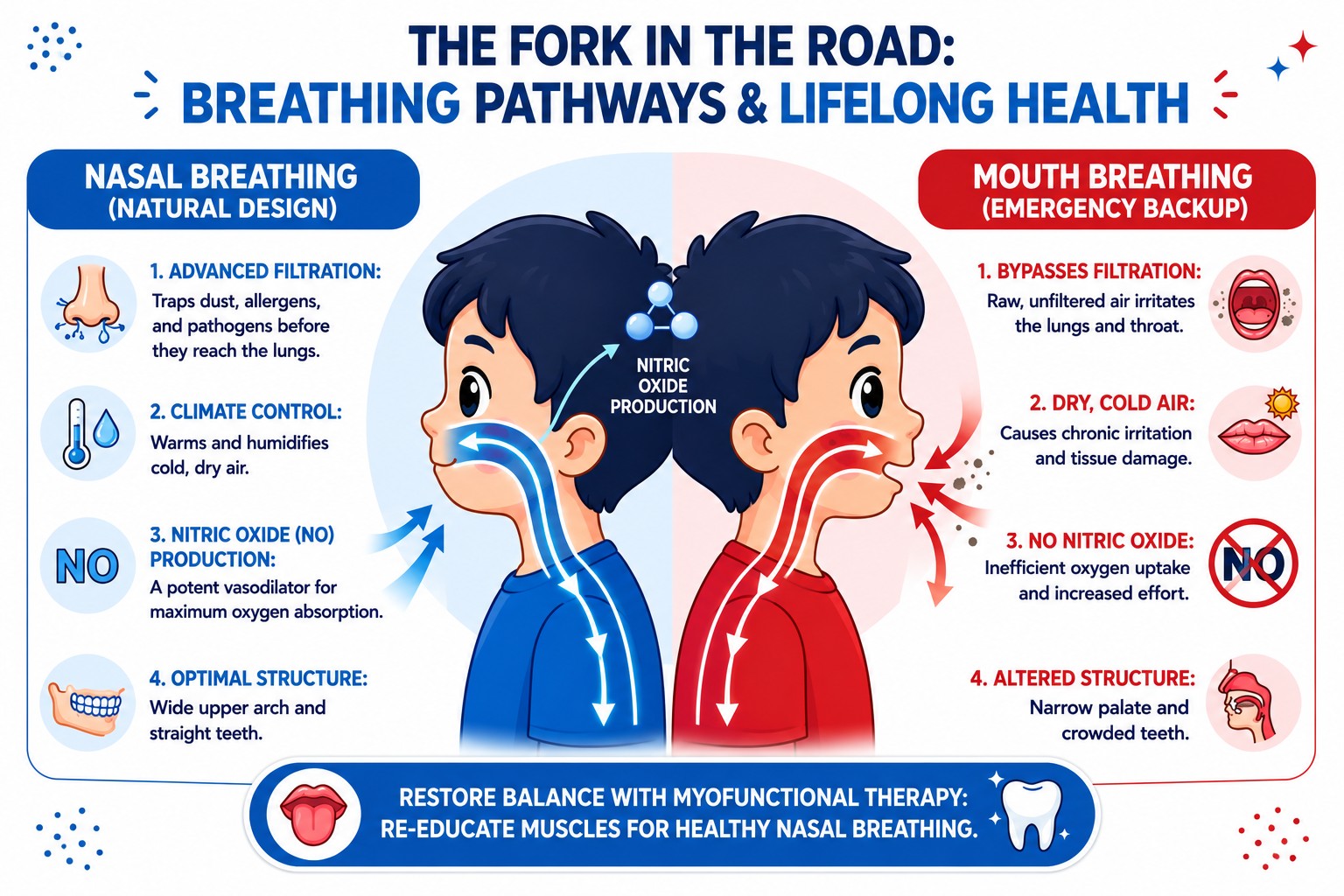
To understand why the distinction between nasal and oral breathing is so profound, we must look at how our anatomy is engineered. The nose is a highly sophisticated, multi-stage filtration and conditioning system designed specifically to prepare ambient air for the delicate environment of our lungs.
When air enters through the nostrils, it passes through a complex labyrinth of passages lined with microscopic hairs called cilia and a protective layer of mucous membrane. This intricate pathway acts as a natural shield, trapping airborne dust, allergens, pollutants, and microbes before they can travel deeper into the body.
Beyond filtration, the nasal passages act as a built-in climate control system. Cold, dry air is rapidly warmed to body temperature and humidified, ensuring that by the time it reaches the lungs, it is gentle on the respiratory tissues. This prevents irritation and allows the lungs to extract oxygen with maximum efficiency.
The mouth, conversely, has no such conditioning mechanism. It is designed primarily for ingestion and speech. When we breathe through the mouth, raw, unfiltered, cold, and dry air bypasses the natural filtration system and flows directly into the throat and lower airway. This forces the lungs and throat tissues to work harder, leading to dryness, chronic irritation, and an increased vulnerability to environmental stressors.
The Hidden Power Of Nitric Oxide
One of the most remarkable discoveries in modern respiratory science is the role of a gas called nitric oxide. This molecule is continuously produced in the paranasal sinuses, the small hollow cavities surrounding our nasal passages.
When we breathe through our nose, we carry this steady supply of nitric oxide directly into our lungs. Nitric oxide acts as a potent vasodilator, meaning it helps relax and widen the blood vessels. This widening significantly enhances the lungs’ ability to absorb oxygen and distribute it throughout the bloodstream to our brain, muscles, and vital organs.
Furthermore, nitric oxide possesses natural antiviral and antibacterial properties, providing an extra layer of defense against airborne pathogens. Because nitric oxide is produced almost exclusively in the nasal cavities, mouth breathing completely bypasses this vital resource. Without it, oxygen uptake is less efficient, forcing the body to exert more effort to achieve the same level of cellular oxygenation.
The Cascading Effects Of Chronic Mouth Breathing
When mouth breathing transitions from a temporary necessity, such as during a heavy cold or intense exercise, into a permanent habit, it alters the internal environment of the body. The consequences of this shift extend far beyond simple dry mouth, creating a ripple effect that touches multiple aspects of physical health.
Altered Oral Ecology And Dental Health
The mouth requires a continuous flow of saliva to maintain a healthy balance. Saliva is the body’s natural defense mechanism for the teeth and gums, working constantly to wash away food particles, neutralize harmful acids, and keep bacteria populations in check.
Continuous mouth breathing dries out oral tissues, severely reducing salivary flow. In the absence of adequate saliva, the oral environment becomes increasingly acidic, creating the perfect breeding ground for harmful bacteria. This shift elevates the risk of tooth decay, gum inflammation, and persistent bad breath, even in individuals who maintain meticulous oral hygiene routines.
Compromised Sleep Quality And Nighttime Fatigue
The way we breathe during the day dictates how we breathe at night. Mouth breathing is closely linked to sleep disruptions, ranging from light snoring to more severe airway collapses during sleep.
When we sleep with an open mouth, the tongue naturally falls backward into the throat, partially obstructing the airway. This restriction forces the body to work much harder to draw in air, triggering micro-arousals that pull us out of deep, restorative sleep cycles without our conscious awareness. Individuals who rely on mouth breathing often wake up feeling unrefreshed, experiencing morning headaches, brain fog, and a persistent lack of energy throughout the day.
How Breathing Shapes Structural Development
The impact of respiratory habits is perhaps most visible in the physical structure of the face and jaw, particularly during the growing years of childhood. The human body is highly adaptable, and bones develop in response to the constant, gentle forces exerted upon them by the surrounding muscles.
In a healthy state where nasal breathing is the norm, the tongue rests naturally against the roof of the mouth. This resting position is crucial because the tongue acts as an internal support system, exerting an outward pressure that shapes the upper jaw into a wide, optimal arch. This spacious arch provides ample room for permanent teeth to emerge straight and well-aligned.
When chronic mouth breathing forces the jaw to hang open, the tongue drops to the floor of the mouth. Without the supportive pressure of the tongue against the palate, the upper jaw can develop into a narrow, high-arched shape. This structural narrowing leaves less room for teeth, often resulting in severe crowding and misalignment.
Over time, this altered muscle posture can influence the overall growth pattern of the face, sometimes leading to a more elongated facial profile, a recessed chin, and strained facial muscles. Recognizing these structural shifts early has led many families to explore the specialized support available through Myofunctional Therapy Dubai to address the root muscular habits driving these changes.
Restoring Balance Through Myofunctional Therapy
Breaking a long-standing habit of mouth breathing requires more than a simple reminder to keep the lips together. Over time, the muscles of the face, tongue, and throat adapt to the open-mouth posture, losing the tone and coordination necessary to maintain a natural nasal breathing pattern comfortably.
This is where myofunctional therapy plays a transformative role. Think of it as a tailored program of physical therapy specifically for the oral and facial muscles. The primary objective is to re-educate these muscles, guiding them back to their natural, anatomically correct resting positions.
A typical therapeutic journey focuses on four foundational pillars:
- Optimal Tongue Rest Posture: Training the tongue to rest fully and comfortably against the roof of the mouth.
- Consistent Lip Seal: Strengthening the muscles of the lips so they remain gently closed without conscious effort or strain.
- Correct Swallowing Patterns: Ensuring the tongue moves upward and backward during swallowing, rather than thrusting forward against the teeth.
- Exclusive Nasal Breathing: Establishing the nose as the primary channel for respiration, both day and night.
Through targeted, simple exercises practiced consistently, individuals can rebuild muscle memory, making nasal breathing feel natural and effortless once again.
The Journey to Healthier Breathing
The Path to Healthier Breathing
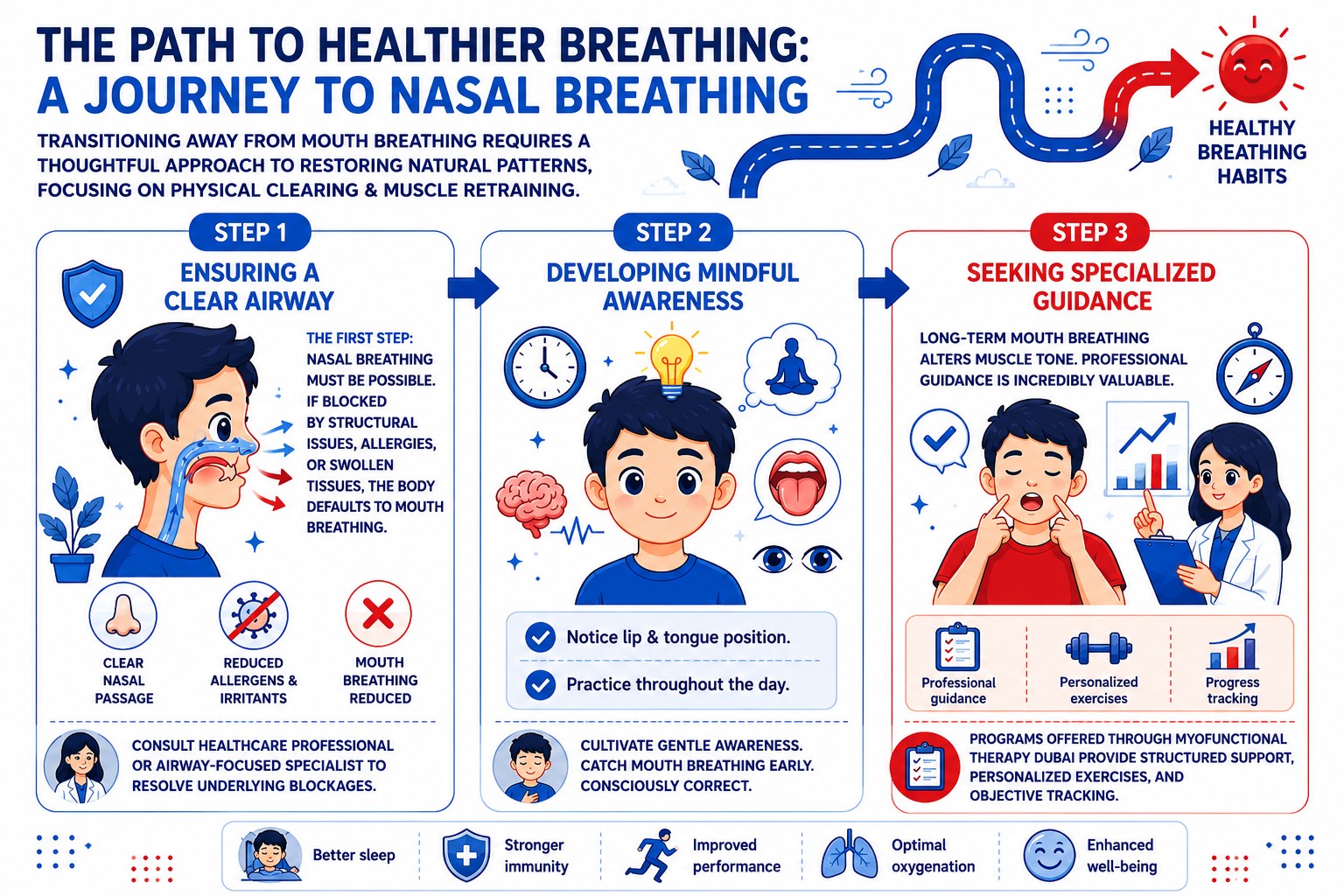
Transitioning away from a habit of mouth breathing is a journey that benefits from a thoughtful, step-by-step approach. Because the body has relied on an alternative pathway for so long, restoring natural patterns involves addressing both physical clearing and muscle retraining.
Ensuring A Clear Airway
The first step in any breathing transformation is ensuring that nasal breathing is actually possible. If the nasal passages are physically blocked by structural variances, severe environmental allergies, or swollen tissues, the body will naturally default to mouth breathing to survive. Consulting with a healthcare professional or an airway-focused specialist can help identify and resolve any underlying blockages, paving the way for successful muscle retraining.
Developing Mindful Awareness
Throughout the day, take brief moments to check in with your body. Notice the position of your lips and tongue. Are your teeth gently resting apart with your lips closed, or is your jaw slightly dropped? Cultivating this gentle awareness helps catch mouth breathing early, allowing you to consciously close your mouth and place your tongue on the roof of the palate. Over time, these small corrections build the foundation for permanent behavioral change.
Seeking Specialized Guidance
For many individuals, long-term mouth breathing has deeply altered muscle tone, making professional guidance incredibly valuable. Engaging with specialized care, such as the programs offered through Myofunctional Therapy Dubai, provides structured support, personalized exercises, and objective tracking to ensure the muscles of the mouth and airway are fully supported throughout the transition.
A Foundational Pillar Of Long-Term Wellness
In our pursuit of health and vitality, we often focus intensely on diet, exercise, and stress management, while overlooking the very mechanism that sustains us from minute to minute. The way we breathe is a cornerstone of our physiological well-being, influencing everything from the pH balance of our mouths to the oxygenation of our cells and the structure of our faces.
Shifting from mouth breathing to consistent, deep nasal breathing is one of the most profound gifts we can give our bodies. It is a return to our natural design, unlocking better sleep, enhanced energy, and improved structural health. By paying attention to this quiet habit and seeking the right support when needed, we can ensure that every breath we take actively supports a healthier, more vibrant life.
The Fork in the Road Breathing Pathways and Life Long Health
