Understanding Ankyloglossia: How Tongue Tie Release and Myofunctional Therapy Work Hand in Hand for Long Term Wellness

Understanding Ankyloglossia: How Tongue Tie Release and Myofunctional Therapy Work Hand in Hand for Long Term Wellness
The human body is an intricate, highly interconnected system. Often, small anatomical details that seem minor at first glance can exert a profound influence on daily functions like breathing, speaking, chewing, and sleeping. One such detail is the lingual frenulum, the band of tissue that connects the underside of the tongue to the floor of the mouth. When this tissue is unusually short, thick, or tight, it restricts the movement of the tongue, a condition clinically known as ankyloglossia, or more commonly, a tongue tie.
While a restricted tongue is often identified in infancy due to feeding challenges, its effects frequently extend far beyond early childhood. Restricted lingual movement can alter oral posture, compromise airway health, and impact facial growth and development. Addressing ankyloglossia successfully requires a comprehensive, multidisciplinary approach. Simply releasing the physical restraint is often only half the equation. True, long lasting improvement relies on retraining the muscles of the mouth and face to function correctly. This is where myofunctional therapy becomes an essential partner in the journey toward oral health and overall physical well-being.
What Is Ankyloglossia
Understanding Ankyloglossia A Friendly Guide ()
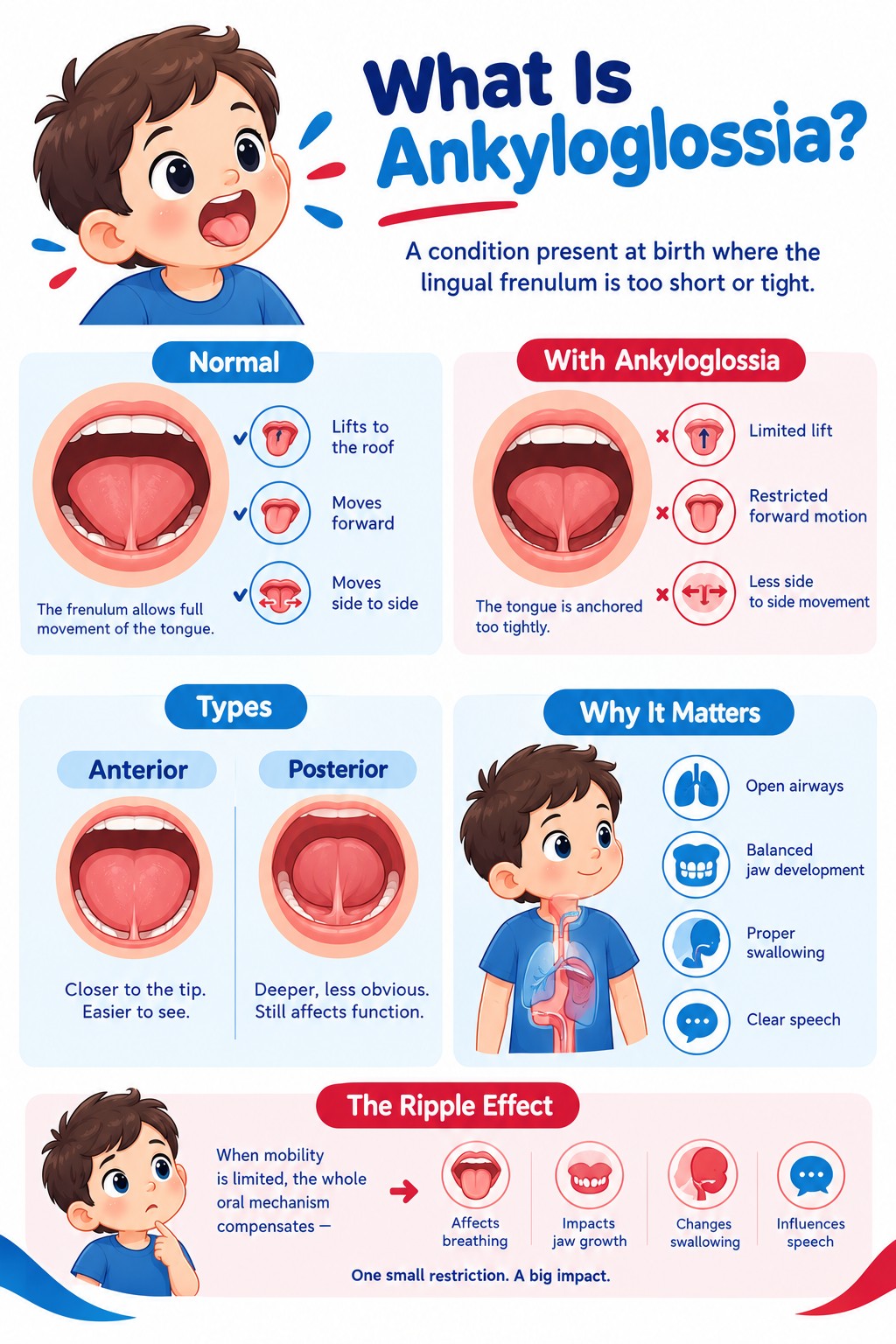
Ankyloglossia is a congenital condition present at birth, characterized by an abnormally short or tight lingual frenulum. Under typical circumstances, the lingual frenulum allows the tongue a full range of motion. It enables the tip and body of the tongue to lift easily to the roof of the mouth, extend outward without pulling downward into a heart shape, and move freely from side to side.
In individuals with ankyloglossia, this restriction anchors the tongue too tightly to the floor of the mouth. Depending on where the tissue attaches and how thick or rigid it is, tongue ties are generally categorized into different types. Anterior tongue ties are located closer to the tip of the tongue and are typically easier to spot visually. Posterior tongue ties lie deeper underneath the mucous membrane, making them less obvious to the untrained eye while still causing significant functional limitation.
Regardless of whether a tongue tie is anterior or posterior, the fundamental issue remains functional restriction. The human tongue is composed of a complex network of muscles that play a pivotal role in maintaining open airways, supporting balanced jaw development, facilitating proper swallowing patterns, and promoting clear speech production. When its mobility is limited, the entire oral mechanism compensates, leading to a ripple effect throughout the body.
Recognizing the Wide Ranging Signs of Restricted Tongue Mobility
Because the tongue is involved in so many fundamental physical processes, the signs of ankyloglossia manifest differently across various stages of life.
Infancy and Early Childhood
In newborns and infants, tongue movement is vital for establishing a comfortable, effective latch during nursing or bottle feeding. A restricted tongue may prevent an infant from creating a proper seal, leading to feeding difficulties, inadequate weight gain, extended feeding times, and excessive air swallowing. For mothers, this often results in significant discomfort and stress. As children grow and transition to solid foods, restricted tongue mobility may present as difficulty managing certain food textures, frequent gagging, or challenges with chewing efficiently.
Adolescence and Adulthood
If left unaddressed, restricted tongue movement does not disappear with age. Instead, the body adapts by developing functional compensations. Older children, teenagers, and adults with unreleased tongue ties may experience a range of subtle yet persistent symptoms:
- Persistent low tongue posture, where the tongue rests on the floor of the mouth rather than gently resting against the hard palate.
- Mouth breathing, particularly during sleep, which can lead to dry mouth, heightened risk of dental decay, and restless sleep patterns.
- Speech articulation challenges, especially with sounds that require lifting the tip of the tongue to the roof of the mouth.
- Chronic tension in the neck, shoulders, and jaw, often tied to muscle overuse as surrounding structures work overtime to compensate for poor oral mechanics.
- Difficulty swallowing comfortably, leading to reverse swallowing habits or tight facial muscles during meals.
Identifying these signs is the first step toward understanding how restricted oral anatomy impacts day to day life.
Understanding Myofunctional Therapy
To understand why a surgical release alone is rarely sufficient, one must first understand myofunctional therapy. Myo refers to muscle, and myofunctional therapy is a targeted program of physical therapy exercises designed specifically for the muscles of the face, mouth, and neck.
Just as a physical therapist helps an individual rebuild strength, flexibility, and proper movement mechanics after an injury or surgery, an oral myofunctional therapist evaluates and retrains the neuromuscular patterns of the oral facial complex.
The primary goals of myofunctional therapy include:
- Restoring proper resting tongue posture, encouraging the entire tongue to rest gently against the roof of the mouth.
- Establishing consistent nasal breathing during both waking and sleeping hours.
- Correcting swallowing mechanics to prevent tongue thrusting against the front teeth.
- Promoting appropriate lip closure at rest, keeping the mouth closed naturally without strain.
When the muscles of the mouth function harmoniously, they provide an internal structural framework that supports healthy airway space and balanced facial development. However, when a tongue tie is present, the muscles have adapted to restricted movement for years, or even decades. Retraining those muscles is essential to achieving healthy, lasting function.
The Limitations of a Surgical Release Alone
A surgical procedure to release a tongue tie, often referred to as a frenectomy or frenulotomy, involves carefully dividing or removing the restrictive tissue using modern clinical tools such as precise dental lasers or surgical scissors. This procedure physically frees the tongue, providing it with an expanded anatomical range of motion.
However, physical freedom does not automatically translate into functional competence.
Consider an individual who has had their arm in a cast for several months. Once the cast is removed, the bones are healed, but the muscles are weak, stiff, and unfamiliar with full movement. The individual cannot immediately return to lifting heavy objects or performing complex tasks with that arm without rehabilitative exercise.
The same principle applies to the tongue. If a restricted lingual frenulum is released without rehabilitative care, the patient’s brain and oral muscles will simply default to the motor patterns they have relied on for years. The tongue may continue resting on the floor of the mouth, swallowing patterns may remain dysfunctional, and scar tissue from the release may contract, potentially leading to reattachment or reduced mobility.
This reality highlights the synergy between surgical care and myofunctional therapy. A surgical release provides the necessary structural space, but myofunctional therapy teaches the body how to use that space effectively.
How Tongue Tie Release and Myofunctional Therapy Work Together
Tongue Tie Release and Therapy Pathway ()
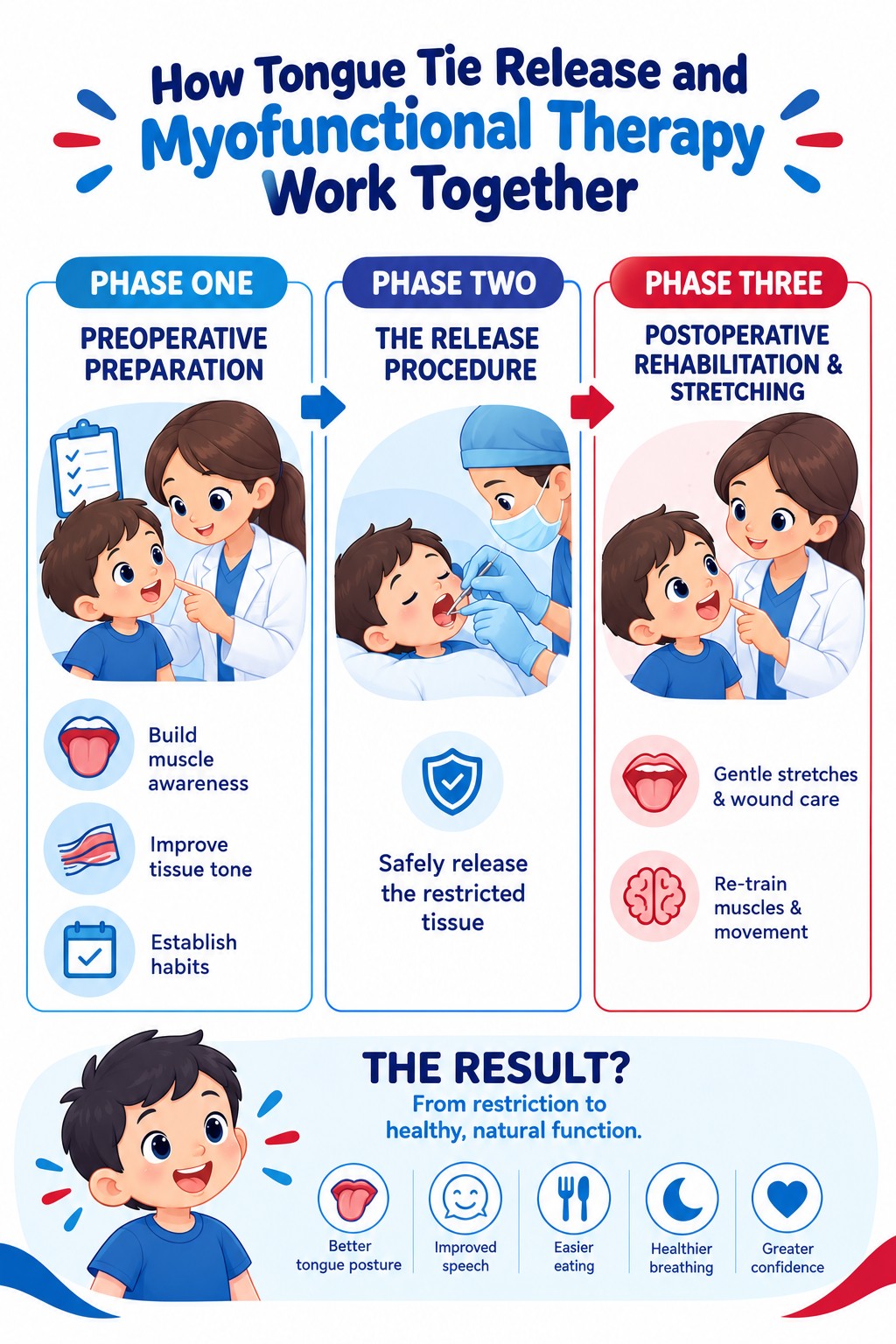
Achieving optimal, long term functional outcomes requires a structured, multi-phase approach where surgical release and therapy are integrated seamlessly. This collaborative pathway typically unfolds across three key phases: preoperative preparation, the procedure itself, and postoperative rehabilitation.
Phase One: Preoperative Preparation
Before any surgical release takes place, engaging in targeted preoperative myofunctional therapy is highly beneficial. During this phase, the therapist assesses baseline muscle strength, coordination, and compensation habits.
Preoperative exercises serve several critical purposes:
- Building Muscle Awareness: Patients learn how to isolate and control specific tongue and facial muscles, making post-procedure exercises far easier to perform.
- Improving Tissue Tone: Targeted exercises help lengthen and condition the tissue surrounding the lingual frenulum, providing the healthcare provider with better access and clarity during the release procedure.
- Establishing Habits: Practicing the therapeutic routine beforehand helps patients, or parents of young patients, feel confident and prepared for the postoperative care phase.
Phase Two: The Release Procedure
With the surrounding tissues conditioned and muscle awareness established, a qualified healthcare professional performs the release procedure. The goal is to safely free the restricted tissue, restoring full anatomical range of motion. Because proper preparation has taken place, the procedure can be performed with maximum precision.
Phase Three: Postoperative Rehabilitation and Stretching
The weeks following a tongue tie release are critical for long term success. Healing tissues naturally tend to shrink and contract as scar tissue forms. Without active management, the newly freed tissue can tighten or reattach, limiting the benefits of the procedure.
Postoperative care involves two primary therapeutic activities:
- Active Wound Management and Gentle Stretches: Patients or caregivers perform specific, gentle stretches guided by their care team to ensure the tissue heals with maximum flexibility and length.
- Neuromuscular Re-Education: Myofunctional therapy exercises are resumed shortly after the procedure. These exercises actively teach the tongue how to lift to the roof of the mouth, strengthen the elevator muscles, and integrate new movement patterns into daily activities like talking, eating, and breathing.
By pairing the release with consistent therapy, patients can transition from physical restriction to healthy, natural function.
Long Term Benefits of an Integrated Approach
When tongue tie release and myofunctional therapy are combined into a cohesive care plan, the potential benefits extend far beyond the mouth, positively influencing multiple aspects of health and quality of life.
Encouraging Healthy Airway Mechanics and Nasal Breathing
The roof of the mouth serves a dual purpose: it is the floor of the nasal cavity. When the tongue rests comfortably against the hard palate, it provides gentle, continuous support that helps shape the upper jaw and maintain an expansive nasal pathway. Nasal breathing filters, warms, and humidifies the air we inhale, promoting better oxygen intake and supporting overall respiratory health.
Supporting Balanced Jaw and Facial Development
In growing children, the gentle upward and outward pressure of a correctly positioned tongue acts as a natural palatal expander. This structural support guides the forward and lateral growth of the maxilla (upper jaw), creating adequate space for permanent teeth to align naturally.
Enhancing Sleep Quality
Low tongue posture and mouth breathing during sleep can contribute to upper airway resistance, snoring, and disrupted sleep patterns. By retraining the tongue to rest elevated against the palate and encouraging consistent lip closure, patients often experience quieter, deeper, and more restorative sleep.
Alleviating Chronic Muscle Strain
When the tongue cannot perform its normal duties, auxiliary muscles in the neck, jaw, and shoulders step in to assist with swallowing and breathing. Re-establishing correct tongue function reduces this unnecessary burden, helping to relieve persistent tension in the head, neck, and temporomandibular joint (TMJ) area.
What to Expect During a Evaluation
If you suspect that you or a family member may be experiencing restricted tongue mobility or related oral habit patterns, seeking a professional evaluation is an encouraging first step.
A thorough assessment typically begins with a comprehensive review of health history, daily habits, sleep quality, and any functional concerns. The healthcare practitioner will carefully examine the physical structures of the mouth, observing the appearance of the frenulum during various movements.
Equally important is a functional evaluation. The practitioner will observe tongue range of motion, resting posture, lip seal, swallowing mechanics, and speech patterns. This detailed assessment helps determine whether a restriction is present, how significantly it affects daily function, and whether a combined approach of myofunctional therapy and release care is the appropriate path forward.
Every individual’s anatomy and functional needs are unique. Therefore, care plans are tailored specifically to the individual, ensuring that therapeutic exercises and clinical recommendations align with their unique goals and health profile.
Taking the Next Step Toward Health and Balance
Understanding the close relationship between structural anatomy and muscle function is empowering. Ankyloglossia is more than just a localized tissue restriction; it is a condition that can influence how we breathe, speak, sleep, and feel every day.
Releasing a restricted tongue tie provides the physical potential for proper movement, but myofunctional therapy provides the essential training required to turn that potential into lifelong habit. Together, these two discipline areas work in complete harmony, supporting functional movement, open airways, and improved overall wellness.
If you have questions about tongue mobility, resting oral posture, or myofunctional therapy, speaking with a qualified healthcare professional can provide clarity and guidance. Treatment options vary depending on individual needs, and a personalized assessment can help determine the most suitable approach for your journey toward balanced oral health.
